Kering—the French luxury conglomerate behind Gucci, Saint Laurent, Balenciaga, and Bottega Veneta—has entered a period of aggressive restructuring as it contends with weak global demand, regulatory headwinds, and internal financial recalibration.
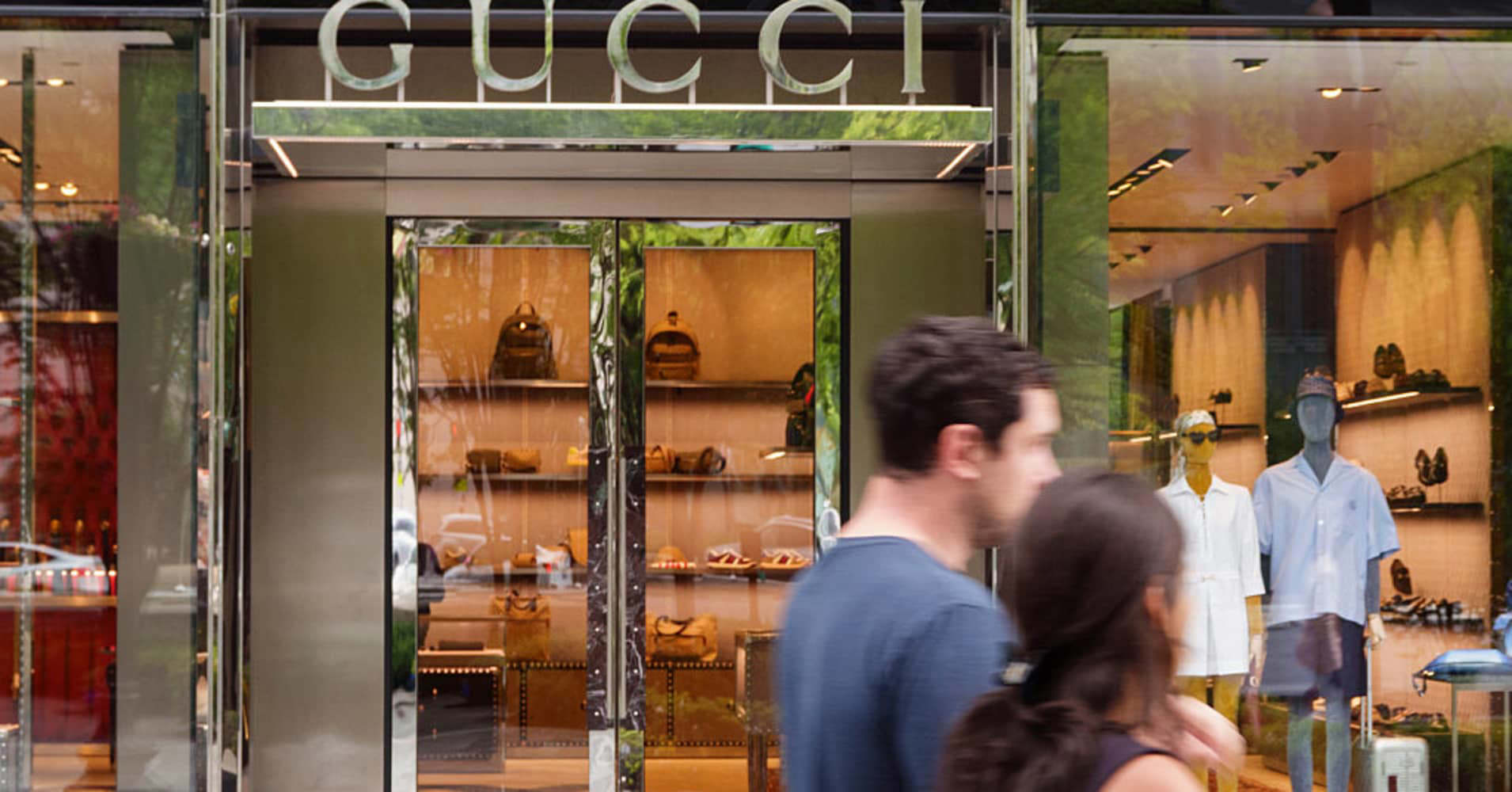
The group’s latest quarterly earnings paint a stark picture: €3.7 billion in Q2 revenue, marking a 15% decline year-on-year on a comparable basis—below market expectations. Flagship brand Gucci reported a 25% drop in sales, down to €1.46 billion, further highlighting the fragility of its once-indomitable position in the global fashion hierarchy.
This contraction comes at a time when the luxury sector as a whole is wobbling, especially in China—once a dependable engine of growth. With inflation biting into consumer sentiment across key Western markets as well, even the most established fashion houses are being forced to reconsider their models.
Tariffs, Debt, and Downsizing
Adding to Kering’s challenges is the implementation of a new 15% tariff on all European Union exports to the United States. With over 20% of Kering’s sales generated in the U.S., the group is now preparing for another round of price hikes—a delicate dance that risks alienating high-end consumers already showing signs of fatigue.
Despite CFO Armelle Poulou stating that the tariff impact is “perfectly manageable,” the group is clearly in efficiency mode. Kering has trimmed its store footprint and now plans to close up to 80 more locations by the end of 2025. Its net debt, while reduced to €9.5 billion through asset sales, remains significant. Investor pressure is mounting.
A New CEO, A New Mandate
To spearhead its turnaround, Kering is bringing in Luca de Meo, former CEO of Renault, as group CEO starting September. His appointment is a signal: this isn’t just about brand storytelling or aesthetic revival—it’s about deep operational reform.
De Meo enters a boardroom charged with urgency. Kering shares have shed nearly 60% of their value in the past two years. The market is not just questioning Gucci’s creative direction; it’s questioning the entire Kering ecosystem’s ability to compete in a radically different luxury economy—one that prizes cultural relevance, digital savviness, and fiscal agility.
Strategic Outlook: Beyond Optics
This isn’t just a temporary earnings dip. Kering’s current phase reflects a broader challenge facing legacy luxury brands: how to evolve when global demand softens, geopolitical friction intensifies, and consumer values shift.
Gucci, once a symbol of explosive creative risk under Alessandro Michele, now faces the challenge of stabilizing its brand voice under Sabato De Sarno. Meanwhile, competitors like LVMH and Hermès are leaning into cultural and experiential dominance, leaving Kering in a race not just to catch up—but to reimagine itself.
Price increases can only go so far. Store closures may trim the fat, but they don’t replace long-term vision. For Kering to reclaim investor confidence and consumer magnetism, a clearer articulation of its post-Gucci future will be essential.
A realignment is underway. Whether it leads to resurgence—or further retreat—will define Kering’s next decade.
Partner With Us
Want to feature your brand, business, or service on 365247 — Whether you’re looking to sponsor, collaborate, or build presence within our ecosystem, we’d love to explore it with you.
Submit Your Interest Here