Credit: Insider Sport
The 2025/26 Women’s Super League (WSL) kicked off in September with both spectacle and structural change. Arsenal’s 4–1 victory over newcomers London City Lionesses at the Emirates, in front of 38,142 fans, set the tone for the season, while Everton matched the scoreline with a 4–1 Merseyside derby win at Anfield. Beyond the goals, this year represents a transformative cycle for the WSL—marked by new broadcast deals, governance reforms, and commercial expansion.
A Landmark Media Rights Cycle
This is the first season under the WSL’s five-year domestic rights deal worth around £65 million with Sky Sports and the BBC. The agreement reshapes women’s football on UK television:
- Sky Sports: Up to 118 live games per season.
- BBC: 21 live matches per season, produced by Buzz 16.
- YouTube: Non-televised matches streamed on the official Barclays WSL channel.
A regular Sunday 12:00 slot has been introduced to create consistent “appointment viewing.” Sky has also rolled out its MultiView feature, previously used in men’s football, to help discoverability during overlapping fixtures.
On audio, talkSPORT has committed to live commentaries and shoulder programming through a three-year partnership running until 2028, broadening the WSL’s reach beyond television.
Globally, IMG is managing rights sales, securing 13 new partners for 2025/26. New broadcasters include Stan Sport (Australia), Movistar (Spain), and beIN Sports (Southeast Asia), while the league’s YouTube channel continues to serve non-partner territories.
Governance Reset: WSL Football
The competition now operates under WSL Football, an independent body running both the WSL and the newly branded WSL2, with clubs as shareholders in a Premier League-style model.
This season serves as a transition year ahead of expansion to 14 clubs in 2026/27. Two WSL2 clubs will be promoted automatically, while the lowest-ranked WSL side faces a play-off against WSL2’s third-place finisher.
Other reforms include:
- Minimum salaries across both divisions.
- A wage-spend framework linking club salaries to income (up to 80% of revenue, with capped owner contributions).
- Enhanced safeguarding measures, including a safe-sport partnership with Kyniska Advocacy to provide confidential support for players.
- Adoption of IFAB officiating guidelines, such as the “captains-only” rule for referee interactions and tighter timekeeping.
Commercial Growth
The WSL’s commercial picture continues to strengthen:
- Barclays remains the title sponsor under a £45 million deal, the league’s largest commercial agreement to date.
- Nike signed a multi-year partnership, supplying match balls, boots for players without endorsement deals, and goalkeeper gloves.
- British Gas joined as an official partner, with fan activations and sustainability support around pitch protection.
- Ocean Outdoor became digital out-of-home partner, showcasing league highlights and promotions across UK screens.
- Panini continues its collectibles line, while EA SPORTS FC expands the women’s game in Ultimate Team.
- Subway retains naming rights for the Women’s League Cup.
Club Partnerships Snapshot
- Arsenal: Emirates “Fly Better” continues; Visit Rwanda stays as sleeve sponsor.
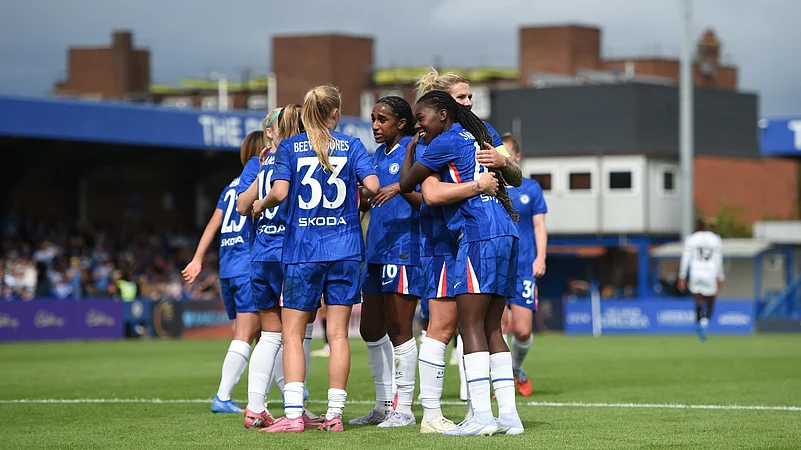
- Chelsea: Front-of-shirt for 2025/26 TBC; Škoda UK confirmed on the back of shirt.
- Everton: Stake.com remains principal sponsor, though under scrutiny.
- Liverpool: Standard Chartered continues as principal partner through 2026/27.
- Manchester United: Snapdragon leads across men and women.
- Manchester City: Etihad Airways remains the long-standing principal partner.
- London City Lionesses: TOGETHXR debuts as front-of-shirt partner with a two-year Nike kit deal.
- Tottenham Hotspur: AIA continues as principal partner, with women’s-specific inventory.
- West Ham United: BoyleSports confirmed as new principal partner, alongside women’s sponsors QuickBooks (sleeve) and Modibodi (back-of-shorts).
Audiences and Metrics
While opening-weekend BARB ratings are not yet published, last season highlighted a trend: as women’s football matches become more widely available, average game audiences dip, but overall reach and viewing hours rise. With the new Sunday noon slot and broader coverage across Sky, BBC, and YouTube, reach—not single-match peaks—will be the defining metric of the 2025/26 season.
The 365247 View
The WSL’s new cycle blends commercial ambition with structural reform. By securing premium media rights, centralizing sponsorship under Two Circles, and creating a Premier League-style ownership model, the league is moving into a sustainable growth phase.
The introduction of wage frameworks and safeguarding measures highlights maturity in governance, while the expansion path signals ambition for competitive depth.
This season is not only about football—it is about proving that the WSL can become a £100m-revenue property within this broadcast cycle, aligning player welfare, financial stability, and global marketability.
For Brands, Businesses and Services, feature in our ecosystem