CREDIT: Jordan from the Long Play
Football’s global rise has been powered by capital, creativity, and competition. But two fast-growing practices—associated-party sponsorships and intra-group transfers inside multi-club ownership (MCO) networks—are testing the sport’s promise of fair play. Both are legal in many jurisdictions. Both can also be engineered in ways that tilt the field.
This piece explains the issues in plain language, illustrates them with recent examples, and outlines a practical framework regulators and clubs can adopt to protect integrity without stifling investment.
1) Associated-Party Transactions: When the Sponsor and the Owner Are Connected
What it is
An associated-party transaction (APT) is a commercial deal—often a sponsorship—between a club and a company linked to that club’s owners. Done at fair market value (FMV), it’s legitimate. Done at an inflated price, it can artificially boost revenue and bend cost-control rules.
A recent flashpoint
- Newcastle United’s front-of-shirt moved from Fun88 to Sela after the Saudi Public Investment Fund (PIF)-led takeover of the club was completed in October 2021. Reports suggested the previous Fun88 deal was worth around £6.5m a year, while the incoming Sela deal was widely reported near £25m a year—illustrating how quickly valuations can jump when ownership and sponsors are connected.
Where the rules stand
- The Premier League first introduced APT and FMV assessment rules in December 2021 (later amended in March 2024) to protect competitive balance.
- In February 2025, a tribunal ruled the League’s sponsorship regulations from 2021–2024 “void and unenforceable,” highlighting how legally complex this area remains. (Subsequent frameworks continue to evolve.)
Why it matters
If FMV is not independently and consistently verified, associated sponsors can overpay, revenues can be overstated, and wage/transfer spending can outstrip rivals who play by tighter market rates.
2) Multi-Club Ownership: Success Story or Financial Engineering?
What it is
In MCO structures, one group owns multiple clubs across leagues. Talent can be developed at one, showcased at another, and sold on—sometimes within the group—creating opportunities and potential loopholes.
A case study: Sávio (Savinho)
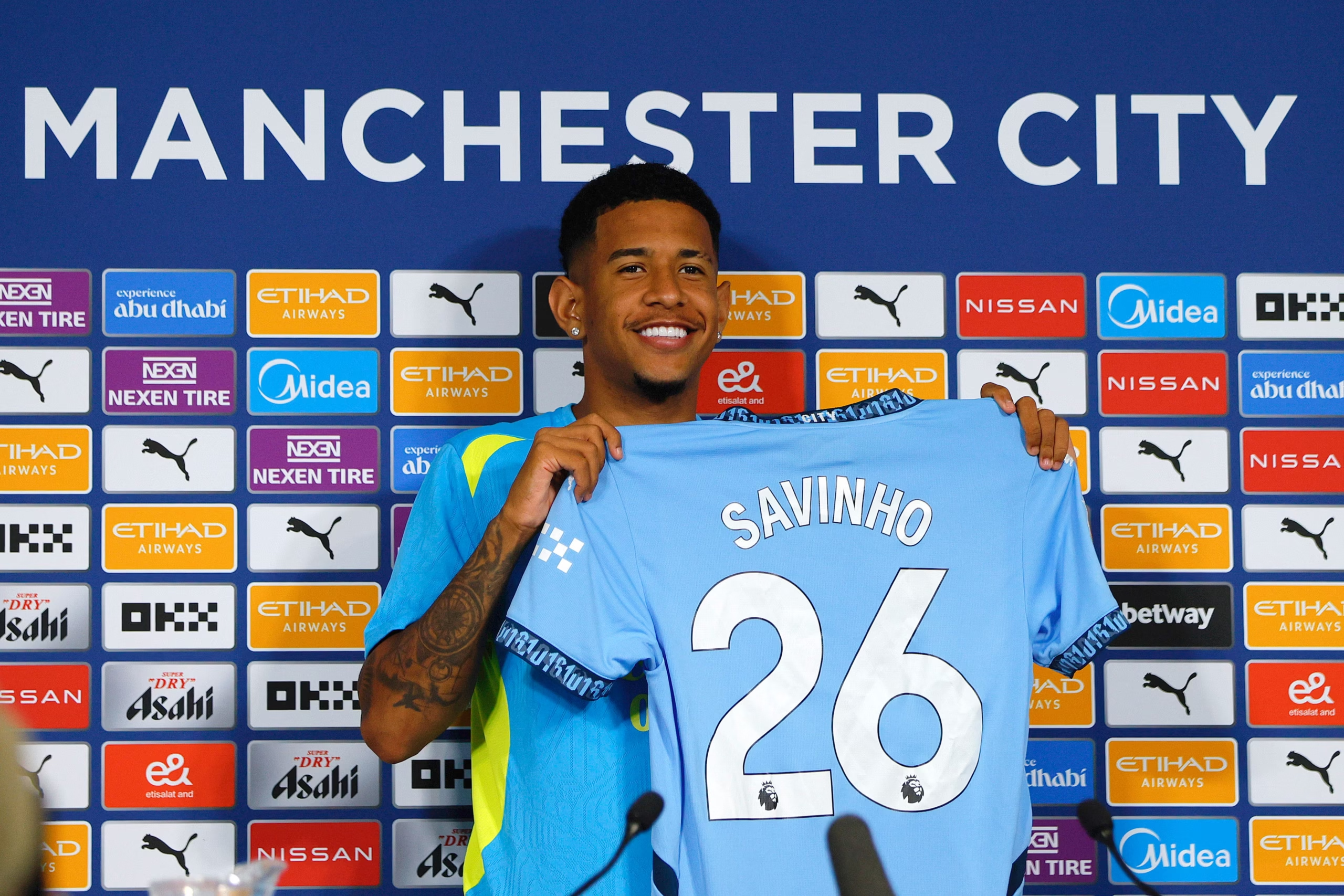
- In June 2022, Atlético Mineiro sold Sávio to the City Football Group (assigned to Troyes) for a fee reported at about €6.5m (plus variables). He didn’t play for Troyes; he was loaned to PSV and then to Girona, both CFG-linked. After a breakout season at Girona, Manchester City completed a transfer for him in July 2024, with outlets reporting an initial €25m fee (plus add-ons).
Why critics worry
On paper, the selling club (here, another team within the same group) can book a sizeable profit, improving its financial position—even when the player never leaves the group’s orbit. It may all be compliant, but the optics raise questions about arm’s-length pricing and whether group economics, rather than open-market bidding, determine value.
3) The Integrity Gap: What’s Missing
- Independent, timely FMV checks. Without consistent third-party valuations, it’s hard to prove a sponsorship or transfer reflects the wider market.
- Transparent intra-group pricing. When clubs share ownership, auditors need clear comparables and rationale—especially if there was no genuine external auction.
- Consolidated oversight. Evaluating each club in isolation can miss the “group effect” that shifts value and risk across the network.
- Legal durability. Rules must be drafted to survive legal challenge and remain predictable for investors.
4) A Practical Framework Regulators Can Deploy
- Independent Valuation Panels
- Pre-clear associated-party sponsorships and intra-group transfers above defined thresholds using audited comparables (audience, geography, rights inventory; age, position, minutes, comps for players).
- Arm’s-Length Proof Pack
- Require evidence of a genuine market process: third-party bids, alternative sponsor outreach, and documented valuation methodologies.
- Group-Level Reporting
- For MCOs, add a consolidated note reconciling intra-group deals: who paid what, when, and how it maps to cash, amortization, and profits across the group.
- Cooling-Off or Escalation Triggers
- If a player moves within the group and is sold externally within a short window, mandate a top-up or re-valuation to reflect open-market price discovery.
- Disclosure & Audit Trails
- Publish high-level summaries of approved APTs and intra-group transfers (bands, not sensitive details) to build confidence with clubs and supporters.
- Rule-Drafting for Resilience
- Align definitions and tests with competition law and prior case rulings so frameworks are defensible and durable.
5) What Responsible Clubs Can Do Now
Even before rules tighten, clubs can lead:
- Adopt internal FMV policies for major sponsorships and transfers; log comps and audit notes.
- Invite multiple bids (or at least formal expressions of interest) for key assets—even if an associated party is in the mix.
- Separate deal teams within MCOs to reduce conflicts and document independence.
- Communicate simply to fans: why this sponsor, why this fee, why this sale price—within confidentiality limits.
Keep the Investment, Close the Loopholes
Football needs both capital and credibility. Associated-party sponsors and multi-club pathways can unlock growth, create jobs, and improve the product—if pricing is honest and competition stays meaningful. The aim isn’t to shut doors; it’s to add glass walls: clear, fair, and built to last.
Partner With Us
Want to feature your brand, business, or service on 365247 — Whether you’re looking to sponsor, collaborate, or build presence within our ecosystem, we’d love to explore it with you.
Submit your interest here
Read the Original Article here
IMAGE: Getty Images