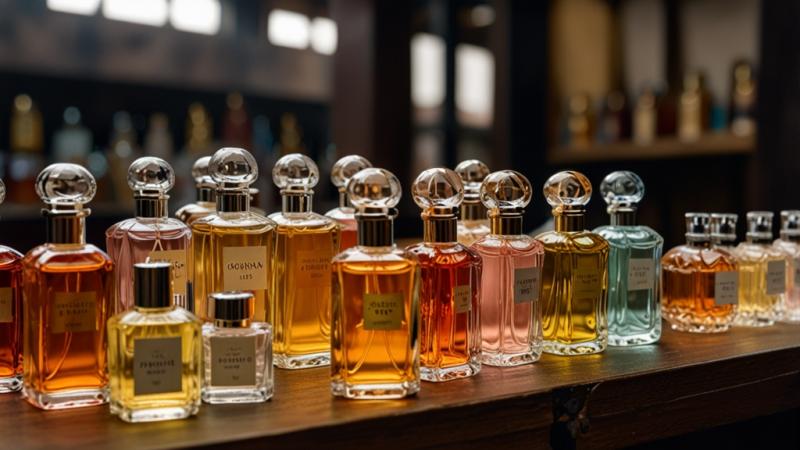
Paris might have smelled like roses this month, but beneath the floral façades at SIMPPAR — the annual global fragrance ingredient expo — a much murkier scent lingers across the fragrance industry.
Held in the French capital, SIMPPAR brought together a global roster of perfumery suppliers — from heritage Sicilian growers to Japanese chemical conglomerates — to showcase the latest in scent innovation. Whether it’s the famed centifolia rose, picked at dawn for optimal aroma, or the latest lab-created synthetic note designed to replicate musk without harming animals, every scent has a story. But behind the scenes, the fragrance world is navigating volatile markets, climate disruptions, and a growing cloud of regulatory and legal scrutiny.
The Invisible Giants of the Perfume World
At the heart of the global fragrance economy lie four dominant players: Givaudan, dsm-firmenich, Symrise, and International Flavors & Fragrances (IFF). Collectively, they control roughly two-thirds of the global market for scent and flavour creation. They don’t just shape luxury perfume lines like Yves Saint Laurent and Hugo Boss; they also develop signature notes for household products like laundry detergents and beverages from brands such as Procter & Gamble and Coca-Cola.
These firms operate largely behind the curtain. Their formulae are guarded as closely as state secrets, and the race to win brand briefs is fierce. While natural ingredients remain important, it’s the in-house development of synthetic molecules— offering consistency, cost-efficiency, and ethical advantages — that has become increasingly lucrative.
Under Investigation: A Scent of Suspicion
Yet, as the business of smell booms, authorities have started sniffing around. Antitrust regulators from the EU, UK, and Switzerland have launched investigations into the sector’s biggest players, focusing on possible price-fixing and market manipulation. Offices have been raided. Civil lawsuits are underway in the United States, and Unilever — one of the world’s largest consumer goods companies — has launched its own legal action, while also investing €100 million to internalise fragrance capabilities.
The impact is being felt. Despite strong Q1 2025 performances across the board (with nearly 6% average year-on-year growth), the four firms have collectively seen their share prices decline by about 9% over the last year.
Fragrance Demand Remains on Fire — Especially with Gen Z
Despite these legal headwinds, the perfume market itself is thriving. According to Circana, fragrance was the fastest-growing beauty category in the U.S. in 2024, with over 80% of Gen Z consumers using perfumes at least three times per week. For companies able to navigate the regulatory environment, it’s a commercial opportunity with enormous upside.
But not everyone is celebrating. Industry veterans are increasingly wary of the rise of “dupes” — affordable imitations of luxury scents that are popular among younger, budget-conscious consumers. While they expand access, they also threaten brand equity and blur the lines between prestige and mass-market.
The global fragrance industry is undergoing a transformation that smells of both opportunity and risk. As lawsuits mount and regulatory pressure builds, the sector’s major players must balance innovation, compliance, and transparency while keeping pace with evolving consumer tastes.
In an industry built on invisibility and emotion, the biggest challenge ahead might be learning how to operate — and thrive — in the spotlight.