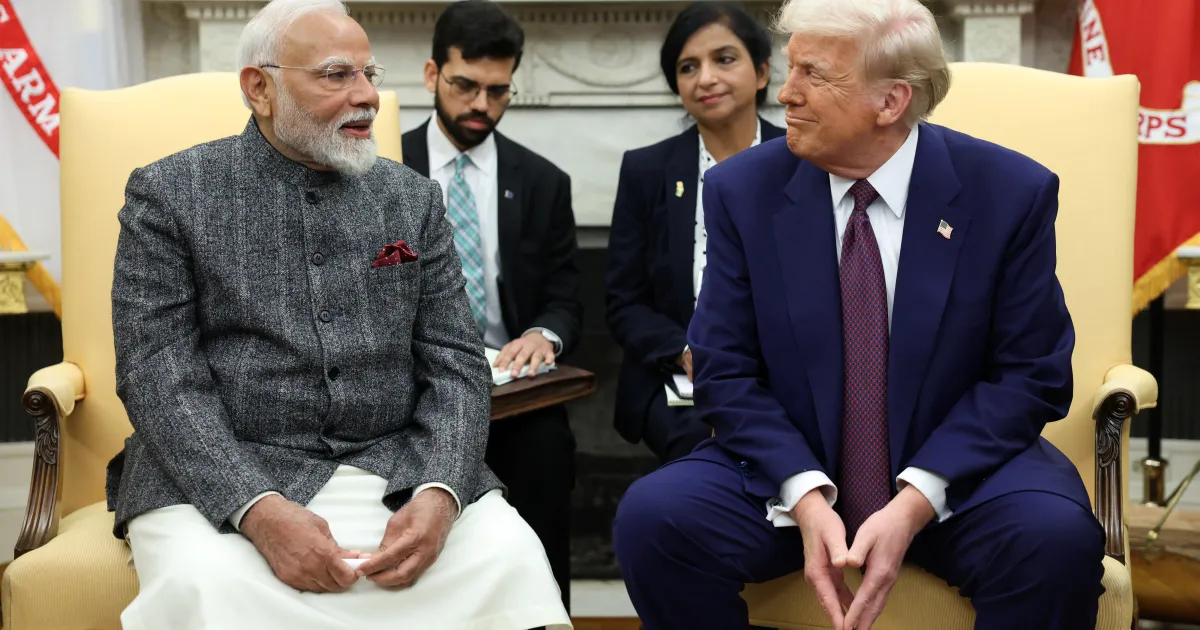
Tensions between Washington and New Delhi are flaring once again—this time over India’s continued imports of Russian oil. The White House has issued a strong statement declaring that Russia’s actions in Ukraine pose an ongoing threat to U.S. national security and foreign policy. As a result, the Biden administration is preparing to implement broader economic measures, including potential secondary sanctions and tariff hikes.
Russian Oil: The Core of the Dispute
At the heart of the dispute is India’s growing reliance on discounted Russian crude. According to global trade platform Kpler, Russia now accounts for over 35% of India’s oil imports, making it the country’s largest supplier. During the first half of 2025, India purchased approximately 1.75 million barrels per day from Russia.
While India has defended these imports as essential for maintaining domestic energy security, the U.S. sees them as undermining global efforts to isolate Moscow economically.
Tariff Fallout: A Direct Hit to Indian Exports
The U.S. government is reportedly considering imposing a steep 50% tariff on a range of Indian exports, including:
- Textiles
- Gems and jewellery
- Auto parts
- Seafood
Notably, electronics and pharmaceuticals—two categories where India also holds a strong export position—will remain exempt from the proposed tariffs, at least for now.
Trade experts warn that these new duties could reduce India’s exports to the U.S. by as much as 40–50%, delivering a major blow to sectors that employ millions.
India Pushes Back
India’s foreign ministry has described the threat as “unjustified and unreasonable,” emphasizing that it began importing Russian energy only after traditional suppliers diverted exports to Europe. Officials also noted that the U.S. had initially encouraged such diversification during the early days of the conflict.
At the policy level, Delhi has urged calm and strategic patience. Ajay Srivastava, former Indian trade official and head of the Global Trade Research Initiative (GTRI), advised against immediate retaliation. “India should remain calm and avoid countermeasures for at least six months. Any serious trade talks cannot happen under pressure or mistrust,” he said.
The Bigger Picture: Global Sanctions and Strategic Realignment
The U.S. is not only focused on India. It has signaled plans to monitor all major buyers of Russian oil and take further action where necessary. This aligns with past enforcement patterns, such as secondary sanctions imposed on buyers of Venezuelan oil.
Despite their previous camaraderie—marked by joint political rallies and reciprocal diplomatic gestures—the India-US trade relationship appears to be entering a colder phase. The Federation of Indian Export Organisations has labeled the move “extremely shocking,” warning that over half of India’s exports to the U.S. could be impacted.
At the same time, critics point out the inconsistency of U.S. policy, noting that America itself conducted over $3.5 billionin trade with Russia last year, despite imposing multiple rounds of sanctions.
Partner With Us
Want to feature your brand, business, or service on 365247 — Whether you’re looking to sponsor, collaborate, or build presence within our ecosystem, we’d love to explore it with you.
Submit your Interest Here
IMAGE: Reuters