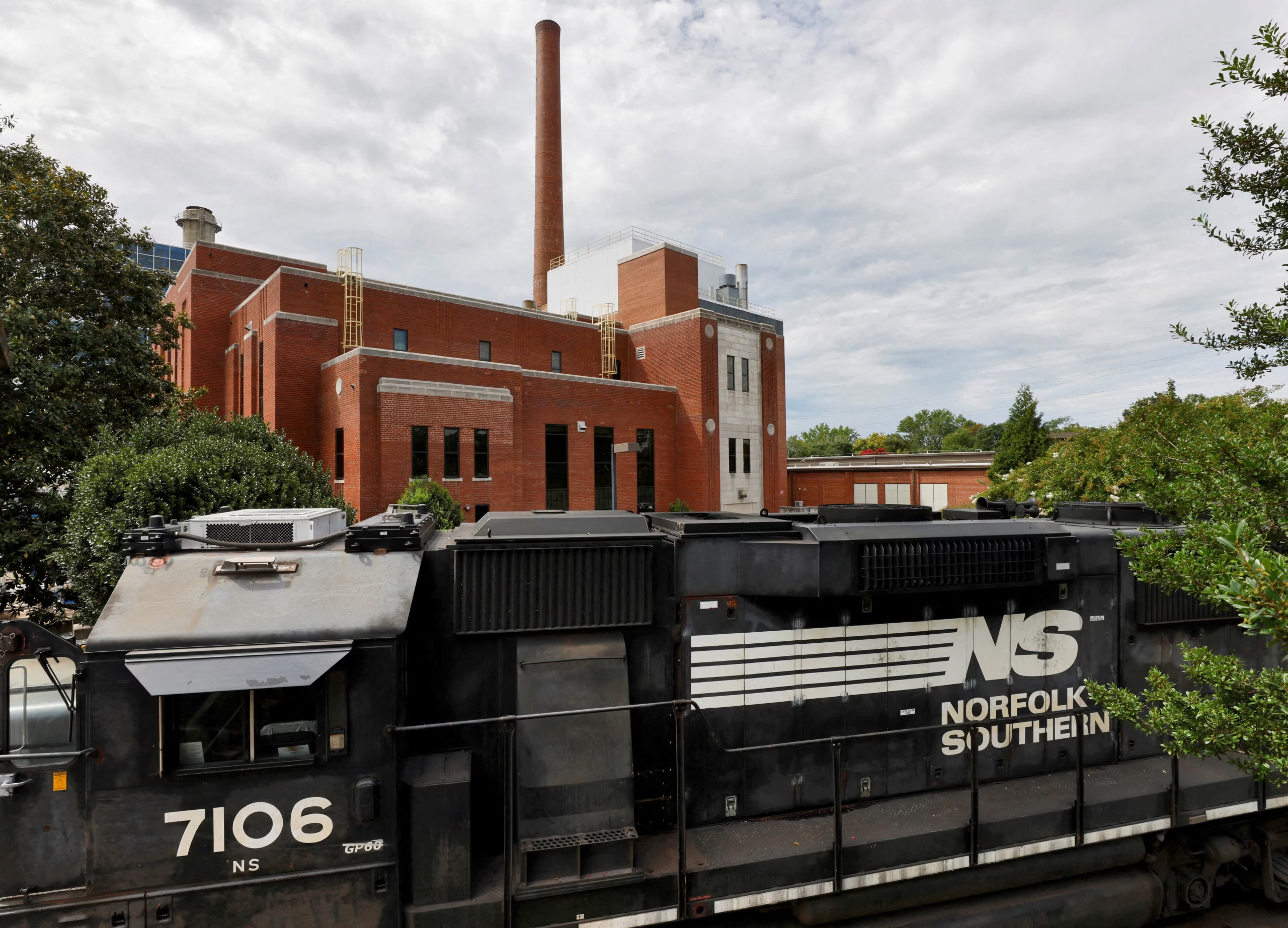
In a move that could redefine the logistics landscape of North America, Union Pacific has proposed an $85 billion acquisition of rival Norfolk Southern—a deal that would create the first coast-to-coast freight rail operator in the United States.
If approved, the transaction would not only be the largest railroad merger in history, but also compress the number of major Class I railroads in North America from six to four, signaling a new era of hyper-consolidation in freight infrastructure.
Coast-to-Coast Ambitions
Union Pacific, headquartered in Omaha, already dominates freight movement across the western U.S. Merging with Norfolk Southern—whose 19,500-mile rail network spans 22 states in the East—would result in an integrated system valued at a combined $250 billion in enterprise value. The companies estimate $2.75 billion in annualized synergiesfrom the integration.
At a price of $320 per share, the offer represents an 18.6% premium over Norfolk Southern’s closing value when merger speculation first surfaced in July. The two railroads confirmed that formal merger discussions are well underway and expect to file an application with the U.S. Surface Transportation Board (STB) within six months.
Regulatory Headwinds and Labor Pushback
Despite the bold financial and operational logic, the merger will face intense regulatory scrutiny, with historical precedent offering a cautionary tale. Union Pacific’s 1996 merger with Southern Pacific led to widespread delays and congestion, especially in the Southwest. Labor unions, including SMART-TD, the largest railroad operating union in North America, have already voiced concerns over potential job losses, rate hikes, and service disruptions.
STB Chairman Patrick Fuchs, appointed in early 2025, has signaled openness to a more streamlined review process. Still, insiders suggest a formal review could take up to 22 months, even under accelerated conditions.
Competitive Ripple Effects
The deal has already triggered competitive reactions. Rivals BNSF Railway (owned by Berkshire Hathaway) and CSXare reportedly exploring strategic merger options of their own. STB officials are said to be preparing for multiple megamerger proposals, potentially leading to the most significant industry reshuffle since the Canadian Pacific–Kansas City Southern merger in 2023.
That $31 billion deal, which connected Canada, the U.S., and Mexico via a single line, set the stage for today’s merger wave—despite facing fierce regulatory pushback over competition and employment impacts.
Industry Under Pressure
North America’s freight rail sector is navigating a volatile period marked by:
- Unpredictable freight volumes
- Rising labor and fuel costs
- Mounting shipper frustration over service reliability
Consolidation, in this context, is both a response to economic stress and a preemptive strike to control pricing power and network scale.
Partner With Us
Want to feature your brand, business, or service on 365247 — Whether you’re looking to sponsor, collaborate, or build presence within our ecosystem, we’d love to explore it with you.
Submit Your Interest Here
IMAGE: Reuters