Could a historic transcontinental rail network be taking shape in the U.S.?
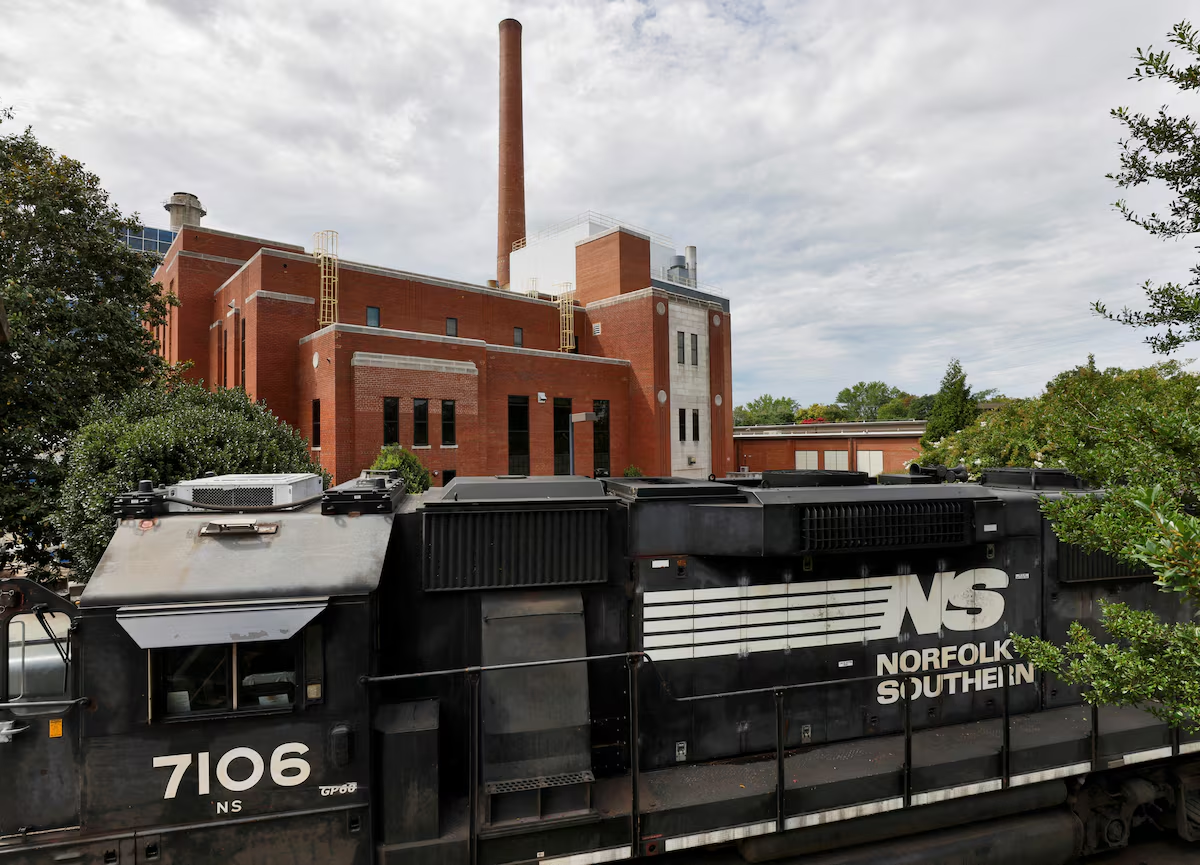
Union Pacific, the largest freight rail operator in the United States, is reportedly exploring the acquisition of Norfolk Southern in what could become a transformative $200 billion consolidation of the American rail industry. If successful, the deal would create the country’s first coast-to-coast, single-line freight railroad — reshaping the logistics landscape and challenging long-standing operational divides.
A New Era of Rail Connectivity?
While discussions remain in preliminary stages, insiders suggest the intent is bold: unifying major western and eastern freight corridors under one operator to reduce logistical friction, cut costs, and boost efficiency for major industries like agriculture, chemicals, steel, and manufacturing.
Union Pacific CEO Jim Vena has previously hinted that a transcontinental model could solve long-standing bottlenecks — most notably, Chicago — where carriers traditionally switch freight, often leading to costly delays and inefficiencies.
The merger would enable direct, uninterrupted service across thousands of miles of U.S. territory, a dream scenario for shippers but a potential red flag for regulators.
Regulation: The Inevitable Roadblock
Any move of this magnitude will not escape the scrutiny of U.S. regulators. A merger of this scale could trigger anti-competition concerns, especially in an industry that has already shrunk from over 100 Class I railroads in the 1950s to just six today.
Shippers who rely on pricing leverage between carriers may resist any further consolidation. Industry observers expect lobbying efforts from sectors such as grain, steel, and chemicals to intensify as the conversation progresses.
Analysts warn that despite the potential efficiencies, reduced competition could lead to higher costs and fewer service options for shippers — something that government agencies like the Surface Transportation Board will closely assess. A regulatory approval process, if initiated, could take up to two years.
Norfolk Southern: From Turbulence to Opportunity
Norfolk Southern has had a turbulent few years, marked by executive shakeups, activist investor pressure, and the high-profile East Palestine train derailment — which resulted in an estimated $1.4 billion in damages. However, a tie-up with Union Pacific could represent a strategic reset for the company, aligning it with a more robust national network and steady leadership.
Investors responded cautiously to the speculation: Union Pacific shares dipped slightly, while Norfolk Southern saw a modest increase.
Competitive Chain Reactions?
Increased M&A activity in the rail sector is nothing new. Canadian Pacific’s 2023 acquisition of Kansas City Southern — after beating out Canadian National — set a precedent for large-scale cross-border rail consolidation. That deal established the first rail operator to span Canada, the U.S., and Mexico.
Should Union Pacific and Norfolk Southern proceed, market watchers expect pressure to mount on the remaining major U.S. players — BNSF (owned by Berkshire Hathaway) and CSX — to consider similar moves.
Strategic Stakes: Beyond the Tracks
A successful merger would cement Union Pacific’s dominance in the U.S. market, pushing annual revenues well beyond the $24 billion mark it reached in 2024. For Norfolk Southern, it could offer a smoother operational future after years of internal strife.
For the freight industry, the outcome of this potential deal could define the next generation of rail logistics — one where fewer players control larger networks, with greater efficiency but higher regulatory oversight.
As the rails shift beneath America’s supply chain, this may just be the opening chapter in a new wave of transportation consolidation.