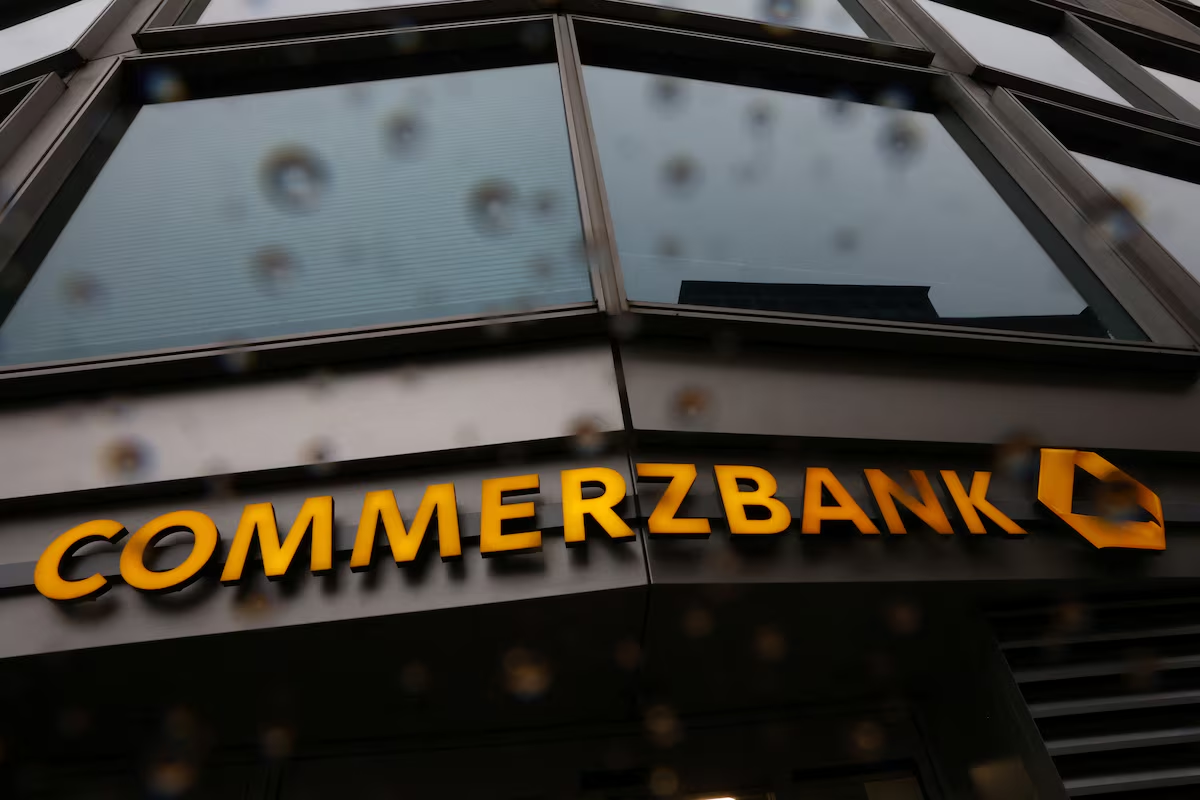
In a bold strategic move aimed at strengthening its position in European banking, UniCredit has doubled its stake in Commerzbank, escalating pressure on German regulators and stakeholders to consider a potential merger between the two financial institutions.
The Italian banking giant announced that it has converted derivatives representing approximately 10% of Commerzbank’s equity into direct shareholding—bringing its total voting stake to roughly 20%. UniCredit also confirmed it holds derivatives for another 9% of Commerzbank, indicating its intent to push that figure closer to the regulatory threshold of 29.9%, a level that allows maximum influence without triggering a formal takeover bid under German law.
Strategic Background: Pressure Meets Resistance
UniCredit first emerged as Commerzbank’s largest private shareholder in September, and its growing stake has since become a flashpoint in European banking politics. Despite obtaining European Central Bank approval earlier this year to raise its stake, the move has been met with stiff resistance from the German government, Commerzbank’s leadership, and labour unions.
Commerzbank issued a pointed response to the latest development, stating the share conversion was “not coordinated” with the bank and reaffirming its commitment to an independent business model. The German trade union Verdi, a long-standing opponent of any merger, described UniCredit’s latest action as “hostile takeover activities.”
Why It Matters
The developments come amid renewed conversations about cross-border banking consolidation in Europe, where regulatory fragmentation and domestic politics have historically hampered such efforts. UniCredit CEO Andrea Orcel is reportedly aiming to spark formal dialogue with Berlin and Commerzbank stakeholders, positioning the share conversion as a trust-building measure to back his long-term vision.
Orcel has long advocated for merging Commerzbank with UniCredit’s German unit HVB, arguing that the combination would strengthen European banking competitiveness and serve the interests of all parties—provided the deal gains broad support.
What Comes Next?
With a declared intention to eventually convert the remaining 9% of synthetic exposure into shares, UniCredit could soon hold a 29%+ voting stake in Commerzbank, giving it enormous sway in shareholder meetings and potential influence over corporate strategy. Still, a full acquisition would likely trigger deeper regulatory scrutiny and more intense political blowback from Berlin.
UniCredit, for now, maintains that its Commerzbank investment could remain a financial stake or be divested if progress on integration stalls. However, the message from Milan is clear: Orcel is not backing down—and this move is less about financial return and more about strategic intent.
IMAGE: Reuters