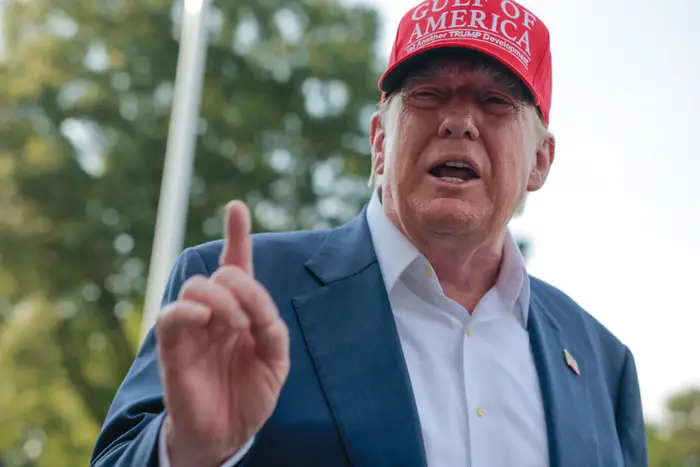
In a landmark shift poised to redefine the American economic landscape, a new tax and spending bill—championed by former President Donald Trump—has passed by razor-thin margins, sending ripples across nearly every major U.S. industry. While it promises sweeping corporate tax cuts and continued deregulation, the bill sharply differentiates between beneficiaries and sectors now left exposed.
From fossil fuels and private equity to tech, renewables, and healthcare, the legislation reveals a clear prioritization of certain industries over others, indicating the ideological and financial direction of the Trump administration’s economic policy.
Private Capital and Fossil Fuels: Clear Winners
At the heart of the bill lies a major win for the $13 trillion private capital industry. Despite Trump’s earlier promises to eliminate the carried interest loophole, the final version leaves it untouched. This provision allows fund managers at firms like Blackstone and Apollo to pay significantly lower capital gains taxes on their earnings, rather than the higher ordinary income tax rate.
The bill also extends favorable deductions for debt interest, depreciation, and amortization—critical for leveraged buyouts and financial engineering in PE-backed firms.
For the fossil fuel sector, and especially metallurgical coal producers, the bill delivers a rare boost. A new tax relief measure allows these firms to claim 2.5% of their costs as a tax deduction through 2029, amid ongoing concerns about price distortions in global coal markets.
Renewable Energy and Silicon Valley: Strategic Setbacks
The legislation is a marked departure from Biden-era clean energy incentives. Tax credits for solar and wind power are being phased out after September. The EV credit system under the Inflation Reduction Act will be dismantled, with home solar installation benefits ending in 2025.
Battery manufacturers will still have access to tax credits, but under stricter “Made in America” conditions, making qualification harder and raising concerns about project delays.
Tesla, one of the most exposed players, faces losses across multiple fronts—battery production, supercharger infrastructure, and emissions credit revenue—all of which are hit by the policy changes.
In the tech world, the AI industry failed to secure a regulatory freeze. A proposed federal moratorium on state-level AI rules was rejected, meaning companies such as OpenAI, Anthropic, Google, and Meta must now navigate a fragmented regulatory landscape. New York is set to impose mandatory AI safety disclosures, and other states may follow suit.
Defence, Space, and Retail: Strategic Gains
The U.S. defence sector emerges as one of the bill’s biggest beneficiaries, securing an additional $150 billion in funding—pushing the Pentagon’s budget closer to $1 trillion. This includes $23 billion for the proposed “Golden Dome” missile defense system and $28 billion for advanced shipbuilding.
Major winners include:
- Lockheed Martin, RTX, and Anduril (missile systems)
- Palantir (defense-tech and immigration support)
- HII and General Dynamics (shipbuilding)
Private space firms such as SpaceX and Blue Origin also gain from a new provision allowing spaceports to be funded through the municipal bond market.
Brick-and-mortar retail chains gain ground with the phasing out of tariff exemptions (under $800 in value) for international e-commerce shipments—a major disruption for fast-fashion platforms like Temu and Shein, and a protective barrier for domestic retailers.
Food, Healthcare, and Universities: Key Cuts
The bill significantly cuts federal food aid under SNAP by $9 billion in the coming year. While some proposed reductions were reversed in final negotiations, grocers operating in low-income areas could struggle, potentially impacting food and beverage companies like Conagra, Kellogg, and Kraft Heinz.
Healthcare programs also saw reductions—though not as severe as early drafts. Cuts to Medicaid are projected to leave nearly 12 million more Americans uninsured by 2034. While large hospital chains such as Tenet and HCA have seen stock price boosts, smaller regional hospitals may not survive the tightening.
Higher education is also hit. The bill introduces a new endowment tax of up to 8% on investment returns at wealthier institutions with over $2 million in endowment per student. Harvard, for instance, could pay over $260 million annually. Combined with student loan revisions and reductions in healthcare and nutrition programs, public universities may see indirect funding shortages from strapped state budgets.
The Business of Picking Sides
This legislation marks a return to Trump-era economic priorities—favoring traditional energy, defense, private capital, and domestic manufacturing, while pulling back on support for renewables, Silicon Valley, and social safety nets.
For global investors and corporates, this bill signals:
- A policy pivot toward legacy sectors and asset-heavy industries
- The strategic rearming of U.S. defence and space as national economic drivers
- Headwinds for ESG-centric investing, especially in clean energy and AI
The Trump administration’s “big, beautiful bill” is more than a tax reform package. It’s a realignment of America’s industrial strategy—one that empowers extractive and financial capital while reining in the next-gen technologies that defined the last decade.
As businesses re-evaluate their U.S. operations, partnerships, and political exposure, one thing is clear: the age of sector-neutral policymaking is over.
IMAGE: Getty Images