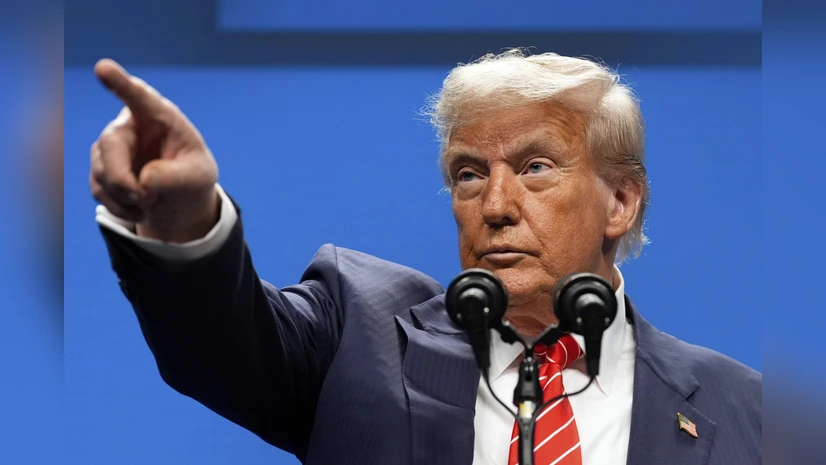
In a dramatic escalation of his ongoing feud with mainstream media, Donald Trump has filed a $10 billion defamation lawsuit against The Wall Street Journal and its owner Rupert Murdoch, following the publication of a controversial story linking the former U.S. president to deceased financier Jeffrey Epstein.
The lawsuit was filed in federal court in Miami just one day after the Journal’s report alleged the existence of a suggestive letter associated with Trump in a birthday album created for Epstein in 2003. The article, which Trump has vehemently denounced as “fabricated” and “defamatory,” has reignited public debate over transparency, political power, and media accountability.
Timing Amid DOJ Movements
The legal action comes at a particularly sensitive moment. On the same day, the U.S. Department of Justice moved to unseal grand jury transcripts related to Epstein’s sex trafficking case and that of his longtime associate, Ghislaine Maxwell. This follows backlash from both the public and segments of Trump’s support base after the administration indicated it would not release additional documents related to the Epstein investigation—despite earlier promises of transparency.
This apparent U-turn has caused unease within conservative circles, with some of Trump’s vocal supporters questioning why more evidence is being withheld and whether critical details are being deliberately buried.
Lawsuit Claims ‘Calculated Harm’
According to the complaint filed by Trump’s legal team, the Journal article included what they described as “knowingly false and malicious” claims that were “intended to inflict reputational and financial damage.” Central to the report was a hand-drawn illustration of a nude woman framing a letter purportedly written by Trump, which allegedly concluded with the line, “Happy Birthday – and may every day be another wonderful secret.”
Trump flatly denied authorship of the note and asserted that he personally warned Murdoch and Journal editor Emma Tucker that the material was fraudulent before publication. The lawsuit also criticizes the Journal for not releasing the full image of the letter or disclosing how the paper obtained it.
In a statement on Truth Social, Trump cast the legal filing as a broader move against what he terms the “Fake News Media,” noting that it follows earlier legal disputes with networks such as ABC and CBS, which resulted in settlement agreements.
Media Response: Standing Ground
Dow Jones, the parent company of the Journal, stood by its reporting. A spokesperson reiterated confidence in the article’s integrity and vowed to defend the publication in court. The newspaper has so far declined to publish the full contents of the disputed letter, citing sourcing protocols and the sensitive nature of the material.
Epstein Files and Public Pressure
Parallel to Trump’s lawsuit, federal prosecutors have urged the court to allow the release of transcripts from grand jury proceedings related to both Epstein and Maxwell. The move signals renewed interest from the Justice Department in increasing transparency around one of the most high-profile criminal cases involving elite figures in recent history.
Still, critics remain skeptical. Earlier announcements about releasing more Epstein-related documents were met with enthusiasm by parts of the public and media, only to fizzle when initial disclosures failed to produce any significant new information. Attorney General Pam Bondi had previously hinted at a broader data dump, which now seems unlikely.
Balancing Act: Transparency vs Privacy
Deputy Attorney General Todd Blanche stated in court filings that any release of transcripts would come with appropriate redactions to protect the identities and privacy of victims. “Transparency,” he wrote, “must not override legal obligations to shield those who were harmed.”
That said, no definitive timeline has been offered for when—or even if—additional evidence will be made public. Given the sensitive nature of grand jury materials and the legal complexities involved, the unsealing process is likely to take months, if not longer.
Strategic Takeaway
This case isn’t just a media skirmish—it’s a flashpoint at the intersection of justice, political influence, and the role of media in democracy. Whether Trump’s lawsuit is a legitimate grievance or a pressure tactic, it signals the continued weaponization of defamation laws amid rising distrust in traditional media institutions. At the same time, the Epstein case remains a litmus test for how governments manage transparency without compromising victim protection—especially when the stakes involve powerful elites.
IMAGE: TPI