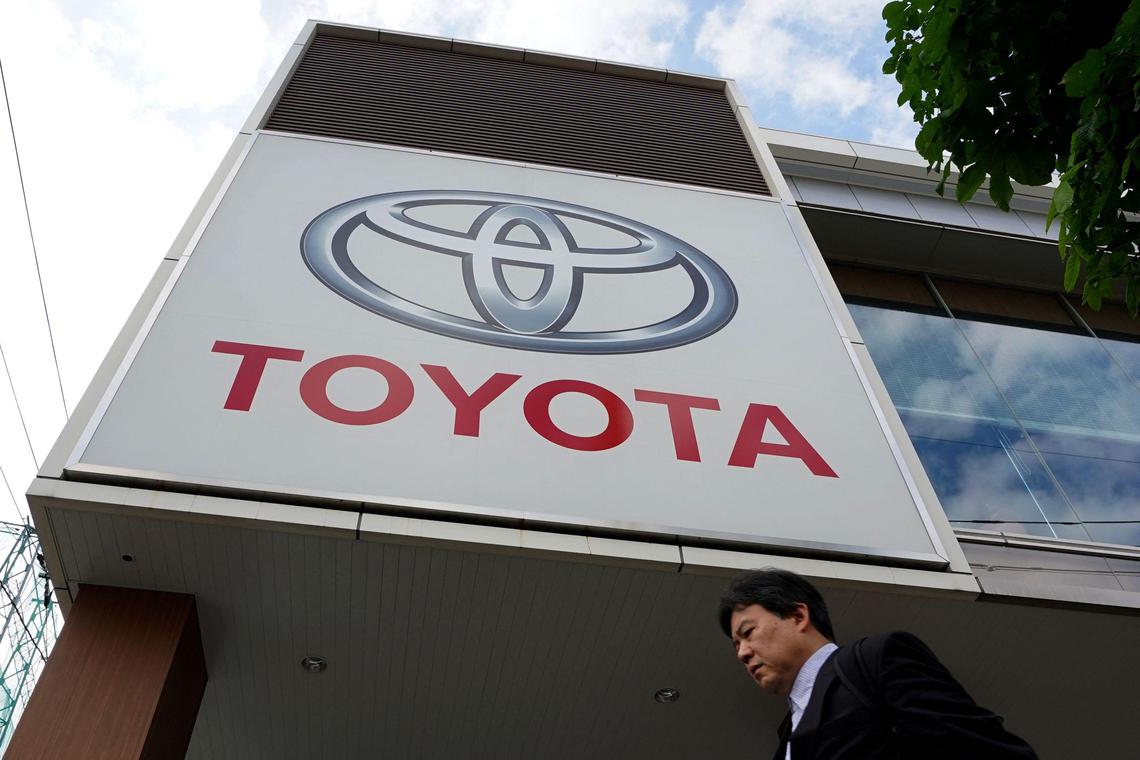
Toyota is proving once again why it’s still the global automotive benchmark.
For the third month in a row, the world’s largest carmaker broke monthly sales records—thanks to surging demand for hybrids in its three most critical markets: the United States, China, and Japan.
In May alone, Toyota’s global group sales (which include Daihatsu and Hino) hit 955,532 units, representing 8% year-on-year growth, while global production stood at just over 906,000 vehicles.
What’s powering this resilience? A combination of strong hybrid adoption, market trust in the Toyota and Lexus brands, and a strategic approach to pricing amid rising geopolitical risk.
Where Toyota Is Winning
- North America: Sales surged by 11%, driven largely by demand for hybrid models and crossovers, with U.S. consumers seeking better fuel efficiency amid fluctuating gas prices and economic uncertainty.
- China: A 7% jump in unit sales in one of the world’s most competitive EV and hybrid markets shows Toyota is successfully navigating Chinese consumer preferences despite strong domestic competition.
- Japan: A home-market boost of over 4% shows Toyota is capitalizing on domestic loyalty and smart portfolio adjustments to meet consumer demand.
Trade Tensions Loom Large
Despite the positive momentum, Toyota—like many Japanese automakers—is operating under the shadow of escalating trade tensions.
The Biden administration’s continuation of former President Trump’s 25% tariff on imported vehicles has become a key pain point. Toyota alone has projected a ¥180 billion (~$1.2 billion) hit to its operations due to these tariffs in just April and May.
Other Japanese giants aren’t faring much better:
- Nissan reported a 6% drop in sales and a 17% cut in output for May.
- Honda saw global sales fall 4%, with production slipping 6%.
- Mazda and Subaru have even opted not to publish profit forecasts amid the volatility.
Japan’s chief trade negotiator, Ryosei Akazawa, has openly opposed the tariff framework, noting that Japanese manufacturers already produce more cars in the U.S. than they export there—3.3 million units built locally versus 1.37 million shipped.
Pricing Response: A Tactical Adjustment
Toyota has announced a price revision on select U.S. models beginning next month, with hikes exceeding $200 in some cases. The company cites market dynamics and competitive positioning, although the move is clearly also aimed at absorbing some of the ongoing tariff impact.
This follows similar announcements by Mitsubishi Motors, suggesting a broader pricing recalibration across Japanese OEMs doing business in the U.S.
Market Confidence Restored
In a strong vote of confidence, Toyota Chairman Akio Toyoda was reappointed during the company’s annual general meeting with 97% shareholder approval. After several years of wavering investor sentiment, this signals a restored belief in Toyota’s leadership, resilience, and strategic direction amid global disruptions.
The Bigger Picture
Toyota’s performance illustrates the paradox facing global automotive players today: operational excellence and product strength can still thrive, even as political headwinds threaten to reshape the business environment.
For Toyota, it’s a balancing act between long-term innovation—particularly in hybrid technology—and short-term maneuvering through volatile trade policies.
The next chapter will be shaped not just by what happens on the showroom floor, but in Washington, Tokyo, and Beijing.
Join the 365247 Community for sharp, strategic takes on mobility, trade, and global innovation.
IMAGE: Bloomberg