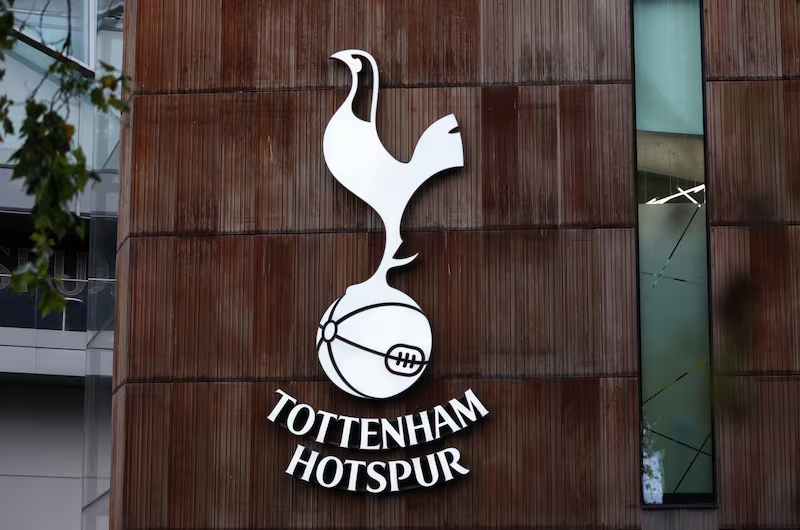
Tottenham Hotspur have moved quickly to shut down speculation over their future ownership, publicly confirming that the club is not for sale after receiving two preliminary takeover approaches.
Context: Levy’s Departure Sparks Rumors
The dramatic events began with the surprise departure of Daniel Levy as executive chairman last Thursday. Levy, a central figure at Spurs for over two decades, was removed following a review of the club’s on-pitch performances. His exit immediately reignited speculation that ENIC—the investment vehicle controlling roughly 87% of Tottenham—could be preparing to sell.
ENIC is itself predominantly owned by the Lewis family, who have historically maintained a tight hold over the club. Their decision to dispense with Levy was framed internally as a footballing decision rather than a signal of a looming sale.
The Approaches Rebuffed
Tottenham’s official statement confirmed they had received and unequivocally rejected two preliminary expressions of interest:
- PCP International Finance, the company led by Amanda Staveley, best known for her pivotal role in the Saudi Public Investment Fund’s takeover of Newcastle United in 2021.
- A consortium of investors led by Dr. Roger Kennedy and Wing-Fai Ng, an experienced financier with extensive ties across Asia.
The club’s board and ENIC declared they had no intention of entertaining any such offers, reinforcing their position that Tottenham is not for sale.
Takeover Code Deadline
Although Spurs rejected the initial inquiries, UK takeover rules require that both interested parties now face a deadline. By 12 p.m. ET on October 5, they must announce whether or not they intend to make a formal offer. If no bid materializes, they will be blocked from returning with another approach for six months.
Notably, this requirement arises because 13% of Tottenham shares are publicly traded—making the club partially subject to the UK Takeover Code.
Ownership Resistance and Market Dynamics
For Amanda Staveley, Spurs would represent another entry point into Premier League ownership after her departure from Newcastle in July 2024. For Ng and Kennedy, Spurs could have been a vehicle to expand Asian investment into elite football.
However, Tottenham’s outright rejection highlights three key dynamics:
- ENIC’s long-term view: The Lewis family shows no signs of exiting their majority control.
- Market value of Premier League clubs: With Liberty Media, sovereign wealth funds, and global investors raising valuations, existing owners have little incentive to sell unless at extraordinary premiums.
- Club strategy reset: The change in leadership was intended as a football-first decision—resetting Spurs’ performance trajectory rather than packaging the club for sale.
The 365247 View
Tottenham’s announcement is not just a defensive posture—it’s a strategic signal. The club is positioning itself to retain control in an era where Premier League assets are attracting record-breaking valuations. For potential investors, Spurs represent one of the most attractive opportunities outside of the very top tier, with:
- A world-class stadium and infrastructure
- A global brand identity with untapped commercial upside
- London market positioning, attractive to both U.S. and Middle Eastern capital
But ENIC’s firm stance suggests Tottenham is playing the long game, focusing on on-field success as the driver of future enterprise value rather than cashing out in the near term.
What This Means for Investors and Clubs
At 365247, we see Tottenham’s rejection as emblematic of a new era in football ownership:
- Investors must recalibrate: With valuations climbing and majority owners reluctant to sell, future deals will likely involve minority stakes, strategic partnerships, or joint ventures rather than full takeovers.
- Clubs must prepare for suitors: Even if “not for sale,” clubs should have playbooks ready for handling inbound interest, balancing valuation protection with long-term brand strategy.
- Transparency will matter: Public ownership (even minority shares) means clubs fall under governance frameworks like the Takeover Code, making clarity of communication critical.
For Brands, Businesses and Services, feature in our ecosystem
IMAGE: Getty Images