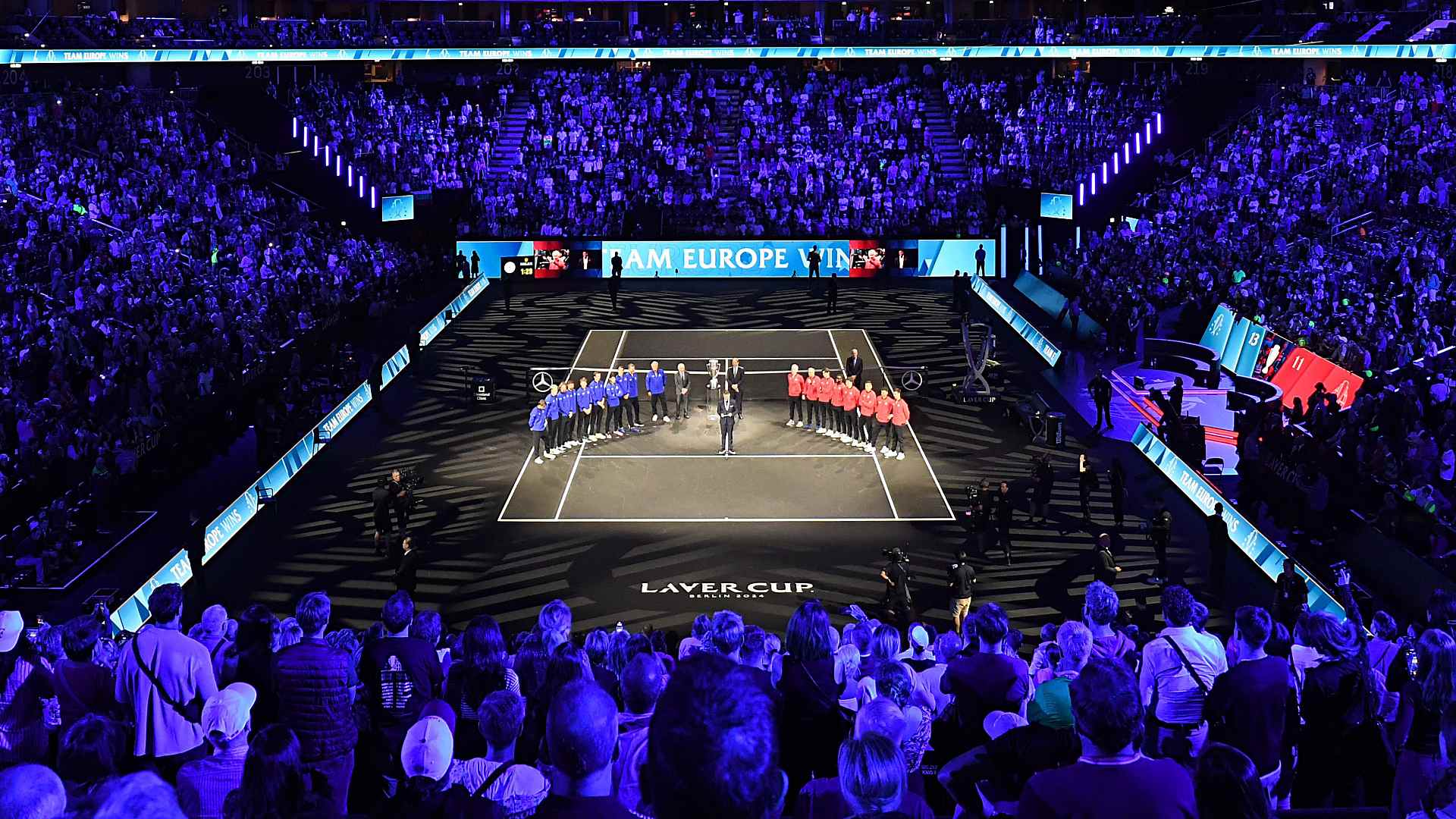
This weekend, more than 80,000 fans will pour into San Francisco’s $1.4 billion Chase Center. But they aren’t there to watch the Golden State Warriors or even Stephen Curry — they’re coming for tennis.
In just a few short years, the Laver Cup has gone from Roger Federer’s vision to one of the most commercially successful events in global sport. Created in 2017 by Federer and Tony Godsick, the three-day competition now generates more than $50 million in revenue across ticketing, sponsorship, and media rights — a remarkable feat for a new property in a crowded sports marketplace.
The Format: Simple Yet Strategic
The Laver Cup’s appeal lies in its team-based format: six top men’s players from Europe face off against six from the rest of the world. Points escalate in value across three days (1 point Friday, 2 points Saturday, 3 points Sunday), ensuring the result is always live until the final day.
Captains Yannick Noah (Europe) and Andre Agassi (World) combine automatic qualifiers with captain’s picks, creating dream-team lineups that feature global stars playing as teammates rather than rivals. This year, six of the top 12 ATP players are competing, including Carlos Alcaraz, Alexander Zverev, Taylor Fritz, and Casper Ruud.
Commercial Powerhouse
The Laver Cup is not only sold out again this year — it has also smashed its previous ticket revenue record. Fans can choose between $44 day passes or $30,000 VIP lounges, with ticketing alone generating over $20 million.
Sponsors have been equally enthusiastic. Rolex, Mercedes-Benz, and UBS were founding partners, but the event has since expanded its roster to include Alipay+, Moët & Chandon, Uniqlo, and Boss. Notably, more than half of today’s sponsors have no direct ties to Federer, proving the Laver Cup has built sustainable value beyond its founder.
Why It Works
- Federer’s Brand Halo: The tournament reflects Federer’s values of elegance, competitiveness, and class.
- Unique Fan Experience: A black court, digital boards, and immersive fan zones make the product visually distinct.
- Guaranteed Competitiveness: As an official ATP event, matches count toward player rankings — giving the event credibility.
- Global Reach: Broadcasting deals extend worldwide, surpassing many standard ATP events.
The Host City Effect
Cities worldwide are now competing fiercely for hosting rights. Past editions in Prague, Chicago, Geneva, Boston, London, and Berlin have shown why: economic studies suggest the Laver Cup generates an average of $58.5 million in local economic activity, with some editions reaching nearly $90 million and creating hundreds of jobs. Unlike many events, the Laver Cup drives true “net-new” spending because fans fly in from across the globe rather than just repurposing local entertainment budgets.
365247 Perspective
The Laver Cup provides a blueprint for building the next great sports property:
- Anchor the event with global superstars, but design it to outlast them.
- Create scarcity — a three-day, once-a-year format ensures every ticket feels premium.
- Balance tradition with innovation — paying homage to Rod Laver while introducing bold visuals and modern economics.
- Elevate the host city proposition — by turning hosting rights into a highly competitive bidding process with measurable ROI.
The lesson for federations, leagues, and rights-holders is clear: there is still room for new global sports traditions — if they blend authenticity, innovation, and flawless execution.
Closing Thought
The Laver Cup began as Federer’s tribute to tennis history. Today, it has become a sustainable, scalable business — one that cities, brands, and fans alike are fighting to be part of.
The real question now is: who will replicate this model next — and in which sport?
For Brands, Businesses and Services, feature in our posts
IMAGE: ATP Tour