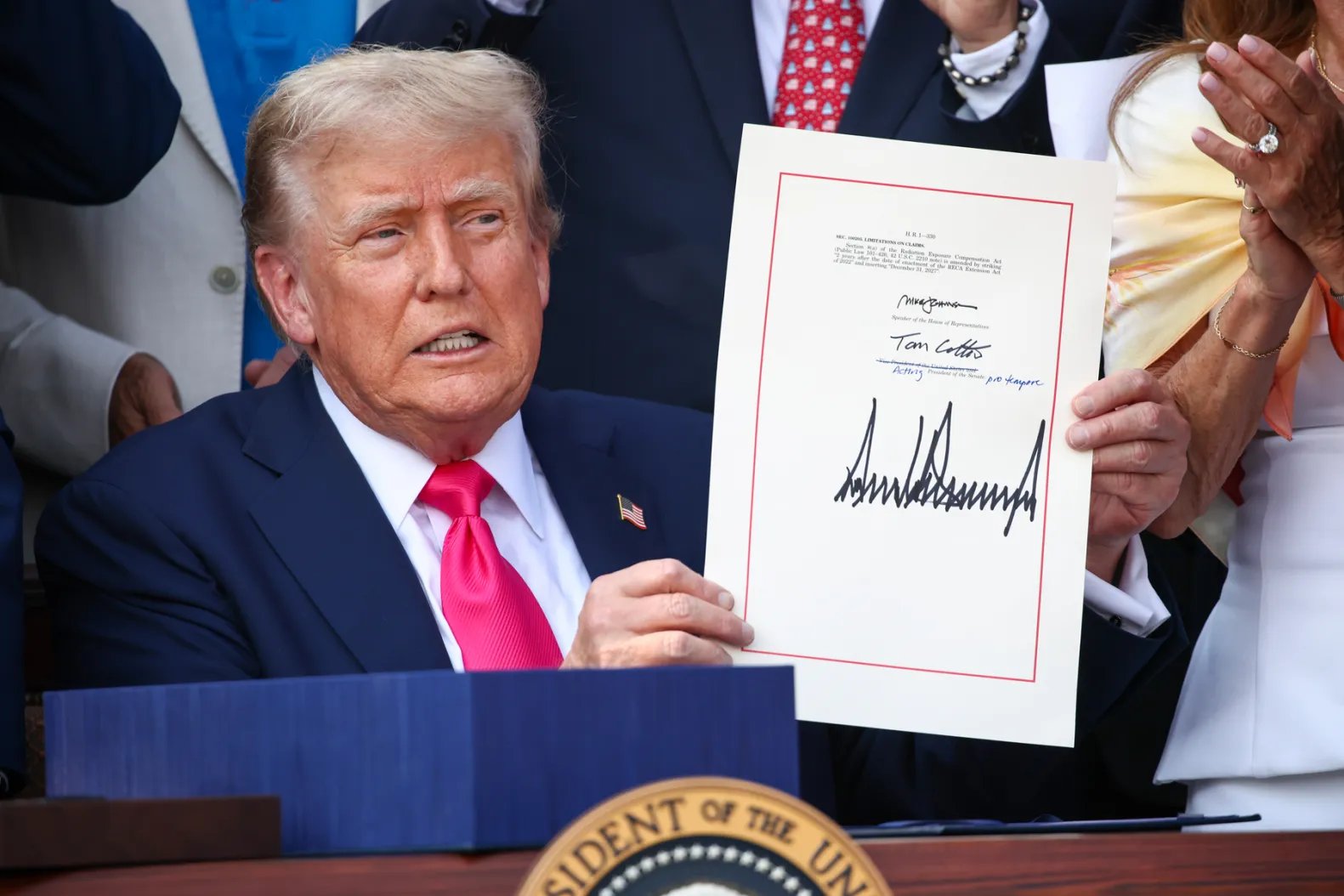
Buried deep in the newly passed “One Big Beautiful Bill Act” is a policy shift that could upend America’s fast-growing sports betting ecosystem — with shockwaves likely to hit professional gamblers, casual bettors, sportsbooks, and state tax revenues alike.
Section 70111 of the 940-page legislation introduces a quiet but seismic change: starting next year, gamblers will only be allowed to deduct 90% of their losses against winnings for tax purposes. It might sound technical — but its implications are anything but.
How It Used to Work
Under the current federal tax framework, a professional or semi-professional bettor who wins $100,000 and loses $100,000 in the same fiscal year pays zero tax — since the income is offset in full by the losses. This is logical. If there’s no net profit, there’s nothing to tax.
What’s Changing
From next year, that same bettor will only be allowed to deduct 90% of their losses. That means their taxable income is now artificially inflated — in this case, to $10,000. At the standard 24% tax rate, that’s $2,400 owed to the IRS on what was, in practice, zero profit.
In effect, this provision taxes the volume of betting activity rather than the net outcome. It’s a move that drastically alters the economics of the gambling ecosystem.
The Domino Effect
1. Professional Bettors Will Be Squeezed Out
Margins in professional sports betting are already razor-thin. Taxing non-existent profits kills the incentive for data-driven, high-volume bettors to operate legally in the U.S. It could drive the industry’s most skilled participants to offshore markets where there’s no tax burden and fewer compliance restrictions.
2. Recreational Bettors Will Feel the Pinch
Operators may respond by cutting back promotions, shrinking jackpots, or increasing hold percentages to absorb volume losses from professionals. For casual players, this translates into worse odds and fewer big-money contests.
3. Operators Face Strategic Uncertainty
Sportsbooks and casinos, already balancing state-by-state regulatory pressures, will now face declining betting volume and changing customer behavior. To protect profitability, operators could lean even more heavily into same-game parlaysand less skill-based games with wider margins — further skewing the player experience.
4. States Could Lose Revenue
Ironically, states that legalized online sports betting to grow tax revenues may find themselves victims of unintended consequences. If player activity drops and bettors flee to offshore sites, state-level tax receipts will contract instead of expand.
Why This Matters Now
Since 2018, over 30 states have legalized some form of online sports betting, driving a booming market worth over $12 billion in revenue annually. This new federal tax cap disrupts the core financial model of the ecosystem — not through regulation or enforcement, but through invisible, structural taxation.
What’s more troubling is the lack of public discourse around the change. Section 70111 was buried quietly in a bill that otherwise had little to do with gambling.
The Strategic Takeaway
This isn’t just a tax issue — it’s a market shift. Stakeholders across the gambling value chain — from sportsbook operators and tech providers to state regulators and advertising agencies — need to recalibrate their assumptions for 2025 and beyond.
Companies that fail to anticipate a likely migration of high-value players to offshore platforms may find their customer acquisition budgets sinking into a market that no longer makes financial sense for the consumer.
What Comes Next?
Unless amended, the new policy takes effect in 2025. Operators should begin revisiting:
- Customer segmentation strategies
- Promotional mechanics for casual bettors
- Partnerships with data providers and compliance tools
- Tax lobbying coalitions to advocate for clarity or reconsideration
Join the 365247 Community here
IMAGE: GETTY IMAGES