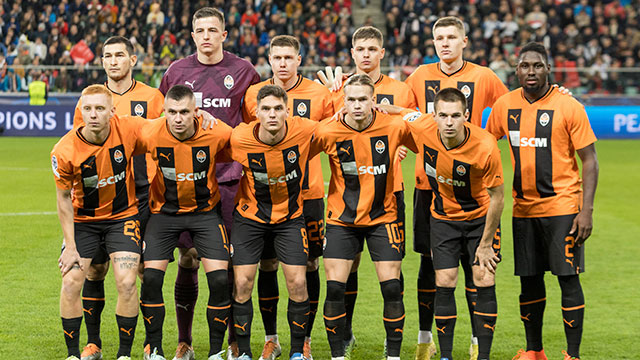
Credit: Sportcal (GlobalData Sport)
The UEFA Champions League has long served as a powerful global stage for clubs outside Europe’s “Big Five” leagues. It is here that teams from emerging football markets can rise to prominence, develop international fan bases, and secure critical revenue streams. FC Shakhtar Donetsk is one such club that has done just that—turning adversity into opportunity, both on and off the pitch.
Despite being displaced from their home city since 2014 due to the conflict in Eastern Ukraine, and facing escalating challenges after Russia’s full-scale invasion in 2022, Shakhtar has emerged as a case study in resilient football governance. The club has maintained competitive performances in the Champions League and domestically, while also deploying a strategic commercial model to stay financially afloat.
In the 2023-24 season, Shakhtar reported revenue of UAH2.82 billion (~$67.6 million). While this figure fell short of the UAH5.99 billion peak in 2022-23, largely due to Mykhailo Mudryk’s high-profile transfer to Chelsea, it demonstrates the club’s continued ability to monetize its footballing assets. Notably, around 75% of this revenue was derived from European competition, underscoring how vital UEFA participation is to Shakhtar’s financial sustainability.
Commercial revenue, however, paints a more sobering picture. At just UAH293 million in 2023-24—less than half of its pre-pandemic 2018-19 tally—Shakhtar’s brand partnerships have been severely impacted by its lack of a permanent stadium, war-induced uncertainty, and weakened domestic media markets.
But according to club CEO Sergey Palkin, physical presence is no longer the linchpin of commercial success: “TV broadcasting and digital platforms are the main tools that deliver reach,” he states. The club leans heavily on UEFA competitions and digital content to provide brand exposure for sponsors.
The core pillars of Shakhtar’s financial strategy include:
- Player Development and Transfers: Scouting and nurturing talent to feed into major European leagues.
- UEFA Participation: European matches drive brand visibility and generate significant broadcasting income.
- Innovative Commercial Products: Youth soccer franchises and content creation platforms aimed at expanding fan and partner engagement.
Shakhtar’s ability to dominate Ukrainian football, winning six of the last seven league titles, is not accidental. Palkin attributes this to smart recruitment, structured player development, and operational discipline—all of which bolster its appeal to sponsors even during geopolitical instability.
WHAT CAN OTHER CLUBS LEARN?
1. Resilience Requires Diversification For clubs in smaller leagues or volatile environments, player development and smart transfer activity remain powerful economic levers. Invest in academies and data-backed scouting models.
2. Stadium Independence Is No Longer a Constraint A modern commercial strategy prioritizes reach. Focus on OTT content, social media strategy, and media collaborations to ensure brand partners gain value.
3. European Football as a Commercial Engine Participation in UEFA competitions must be part of long-term club strategy—not just for prestige, but for financial stability.
4. Local Challenges Require Global Thinking When local media rights are weak, clubs must look beyond their borders. From merchandising to mobile-first fan platforms, globalisation is non-negotiable.
5. Strategic Storytelling Converts Adversity into Value Shakhtar’s story resonates. Clubs facing difficulties should invest in narrative-building—both for fan loyalty and brand partnerships.
Need help building a resilient commercial model for your football club? At 365247 Consultancy, we specialize in helping football clubs across emerging markets scale their sponsorship, fan engagement, and global growth strategies.
Reach out to us for:
- Commercial & revenue model transformation
- Brand partnerships & media strategy
- Player monetization roadmap
Schedule your introductory call here.
Join the 365247 Community here.
IMAGE: IMAGO/NurPhoto