In a significant move that underscores the evolving battle for control inside the digital cockpit, electric vehicle (EV) maker Rivian has deepened its relationship with Google, officially integrating Google Maps directly into its native infotainment system — and notably, doing so without Apple CarPlay compatibility.
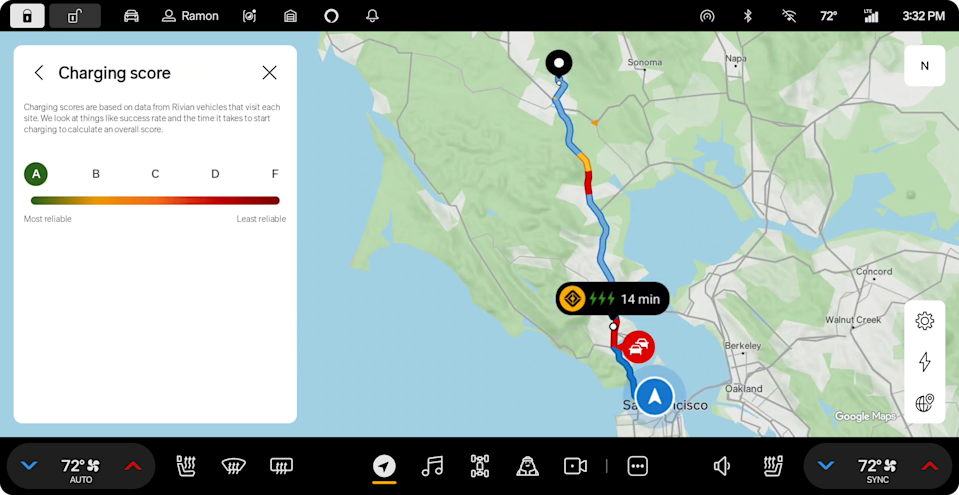
This marks a strategic step for Rivian as it leans further into developing a custom, tightly integrated digital experience for its drivers. Built on Google’s Automotive SDK for Maps, the new system offers real-time routing, traffic updates, satellite views, and estimated time of arrival — but now with a Rivian-designed interface that remains true to the brand’s distinct tech-forward philosophy.
What’s most innovative is the addition of “arrival range” — a feature that estimates battery life at arrival, based on live data — giving EV drivers enhanced confidence in route planning. The navigation system also includes stop recommendations, driver-specific preferences, and information about charging stations, including the bespoke Rivian Adventure Network.
For Rivian, this move isn’t just about convenience — it’s a broader positioning play. As legacy automakers like GM phase out Apple CarPlay in their electric models, Rivian is aligning with a growing industry trend: owning the user experience and monetizing the digital layer. This includes future opportunities like subscription services for premium features, advanced driver-assist tools, and connected services — a model already championed by Tesla.
While Rivian has confirmed that Apple Music will remain available and hinted at future integrations with Apple’s EnergyKit for smart home charging, Apple CarPlay remains absent. This decision has prompted mixed reactions within the Rivian owner community, many of whom have expressed their frustration on platforms like Reddit. Some cite the former in-car navigation as inaccurate or inefficient, especially compared to Google Maps.
That gap may now be addressed. Rivian’s system aims to offer the best of both worlds — the intelligence and data-quality of Google’s services, presented within a user interface purpose-built by Rivian itself.
This approach mirrors moves made by others in the sector. GM, for instance, has justified its exit from Apple CarPlay by citing data ownership and long-term monetization potential. A third-party study by McKinsey suggests that while consumer demand for CarPlay is strong, automakers are prioritizing platforms that allow greater control and recurring revenue.
Tesla, too, has never supported Apple CarPlay or Android Auto — instead building its own closed ecosystem with connectivity and navigation tied directly to its hardware and software stack. And despite the lack of third-party projection software, Tesla continues to lead the EV space by volume.
As the connected car becomes a battleground for software ecosystems, Rivian’s latest move reflects a broader industry shift. OEMs are no longer content being hardware providers. Instead, they are building their own digital operating systems — part media hub, part revenue stream, part brand canvas.
For Rivian, the choice to go Google over Apple isn’t just a tech decision. It’s a statement of intent: to own the experience, shape the ecosystem, and define what the next generation of in-car software looks like.
IMAGE: Rivian