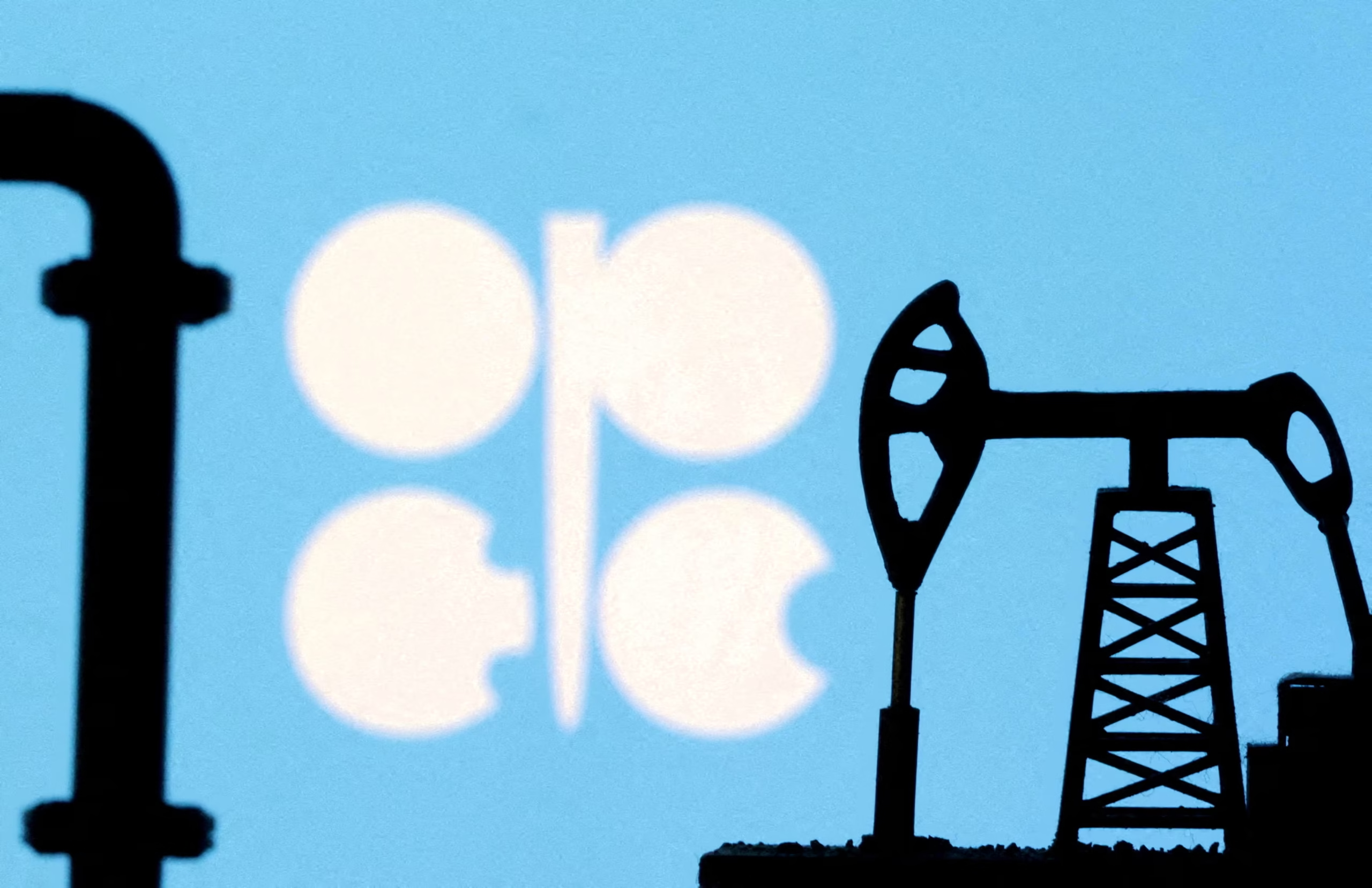
In a surprise shift that signals a more bullish stance on global demand recovery, eight key members of the OPEC+ alliance—including Saudi Arabia, Russia, and the UAE—announced plans to raise crude oil production by 548,000 barrels per day (bpd) in August. This move surpasses market expectations, which had priced in a more conservative increase of around 411,000 bpd.
The announcement follows a virtual meeting of top oil-exporting nations, where the coalition emphasized that the production hike is supported by “strong market fundamentals” and “a steady global economic outlook.” Low inventory levels were cited as justification for the accelerated pace.
Strategic Rollback of Voluntary Cuts
Since April, the group has been engaged in a phased rollback of 2.2 million bpd in voluntary output cuts—a coordinated strategy designed to stabilize prices without overheating supply. The latest August increase effectively compresses what would have been four months of production restoration into a single decision.
Still, the group signaled caution. Members underscored that all production hikes remain conditional on market stability, with the option to pause or reverse increases if volatility returns.
Geopolitical Crosswinds: Iran-Israel Tensions and Price Fragility
The announcement comes in the shadow of recent Middle East unrest, particularly a 12-day flare-up between Iran and Israel, which briefly pushed oil prices above the $80 per barrel mark due to concerns over potential disruption in the Strait of Hormuz, a vital chokepoint for global crude shipments.
Despite those fears, oil prices have largely remained subdued, trading between $65 to $70 per barrel. Analysts attribute this softness to broader macroeconomic pressures and surplus capacity in other regions.
The decision to expand production—even modestly—could be interpreted as an effort by core producers like Saudi Arabia to signal confidence in demand, while simultaneously encouraging quota compliance by reducing the incentive for non-compliant members to overproduce.
Capacity vs. Compliance: A Lagging Reality
Though quotas have technically doubled in recent months, actual output is lagging behind. Estimates suggest that in May, OPEC+ added just 200,000 bpd—well below target. Persistent underperformance continues to weigh on credibility and may limit the short-term impact of the latest quota adjustment.
What’s Next?
The alliance will reconvene on August 3 to assess market trends and finalize quotas for September. Expect that decision to be heavily influenced by three factors:
- Real-time demand signals from China and India
- U.S. monetary policy and its effect on oil futures
- Geopolitical stability across the Middle East
For global energy traders and policy strategists, the August increase should be viewed less as a supply shock and more as a positioning tactic. By frontloading production now, OPEC+ may be trying to regain influence over a market that has become increasingly fractured—and price-insensitive.
More importantly, the announcement reaffirms Saudi Arabia’s role as a swing producer and tactical balancer within the alliance. With OPEC+ struggling to enforce discipline, this move could also serve as a strategic reminder: Riyadh still controls the tempo of global oil markets.
IMAGE: Reuters