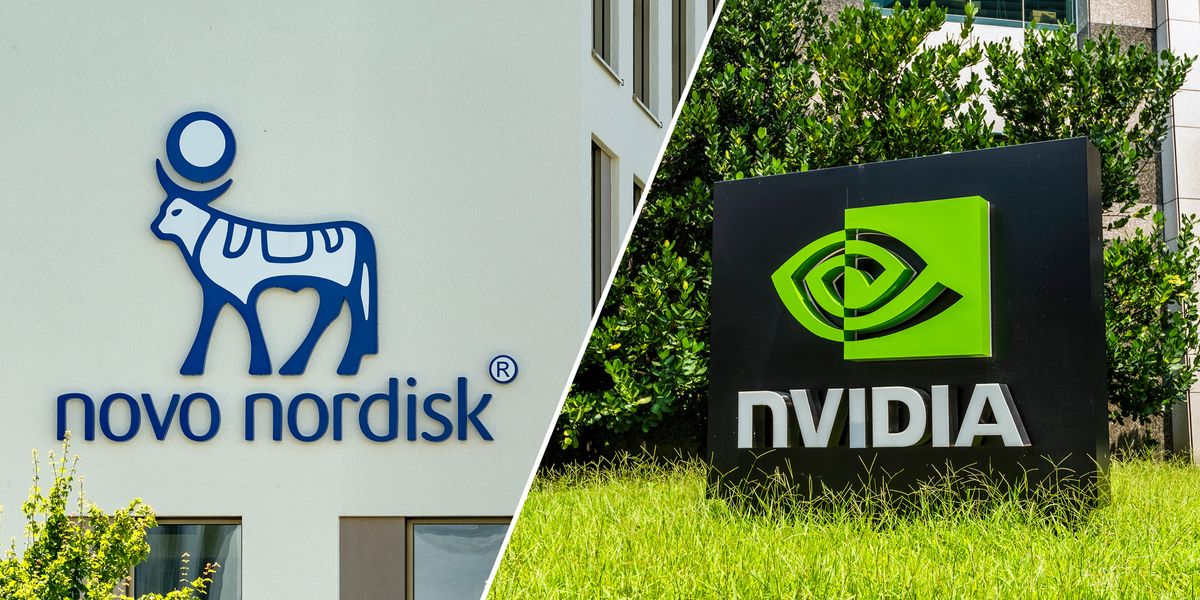
In a compelling convergence of deep tech and life sciences, NVIDIA has announced a strategic collaboration with pharmaceutical giant Novo Nordisk. This partnership aims to supercharge drug discovery using cutting-edge artificial intelligence, powered by the newly unveiled Gefion sovereign AI supercomputer.
What’s Driving the Collaboration?
At the heart of this alliance is NVIDIA’s DGX SuperPOD™ architecture — the backbone of Gefion — which functions as a high-performance “AI factory” enabling large-scale data processing and simulation. Novo Nordisk will use this infrastructure to develop proprietary AI models and intelligent agents tailored for pharmaceutical R&D — from early-stage research to clinical development.
The initiative stems from Novo Nordisk’s agreement with DCAI (Digital Collaboration on Artificial Intelligence), an entity focused on accelerating the integration of AI into mission-critical industries. With Gefion’s architecture, both firms can deploy physical AI simulations and agentic computing techniques that go beyond traditional data analysis — offering the potential to compress years of research into months.
The Bigger Picture: NVIDIA’s Data Center Dominance
This move comes amid exponential growth in NVIDIA’s data center (DC) division. According to market research from Morningstar, NVIDIA’s DC revenues have scaled from $3 billion in 2020 to an expected $115 billion by 2025. However, the firm also notes that near-term expansion is still supply-constrained — a sign that demand continues to outpace even NVIDIA’s aggressive output.
Beyond hardware, NVIDIA holds a powerful intangible edge through its CUDA software platform, which remains the default environment for developers building AI models. The “stickiness” of CUDA has created high switching costs for enterprises, further solidifying NVIDIA’s wide economic moat.
Challenges Ahead?
Despite its dominant position, NVIDIA isn’t immune to emerging headwinds. Investment groups like Longriver Investment Partners have raised concerns over the long-term viability of pricing power in the inference segment of AI. Custom silicon and specialized chips developed by hyperscalers and other big players could pose future threats — particularly as enterprises weigh the tradeoffs between performance, cost, and flexibility.
Still, NVIDIA’s sustained innovation and proactive partnerships (like this one with Novo Nordisk) are helping it stay ahead of the curve in an AI arms race that’s only just beginning.