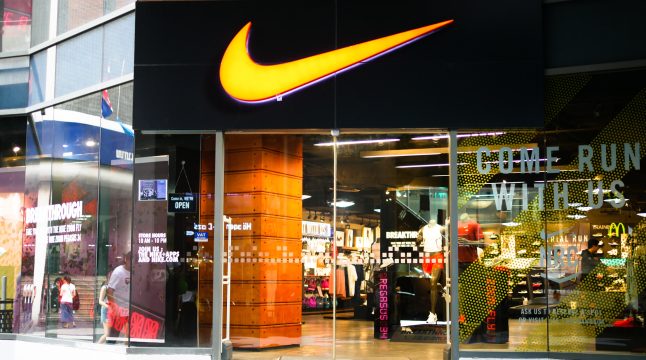
Global sportswear titan Nike experienced a remarkable 15% surge in its stock price on Friday following its latest earnings call, as the company signaled a gradual recovery in revenue and profitability—even as it prepares to absorb nearly $1 billion in tariff-related costs.
Despite a 12% drop in quarterly revenue (Q4 FY2025) and a 440 basis point decline in gross margins, investor confidence appears to be rebounding thanks to management’s forward-looking guidance. Nike anticipates mid-single-digit sales declines this quarter—a notable improvement from the previous double-digit contraction—and expects gross margins to stabilize in the quarters ahead.
Tariffs Bite, But Nike Plots a Strategic Pivot
On its earnings call, CFO Matthew Friend acknowledged the growing impact of recently implemented U.S. tariffs, noting that they represent a “new and meaningful cost headwind.” Nike expects these duties to dent margins by an additional 100 basis points, pushing the total gross cost to nearly $1 billion.
To counter these challenges, Nike is accelerating supply chain diversification. The company plans to significantly reduce its reliance on Chinese factories for U.S.-bound products, targeting a shift from 16% to a “high single-digit” percentage share of total shoe imports by the end of this fiscal year.
Additionally, Nike announced a strategic price increase for the U.S. market, aimed at offsetting some of the tariff-driven cost burden. The pricing adjustment is scheduled to roll out this fall.
China Woes and Innovation Bets
Revenue from Greater China plunged 20% in the latest quarter, driven by significant declines in both footwear and apparel sales. China, once Nike’s fastest-growing market, has become a drag on its global performance amid shifting consumer dynamics and local competition.
Still, the company is pinning its hopes on new product innovations and renewed partnerships. Noteworthy launches include the Vomero 18, updated Jordan Retros, and the much-anticipated A’One line. A collaboration with Kim Kardashian is also in the pipeline—targeting the crossover between sportswear and streetwear culture.
Nike is also rekindling its wholesale relationships with major retailers like Dick’s Sporting Goods and Macy’s, following a period where the company focused heavily on direct-to-consumer (DTC) channels.
Financial Snapshot: Mixed, But Encouraging
Nike posted $11.1 billion in revenue for the fiscal fourth quarter, slightly outperforming analyst estimates. Adjusted earnings per share came in at $0.14, a far cry from last year’s $1.01 but ahead of the $0.13 consensus forecast. Same-store sales rose 2%, exceeding the expected 2.6% drop.
CEO Elliott Hill acknowledged that while the results met expectations, “they are not where we want them to be.” He emphasized that the company is laying the groundwork for recovery through supply chain shifts, brand reinvigoration, and cost mitigation.
The Bigger Picture: Rebound or Risk?
Although Nike shares are still down 6% year-to-date, Friday’s rally significantly trimmed losses that once approached 30% earlier in 2025. The bounce-back coincides with President Trump’s recent decision to pause certain tariffs, offering the brand a temporary reprieve.
Nike is walking a tightrope—juggling geopolitical headwinds, changing consumer sentiment, and intensifying competition from newer brands like On and Hoka. But with clear strategies in place and strong brand equity, it appears the company is gearing up for a measured comeback.
Stay tuned to 365247 Media for more in-depth business coverage from across the globe.
Join the 365247 Community here.
IMAGE: 123rf.com