Source: SportsPro
The National Football League (NFL) has unveiled a fresh approach to its UK broadcast strategy, positioning its new mix of rights agreements as a way to both deepen loyalty among existing fans and open the door to new audiences in one of its most important overseas markets.
A Dual-Broadcast Approach
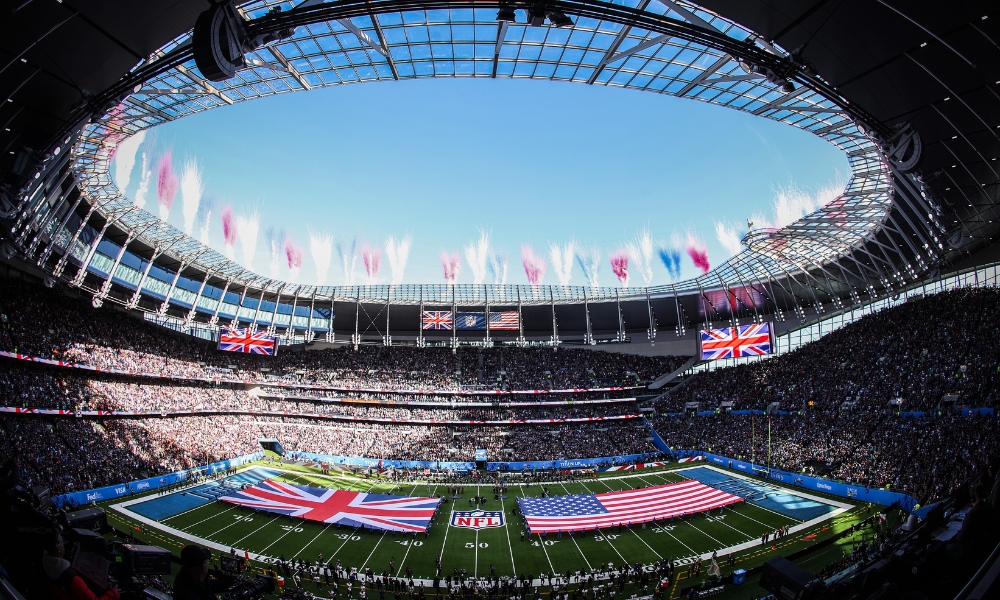
From the 2025 season, Channel 5 will take on a multi-year deal that includes two live Sunday evening games each week, alongside marquee properties such as the Super Bowl, Thanksgiving fixtures, international games in London and Dublin, and three playoff ties. For a league that has long sought greater free-to-air (FTA) visibility in the UK, this represents a significant expansion.
At the same time, Sky Sports, the NFL’s long-term partner, has signed a three-year extension that more than doubles its coverage to around 160 games per season. Sky’s new schedule includes six Sunday matchups, with two kicking off at 6pm, three at 9pm, and Sunday Night Football closing out at 1am. Add in Monday Night Football, Thursday Night Football, the ‘RedZone’ whiparound show, Thanksgiving, the playoffs, and the Super Bowl, and Sky remains the NFL’s anchor broadcaster for the British market.
Strategic Balance: Existing vs. New Fans
According to Henry Hodgson, NFL UK General Manager, the strategy is about complementary audiences rather than overlap. Channel 5 becomes the gateway for casual and younger fans, while Sky deepens the live experience for committed followers.
“Channel 5 is about new eyeballs and accessibility. Sky is about serving existing fans with more live action,” Hodgson explained to SportsPro.
The NFL believes that by offering a mainstream FTA presence on Sunday evenings, it can create an “appointment to view” slot that introduces the sport to people who would never tune in at 1am. Over time, the league anticipates that some of these casual viewers will migrate into Sky Sports subscriptions—feeding the long-term fan pipeline.
Learning from the Past, Building for the Future
The NFL has experimented with British broadcasters for more than four decades. Channel 4’s pioneering coverage in the 1980s built the first wave of fans, while Sky’s commitment since the 1990s has been the backbone of growth. The expansion of the International Series in London, which began in 2007, cemented Britain’s role as the NFL’s primary international hub.
But the new Channel 5 deal marks a shift in tone: it’s not just highlights or late-night coverage, but prime-time, family-friendly slots. That difference is crucial for building generational fandom.
To reinforce this accessibility, Channel 5 will also air “NFL: Big Game Night”, an entertainment-led shoulder programme produced with Hungry Bear Media. It aims to explain the sport, smooth over long commercial breaks, and package the NFL as a cultural experience, not just a competition.
A Three-Tier Media Ecosystem
The final element of the NFL’s UK rights package is NFL Game Pass International, available through DAZN. Game Pass offers every live game—except Sky’s exclusives—alongside on-demand replays. It caters to the diehard supporter who refuses to miss a single play.
Together, these three layers create a carefully tiered ecosystem:
- Channel 5 (FTA): Entry point for new fans and families.
- Sky Sports (Pay-TV): Comprehensive hub for committed UK sports viewers.
- Game Pass International (DTC): Total-access product for obsessive fans.
The NFL insists this structure avoids cannibalisation, instead providing distinct pathways that reflect the maturity of the British market.
Consultancy Perspective: Why This Matters
From a strategic lens, the NFL is effectively hedging its growth bets:
- Accessibility: By carving out a regular FTA slot, it ensures visibility beyond the paywall—a non-negotiable for long-term market penetration.
- Depth: Sky remains a high-value partner, driving broadcast revenue and reinforcing legitimacy within the UK’s established sports ecosystem.
- Direct Control: Game Pass gives the NFL its own consumer channel, reducing reliance on third parties and gathering valuable data on viewing behaviour.
The broader lesson for rights holders is clear: layered broadcast strategies are becoming the new norm. Markets with both casual and mature fan bases demand differentiated products that meet audiences where they are, rather than forcing a one-size-fits-all solution.
Looking Ahead
As the NFL prepares for another London season and its first Dublin game, its UK broadcast model now mirrors its global ambition: to blend premium partnerships with direct reach and grassroots accessibility. If successful, this could be the blueprint for how major US leagues expand in Europe—balancing reach, revenue, and relevance in equal measure.
For Brands, Businesses and Services, partner with us
Read the Original SportsPro Interview
IMAGE: Getty Images