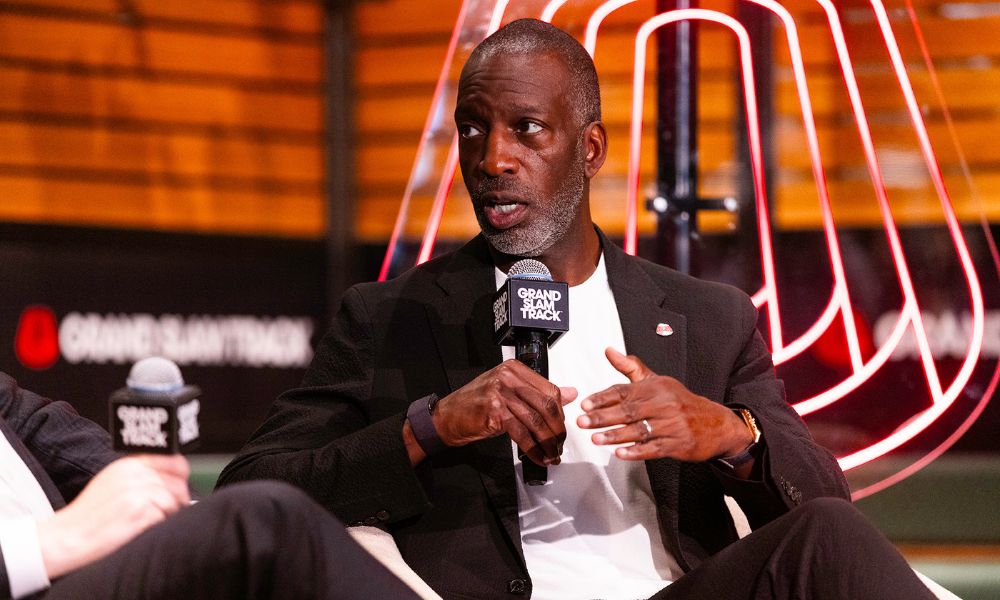
What was launched as a bold new vision for athletics has now hit a major stumbling block. Grand Slam Track, founded by Olympic legend Michael Johnson, has admitted it cannot pay athletes their contracted appearance fees and prize money, casting serious doubt on the league’s future.
Millions Owed, Los Angeles Finale Cancelled
The inaugural season was meant to be a reset for track and field, but financial shortfalls quickly became apparent. The Los Angeles meet, scheduled as the season finale in June, was cancelled after organisers determined it would generate losses of more than $2 million if staged. That decision alone has saved organisers roughly £2.2 million in prize money and travel costs, according to The Times.
Johnson confirmed in a statement that the league is “struggling with our ability to compensate” athletes after promised funding failed to materialise.
“It is incredibly difficult to live with the reality that you’ve built something bigger than yourself while simultaneously feeling like you’ve let down the very people you set out to help,” he said. “The 2026 season will not happen until these obligations are met — and that is my number one priority.”
Big Ambitions, Harsh Realities
When Grand Slam Track was first unveiled, co-founder Steve Gera told The Independent that the league aimed to build the youngest fanbase in global sport within five years. The concept was to modernise athletics by focusing exclusively on track disciplines — notably sprints and middle-distance events — while leaving out field competitions.
The format paired linked events, such as the 100m and 200m, with results combined to crown overall winners. Prize money was pitched at a premium level: $100,000 for winners, $50,000 for runners-up, and $10,000 for eighth place.
The athlete roster reflected the ambition, featuring global stars including Sydney McLaughlin-Levrone, Gabrielle Thomas, Kenny Bednarek, Dina Asher-Smith, and Josh Kerr.
But ticket sales proved inconsistent, with half-empty stadiums in Kingston and Miami contrasting with a stronger turnout of nearly 30,000 spectators across two days in Philadelphia, where the programme was condensed to increase efficiency.
The Funding Gap
Despite star power and international attention, Grand Slam Track has not secured the level of broadcast revenues, sponsorship deals, or ticketing income required to sustain its ambitious prize structure. Organisers admit expectations were too high and that the business model needs recalibration.
Johnson acknowledged the paradox at the heart of the crisis:
“The cruellest paradox in all of this is we promised that athletes would be fairly and quickly compensated. Yet, here we are struggling with our ability to compensate them.”
Looking Ahead
The league’s future now depends on securing fresh investment and restructuring operations. Johnson has hinted that new markets, particularly in Europe, are being considered for future editions, though nothing will move forward until current obligations are met.
The collapse of the 2026 season underscores a broader truth: while athletics is hungry for innovation, breaking through requires sustainable economics as much as visionary storytelling. For now, Johnson’s mission to “save track” remains alive, but Grand Slam Track must first prove it can deliver on its financial promises before it can claim a place in the future of global sport.
Partner With Us
Want to feature your brand, business, or service on 365247 — Whether you’re looking to sponsor, collaborate, or build presence within our ecosystem, we’d love to explore it with you.
Submit your interest here