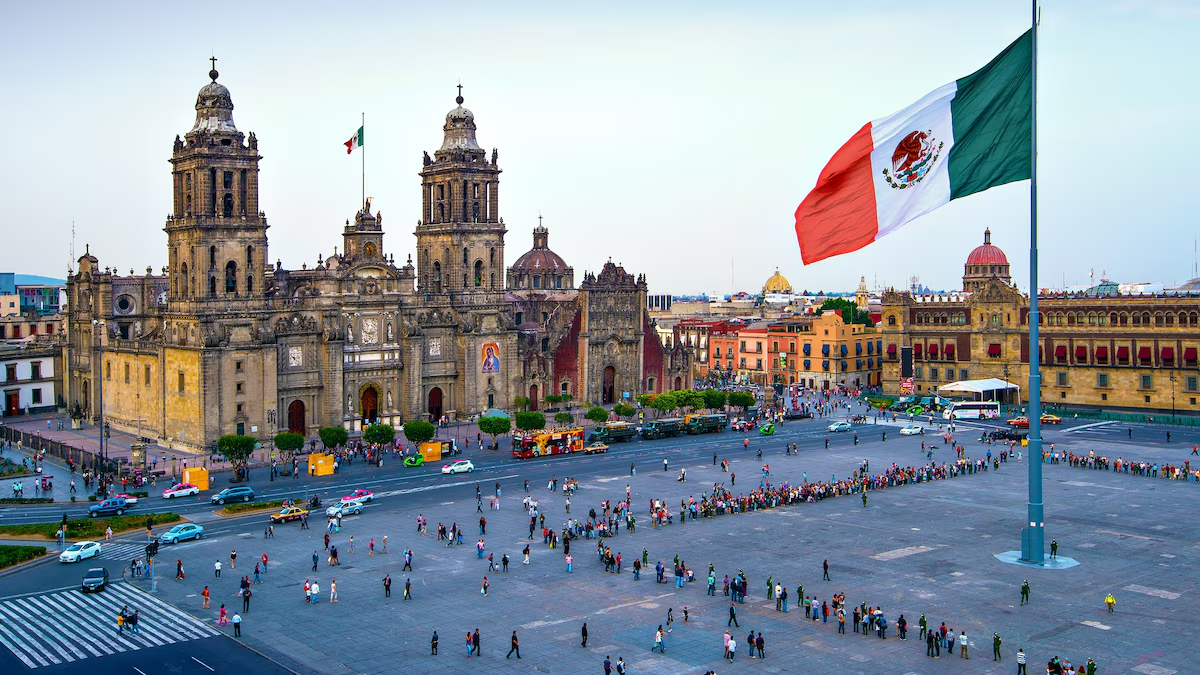
In a development that further elevates North America’s position in global football, the Mexican Football Federation (FMF) has confirmed that Mexico will co-host the 2031 FIFA Women’s World Cup alongside the United States. The announcement came subtly — embedded as a bullet point in an official release following a recent Liga MX owners meeting — but the implications are far from minor.
According to the FMF, the 2031 tournament will be staged “with parity in the number of matches,” suggesting a more balanced hosting structure than seen in previous joint bids. However, U.S. Soccer has not yet publicly confirmed Mexico’s role, and it’s still unclear whether additional CONCACAF nations might join the hosting lineup. A spokesperson from the FMF noted that it is “premature” to determine the exact match allocation between countries.
This decision follows a growing trend. After the 2026 Men’s World Cup — co-hosted by the U.S., Mexico, and Canada — this move underscores FIFA’s increasing openness to multi-nation tournament formats. It’s also a powerful endorsement of the region’s readiness, from stadium infrastructure to logistics, to handle large-scale global events.
Why This Matters
- The Women’s Game Is Going Global—Fast
Co-hosting rights are not just a logistical move; they are a declaration. Mexico is staking a claim in the rapidly growing women’s football ecosystem, investing in visibility, equity, and long-term value. - North America = The New Football Power Hub
With back-to-back global tournaments in 2026 (men’s) and 2031 (women’s), the region is becoming the most commercially and culturally dynamic football marketplace outside Europe. - Infrastructural Readiness Is a Differentiator
Mexico’s successful Liga MX operations, U.S. stadium standards, and potential CONCACAF collaboration create an infrastructure backbone that’s hard to ignore for FIFA.
Consultancy Perspective
For brands, rights holders, and football entities, this co-hosting model creates multiple windows of opportunity:
- Localized brand activations across Mexico and U.S. cities with distinct football cultures.
- Tourism-driven campaigns that blend sport and destination marketing.
- Women’s football sponsorships with legacy-building potential — at a lower cost but higher impact than the men’s game.
- Dual-market storytelling opportunities for broadcasters and content creators.
This isn’t just about 2031 — it’s about preparing your brand and strategy now for a footballing decade that will redefine North American sport.
Looking to position your brand or organization for success in the 2031 Women’s World Cup ecosystem?
We help sports stakeholders develop bespoke commercial, branding, and operational strategies for global tournaments.