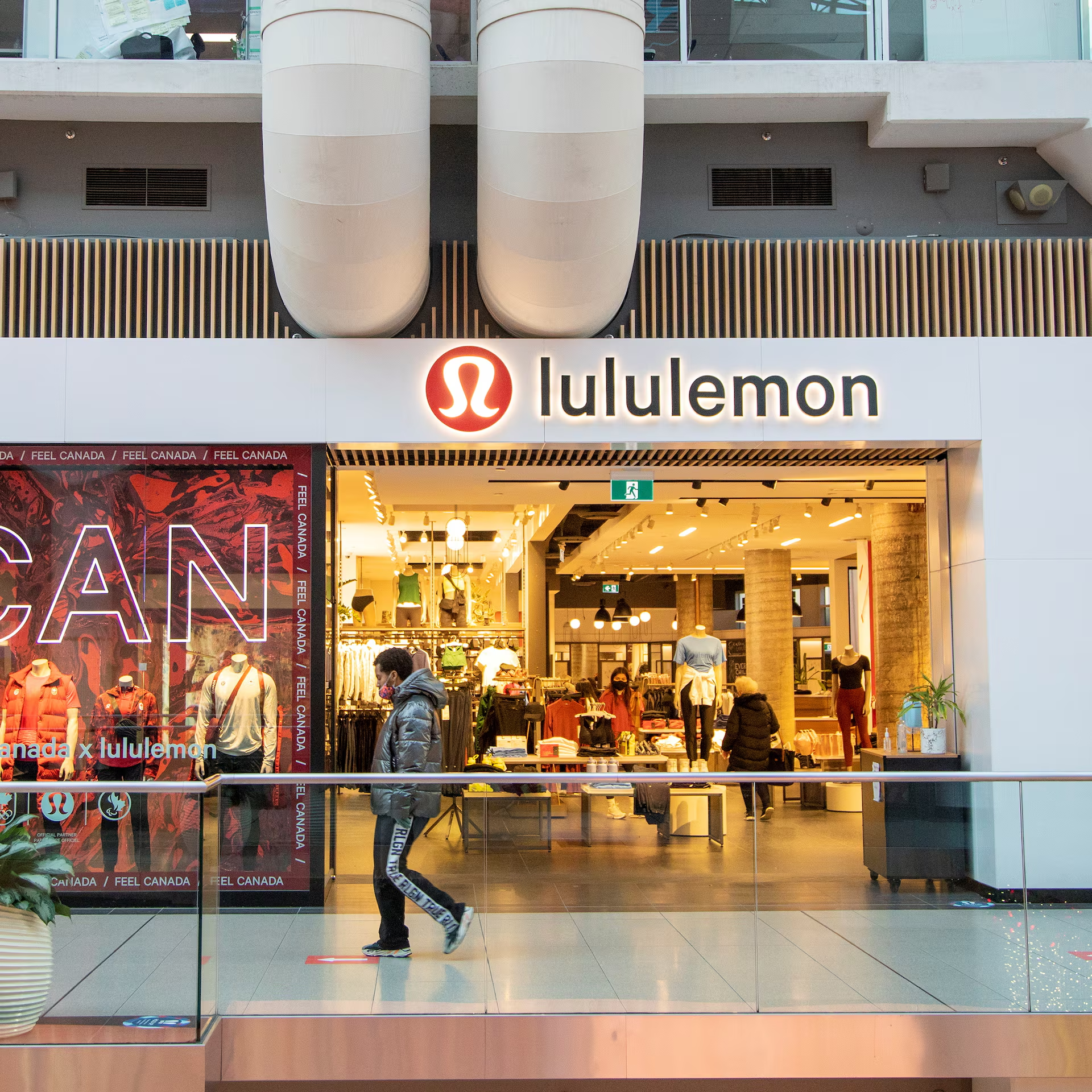
In a significant legal move that could have widespread implications for brand protection and retail competition, Vancouver-based activewear giant Lululemon has filed a lawsuit against Costco, accusing the wholesale retailer of infringing on its intellectual property rights. The legal complaint, submitted in the Central District of California on June 27, targets Costco’s alleged sale of imitation Lululemon apparel—specifically under its Kirkland and Danskin private labels.
At the core of the lawsuit is the claim that Costco is deliberately selling “dupes”—products that closely mimic Lululemon’s signature designs and trademarks, including its widely recognized ABC pants, SCUBA hoodies, and Define jackets—to capitalize on the brand’s reputation and confuse consumers at the point of sale.
What’s Being Alleged?
According to Lululemon’s filing, several Costco items are “unauthorized and unlicensed” imitations, violating U.S. patent, trademark, and trade dress laws. The complaint outlines numerous examples, including:
- Use of trademarked design features, such as the SCUBA zip-up sweatshirt and ABC pants silhouette
- Marketing of products using Lululemon’s proprietary colour names, like “Tidewater Teal”
- Descriptions and product titles that Lululemon argues are intended to mislead consumers into thinking the garments are authentic
The complaint also references media reports from The New York Times and The Washington Post which highlighted the visual and material similarities between Lululemon’s products and some of Costco’s offerings. Lululemon contends these imitations damage its brand equity and are part of a broader issue of large retailers opting to “copy rather than compete.”
Legal Line Between Competition and Duplication
While competition in apparel is legal—and commonplace—Lululemon’s claim rests on a legal distinction between generic inspiration and design infringement. The lawsuit notes that brands like H&M and Tommy Hilfiger may offer similar products but do not violate the same intellectual property boundaries Lululemon accuses Costco of crossing.
The case also highlights instances where Costco allegedly copied specific stylistic elements, naming conventions, and marketing language that Lululemon argues are protected under law. The lawsuit is part of Lululemon’s broader IP enforcement strategy to protect its investment in product development and branding.
Current Status and Retail Implications
Costco has not yet filed a formal response, and no comment has been issued by the company regarding whether this could affect business operations outside the U.S. However, several of the disputed items have since been removed from Costco’s website, a potential indication of risk mitigation or a silent acknowledgment of the claim’s seriousness.
If Lululemon prevails, the case could set a new benchmark for IP enforcement in the fashion industry, especially concerning large retailers with private-label ambitions.
What This Means for Brand Strategy and Retail?
This lawsuit underscores a critical tension in today’s retail landscape:
- Premium brands are investing in design innovation and cultivating a loyal base that identifies closely with brand equity and IP-protected elements.
- Big-box retailers often use their scale and private-label flexibility to replicate popular styles at lower prices, targeting value-driven consumers.
For Lululemon, this legal move isn’t just about stopping imitation—it’s about protecting long-term brand equity, price positioning, and consumer trust in a highly saturated athleisure market.
For retailers like Costco, it raises deeper questions about the boundaries of private-label growth and how far they can push without triggering litigation from the very brands they emulate.
As intellectual property becomes a battleground in modern retail, the Lululemon vs. Costco case will be closely watched by brands, designers, and retail strategists. It may well determine how far value-focused retail giants can go in mirroring the aesthetics of premium labels—and whether innovation can continue to be fairly protected in a copycat economy.
IMAGE: Reuters