Credit: Original reporting by SportBusiness
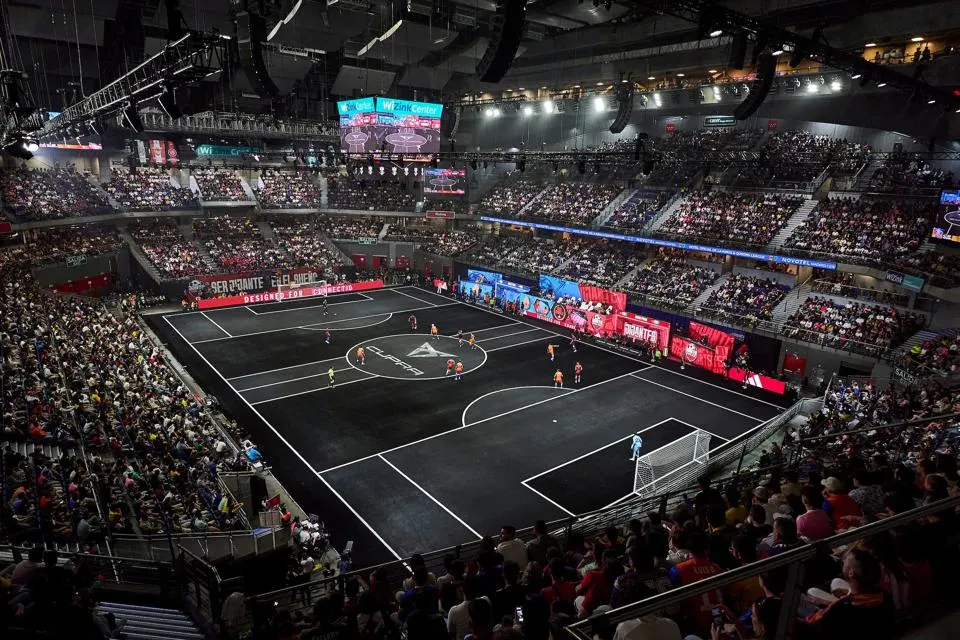
In an era dominated by questions of reach vs. revenue and exposure vs. exclusivity, Kings League is redefining the very foundation of how modern sports properties can grow. Spearheaded by former FC Barcelona and Spain star Gerard Piqué, and CEO Djamel Agaoua, the seven-a-side football league is less reliant on traditional revenue streams like media rights — which currently account for less than 5% of its total income — and instead, leans heavily into sponsorships, streamers, and digital-native strategies.
Rethinking Revenue: Sponsorship First
Currently, 65–75% of Kings League’s income is generated from brand partnerships. In newer markets, where ticketing and merchandising are still ramping up, this figure is even higher. Notable sponsors include Adidas, Cupra, JD Sports, Burger King, Fortnite, and Bazr — each woven organically into the product rather than forced through conventional placements.
With 14 billion brand impressions between January 2024 and January 2025, and a peak viewership of 6 million for the Kings World Cup Nations, the league offers fertile ground for brands looking to reach digitally native audiences. According to Agaoua, it’s not just about presence — it’s about relevance: “This generation isn’t consuming brands; they’re participating in them.”
A Platform Built for Streamers
Kings League flips the script on traditional broadcasting. Most matches are streamed through team owners — who are often popular influencers and content creators — across Twitch, YouTube, Instagram, and TikTok. Spanish streaming star Ibai Llanos, a founding member, has helped anchor the digital-first strategy.
While linear media partners like Sky Italia and ESPN Latin America are part of the picture, they serve more to communicate the format rather than act as primary distribution channels. The strategy reflects a growing realization: today’s youth don’t watch sports on TV — they experience it on their phones.
From IP to Global Expansion
Backed by a €60 million funding round, Kings League is rapidly expanding across markets: Spain, Mexico, Italy, Brazil, France, Germany — and soon the United States, with a full league planned before the 2026 FIFA World Cup. Middle East and North Africa are next, via a joint venture with Saudi Arabia’s SURJ Sports Investment.
What makes the expansion model viable? Control of the IP. Piqué and team not only own the league format, but also limit costs through closed leagues, salary caps, and fan-driven decision-making (yes, even the color of the pitch). The result: clubs like Troncos FC are already attracting investment, having sold a 15% stake for $600,000.
More Than Just Football: A Product for the TikTok Generation
Kings League isn’t competing with the UEFA Champions League; it’s complementing it. With 40-minute matches, secret tactical cards, and club presidents like Neymar (who nearly flew in to take a penalty), the product is intentionally entertainment-first — built for a demographic with shorter attention spans and higher engagement expectations.
While traditionalists may balk at the “video game” aesthetics, it’s clear that this model resonates. The league is piracy-proof, interactive, and driven by community ownership via streamers, not networks.
The 365247 View
Kings League exemplifies the new frontier of sports IP: youth-focused, creator-led, and commercialized through community, not exclusivity.
Brands, properties, and investors need to ask:
- Are we building ecosystems or chasing impressions?
- Are our sports products speaking to future audiences — or just past formats?
Need to Build a Future-Proof Sports Strategy?
At 365247, we help brands, leagues, and investors craft next-gen playbooks inspired by global disruptors. From streamer activation to digital-first sponsorship models, we develop frameworks tailored for the mobile-native fan.
Contact us today to reimagine your sports, media, or brand strategy.
IMAGE: JOSE MANUEL ALVAREZ/QUALITY SPORT IMAGES/KINGS LEAGUE