Credit Sports Business Journal
In a world where sports franchises are increasingly run like high-powered corporations — with valuations soaring into the billions, private equity circling like hawks, and succession plans crafted years in advance — the ownership structure of two major American teams stands apart as a bizarre anomaly.
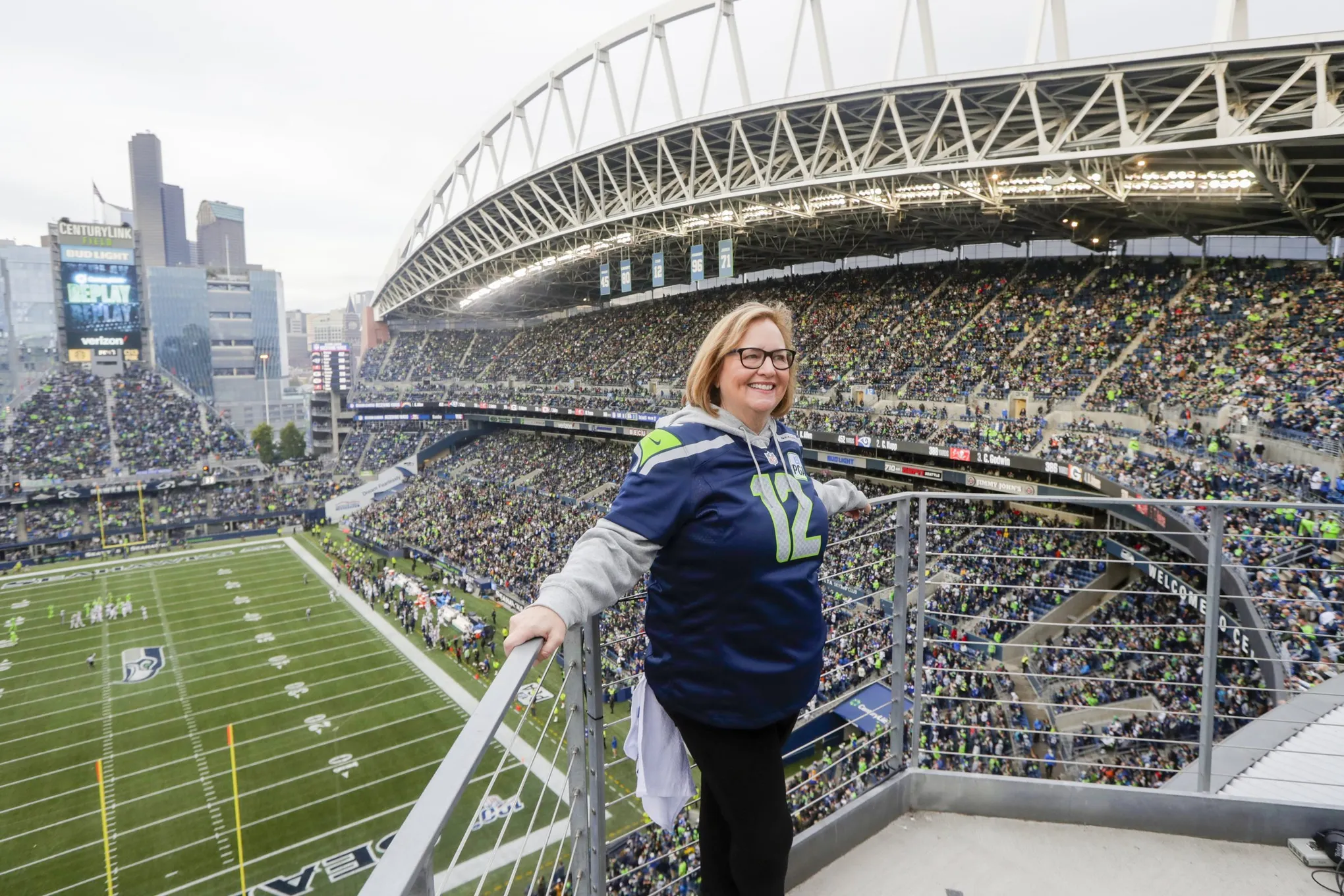
At the center of this anomaly is Jody Allen, the sister of late Microsoft co-founder Paul Allen and the acting steward of his sports empire: the Portland Trail Blazers (NBA) and the Seattle Seahawks (NFL).
A Power with Limits
Jody Allen currently holds what appears to be absolute authority over both franchises. She can hire and fire coaches, greenlight or block blockbuster trades, and vote on major league-wide decisions on both the NBA and NFL boards. On paper, she’s the single most powerful figure tied to either team.
Yet there’s a paradox — one that makes this situation uniquely complex: Jody Allen isn’t technically the owner.
Instead, she is the executor of Paul Allen’s estate and the sole trustee of his vast asset portfolio, which still includes the Blazers and the Seahawks. Her control is absolute in practice, but temporary by design.
Paul Allen’s will is clear: the franchises must eventually be sold. And crucially, Jody Allen will not personally profit from those sales. She is simply the fiduciary — legally bound to act in the estate’s interest, which means maximizing value and eventually liquidating assets.
Why the Delay?
The rest of the Allen estate has been almost entirely liquidated since Paul’s death in 2018. Art, real estate, tech ventures — all have been sold or distributed. Only the Blazers and Seahawks remain.
From a purely financial standpoint, it’s puzzling. With valuations of both franchises at all-time highs, and a clear legal obligation to sell, why hasn’t it happened yet?
According to a Sports Business Journal feature by Bruce Schoenfeld, the answer is as much emotional and human as it is procedural: Jody Allen simply hasn’t wanted to sell. And while her legal mandate is clear, the timelines around execution remain open to interpretation, creating a grey zone that few — even within the NBA or NFL — have experience navigating.
NBA commissioner Adam Silver candidly remarked that this is the most unusual franchise situation he’s encountered in decades, underscoring just how unprecedented this limbo is in major American sport.
What This Means for the Industry
This case offers a fascinating study in governance, succession, and power within elite sports. Ownership is increasingly framed as a blend of capital investment and cultural stewardship — a badge of identity for billionaires, brands, or sovereign wealth funds.
Yet here we have two franchises, among the most valuable in their respective leagues, effectively frozen in transition — operationally led by a steward whose endgame is divestment, not dynasty-building.
For leagues that thrive on certainty, this presents complications. How do you manage a franchise’s long-term planning when ownership is temporary and asset disposition hangs unresolved? How do fans, front offices, and even sponsors buy into a vision that could change overnight?
And most importantly — who gets to decide when enough is enough?
Final Thought
As valuations continue to climb and sports become even more interwoven with geopolitics, media rights, and private capital, the Jody Allen case could become more than a one-off curiosity. It may be a glimpse into a future where ownership structures are more complex, legalistic, and fiduciary-driven than ever before.
IMAGE: AP