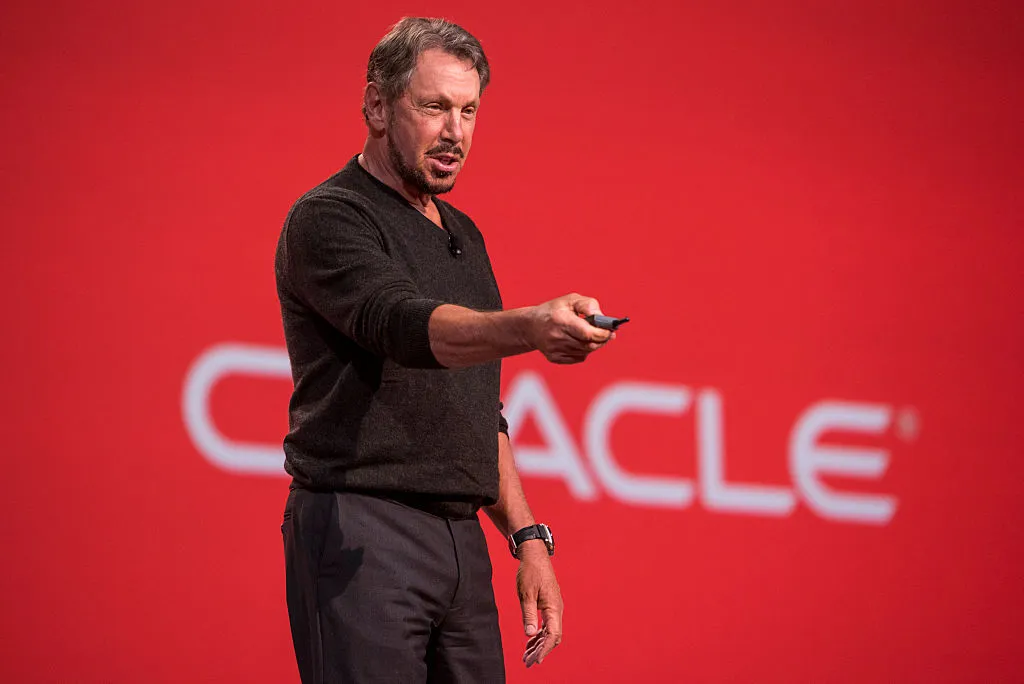
OpenAI, the powerhouse behind the AI revolution, has now confirmed its role in what may be one of the most ambitious cloud infrastructure deals in history — a multi-gigawatt capacity agreement with Oracle as part of a broader strategic expansion. While the exact value of the deal remains undisclosed by OpenAI, public filings suggest it could generate $30 billion annually for Oracle.
This isn’t just a routine enterprise contract. It’s a signal of scale — the kind rarely seen in corporate cloud computing.
From Speculation to Confirmation
Back in June, Oracle’s SEC filings revealed a massive new cloud customer expected to bring in $30 billion per year. At the time, the identity of the client was kept under wraps, leading to wide speculation across tech and finance circles. Oracle’s stock soared on the news, and founder Larry Ellison temporarily became the second richest person in the world.
Now, OpenAI has stepped forward, confirming it is indeed behind the cloud infrastructure expansion — though it stopped short of validating the $30 billion figure.
The Stargate Project: Infrastructure at AI Scale
This deal forms a major piece of the Stargate initiative — a colossal data center project involving OpenAI and Oracle, first revealed in January alongside SoftBank. While SoftBank is involved in the broader Stargate vision, this specific capacity commitment appears to be solely between OpenAI and Oracle.
The scale is staggering: 4.5 gigawatts of computing capacity — roughly the energy output of two Hoover Dams, or enough to power four million homes. That capacity will be centered in Abilene, Texas, where construction of the first Stargate site is underway.
For context, Oracle’s entire global cloud business generated approximately $24.5 billion in its most recent fiscal year. This single OpenAI agreement, if the reported $30 billion annual figure holds, would dwarf that total and reframe Oracle’s strategic relevance in the AI era.
A Bet on the Future of AGI — and Infrastructure
OpenAI’s vision goes beyond simply scaling ChatGPT or other commercial products. This infrastructure investment is about preparing for Artificial General Intelligence (AGI) — and the compute demands that come with it.
But with ambition comes cost. Oracle spent over $21 billion in capital expenditure last year and expects to invest another $25 billion this year, according to CEO Safra Catz. These investments are heavily skewed toward data center expansion — including this new commitment to OpenAI — but also support Oracle’s broader enterprise customer base.
Building out this infrastructure isn’t just about servers and square footage. It’s about securing power, land, and sustainable long-term operations at a time when energy is becoming a key chokepoint in AI deployment.
Revenue vs. Risk: OpenAI’s Financial Horizon
An intriguing wrinkle: OpenAI recently disclosed that it had crossed $10 billion in annual recurring revenue, nearly doubling from the year before. However, that still pales in comparison to the scale of its infrastructure commitments. If the Oracle deal alone is valued at $30 billion per year, it would be triple OpenAI’s current revenue — and does not factor in additional data center partnerships or operational costs.
In other words, this is a long-term, strategic investment — not a cash-flow-aligned decision. OpenAI is betting the house on its vision of the future, and Oracle is helping them build it.
Why This Matters
For tech strategists, investors, and policymakers, this partnership marks a tipping point. AI’s future won’t just be defined by algorithms, but by infrastructure ownership, energy sourcing, and the speed at which hyperscale deployment can happen.
The Oracle-OpenAI deal could reshape not just the cloud industry, but the economic architecture of AI itself.
Welcome to the infrastructure era of artificial intelligence.
IMAGE: Bloomberg via Getty Images