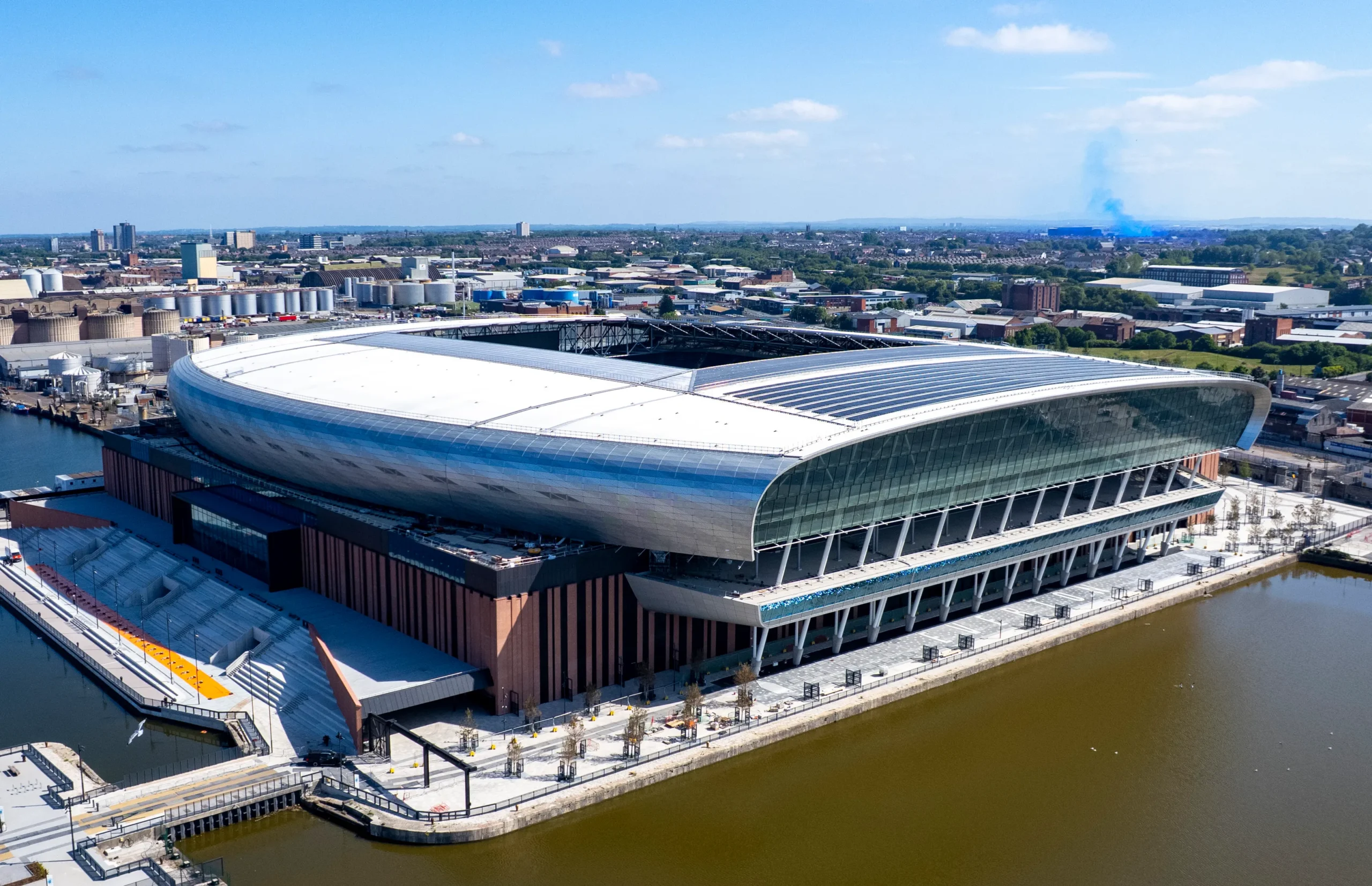
CREDIT: The Athletic
The atmosphere around Everton’s soon-to-be-opened Hill Dickinson Stadium is charged with anticipation. With the official Premier League debut set for just over 50 days from now — a home clash with Brighton & Hove Albion — and a high-profile pre-season friendly against Roma to come even sooner, final preparations are well underway.
This striking new facility — valued at £800 million and designed by American architect Dan Meis — is a stunning fusion of heritage and modernity. Situated on the site of a former dock in north Liverpool, the project took three and a half years to complete and is the largest single-site private sector development in the UK.
Built on History, Built for the Future
Construction began with an enormous undertaking: dredgers made 130 round trips to collect 480,000 cubic metres of sand from the Irish Sea, laying the foundation for a structure made of 12,500 tonnes of steel. Yet, this futuristic venue pays homage to its roots. Historical features like cobblestones and tramlines have been preserved, while the dock’s original walls have been carefully deconstructed and rebuilt to their original specifications.
The Grade II listed hydraulic tower and Engine House dating back to 1883 have been restored. Potential uses are still being discussed, including a bar or museum space, though the latter may be too small to do justice to the club’s extensive memorabilia.
A Home Fit for the People
From the railings, which echo Archibald Leitch’s iconic criss-cross patterns from Goodison Park, to the Everton Way installation of 36,000 engraved stones, there is a clear intention to embed club culture deep within the venue. Internally, details continue to take shape. A retractable blue tunnel, new press rooms, and the impressive Tunnel Club, where fans can witness pre-match action from behind glass, are among the innovations.
The home dressing room is a huge step up from Goodison’s cramped quarters, with circular seating, hydrotherapy pools, and dedicated spaces for faith observance. Sightlines from the dugouts have been significantly improved thanks to a level pitch enabled by cutting-edge undersoil heating.
Designed for Fans and Community
The two-tiered South Stand, accommodating 14,000 fans, features rail seating in line with modern safety regulations. Acoustics have been engineered to trap and amplify crowd noise, helping maintain the intimidating atmosphere Everton supporters are known for. This stand also offers stunning views of Liverpool’s skyline and is designed to encourage fans to stay long after the final whistle.
Everton has also prioritised accessibility and sustainability. With 747 toilets, 279 wheelchair bays, and a 100% green energy mandate, the stadium is set to be the most accessible and environmentally friendly in the UK.
Though some fans have called for more Everton-themed iconography, the club is leaning on digital enhancements like LED displays and big screens to inject a sense of identity into the new environment. Statues from Goodison will remain at the old ground, preserving its legacy, while new legends will be born on the banks of the Mersey.
This development isn’t just a stadium; it’s a transformational asset. For stakeholders across sports and urban development, Everton’s move represents a blueprint in modern sports infrastructure:
- Cultural preservation with commercial scalability
- Smart technology integration for year-round fan engagement
- Sustainable and accessible design leading the industry standard
Clubs considering similar upgrades or relocations should closely study Everton’s hybrid model of old-meets-new. With the right planning, such transitions don’t just enhance performance and revenue — they redefine what a club stands for.
Join the 365247 Community here
CREDIT: The Athletic
IMAGE: Everton FC