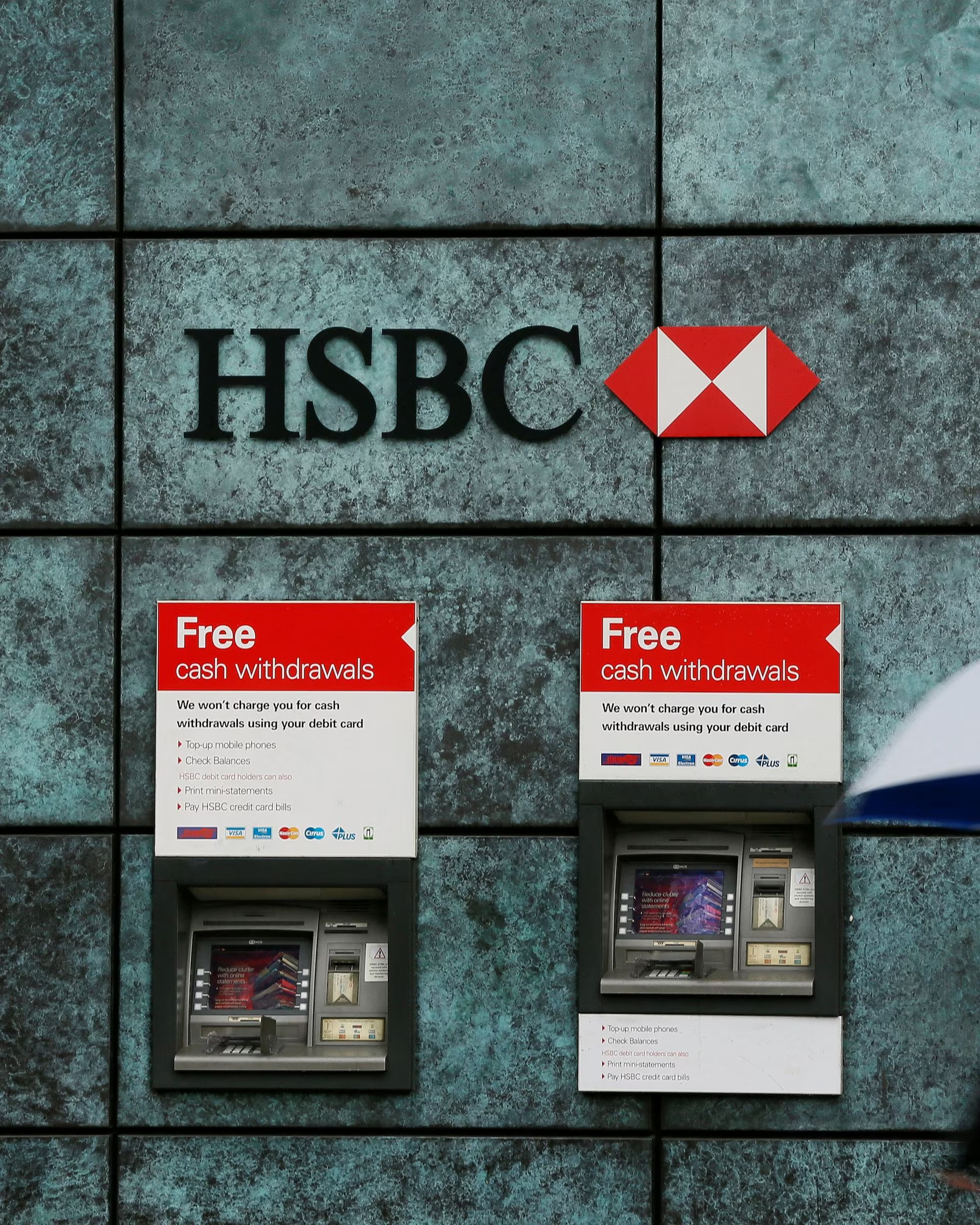
HSBC, Europe’s largest lender by assets, has reported a significant drop in its Q2 2025 profits, underscoring the mounting pressure on global financial institutions as they grapple with both macroeconomic turbulence and internal restructuring.
The Numbers Behind the Narrative
For the quarter ending June 2025, HSBC posted a pre-tax profit of $6.3 billion — nearly 30% lower year-on-year and falling short of internal consensus expectations. This was driven primarily by impairment costs linked to a Chinese banking exposure and the absence of earnings from divested business units earlier this year.
Revenue came in at $16.5 billion, just below analyst forecasts, while operational expenses rose 10% — largely tied to technology investments, restructuring initiatives, and inflation-linked cost escalation.
Despite the underwhelming quarter, the bank announced a fresh $3 billion share buyback, signaling continued capital strength and confidence in long-term shareholder value.
Systemic Challenges, Strategic Answers
Group CFO Georges Elhedery pointed to deepening structural shifts in the global economy — including rising trade barriers and fiscal fragilities — as contributing factors to market volatility and investor caution.
While direct revenue impacts from new tariffs are expected to be limited, HSBC cautioned that the broader macroeconomic context could weigh on future profitability. The bank’s key metric, Return on Tangible Equity (RoTE), may fall outside its target range in the coming years if headwinds persist.
Asia-Middle East Strategy Tightens
In keeping with its pivot to Asia and the Middle East, HSBC continues to scale back investment banking operations in Europe. Following earlier announcements of an exit from parts of its M&A and equities businesses in the West, reports now indicate job cuts within the German equities division — a move consistent with the firm’s gradual repositioning of its investment banking arm.
This operational simplification is part of a wider reorganization that segments HSBC into distinct Eastern and Western market divisions, aimed at boosting cost-efficiency and strategic clarity. Estimated annual savings from this transformation are expected to exceed $300 million.
Where Growth Still Exists
While lending activity remains subdued, HSBC highlighted continued strength in its wealth management business — a pillar of its future strategy. The bank reiterated its medium-term target of achieving double-digit growth in fee-based income across the division.
Leadership Transition Looms
With current Group Chairman Mark Tucker set to step down in September, questions remain over leadership continuity and strategic cohesion. As the bank doubles down on cost reduction without overhauling its business model entirely, maintaining the support of its increasingly Asia-focused investor base will be paramount.
Partner With Us
Want to feature your brand, business, or service on 365247 — Whether you’re looking to sponsor, collaborate, or build presence within our ecosystem, we’d love to explore it with you.
Submit Your Interest Here
IMAGE: Reuters