All sponsorship slots for the inaugural FIFA Club World Cup 2025 have officially been sold out, marking a major milestone in the commercial evolution of global football. As Chelsea FC and Paris Saint-Germain prepare for the tournament’s finale, FIFA has quietly pulled off something just as significant off the pitch: building a sponsorship model that’s raising the bar across the sport and entertainment industry.
Global Brands, Local Impact
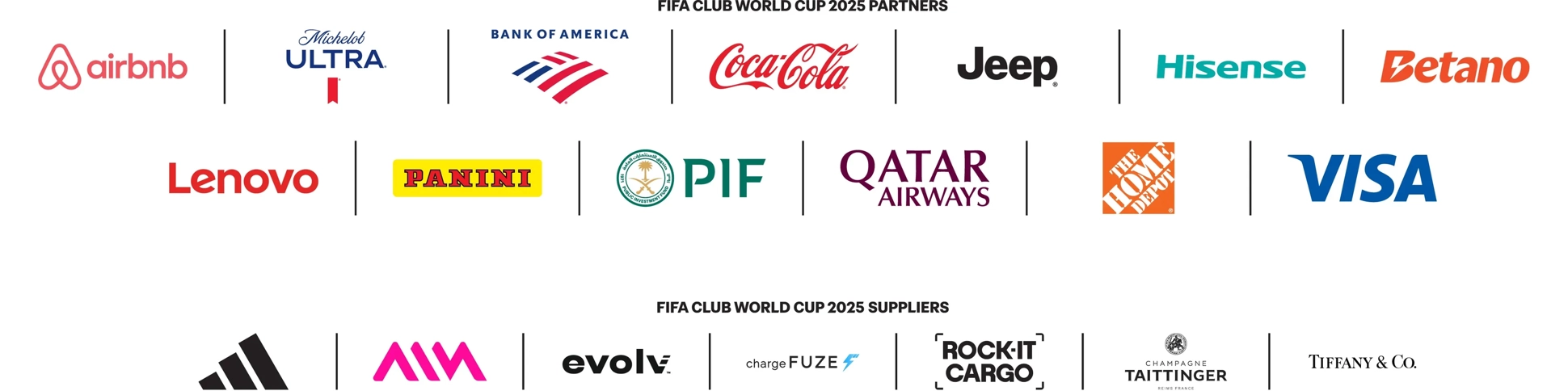
The event — featuring 32 clubs across 11 U.S. cities — has attracted a powerhouse roster of commercial partners. Among the latest to join:
- Panini, taking on a dual role as sponsor and Presenting Partner of the official halftime show.
- Jeep®, confirmed as Official Automotive Partner, signaling a deeper integration of lifestyle brands into FIFA’s club competition ecosystem.
From fast-moving consumer goods to automotive and entertainment, this lineup reflects football’s universal appeal — but more importantly, the strategic architecture behind FIFA’s new partnership approach.
Not Just Branding — Embedded Experiences
This isn’t just another logo-on-the-backdrop model. FIFA introduced a refreshed commercial framework for this new tournament, with customizable rights, experiential branding, and deeper product/service integration baked into the package.
The result? A record-breaking commercial haul — the highest sponsorship revenue ever for a first-time sports property — and a new template for how tournaments can deliver value both to fans and brands.
Rather than sticking with traditional inventory, FIFA’s offering included:
- Modular brand activations embedded within venue experiences.
- Digital-first integrations that travel well across social media and OTT platforms.
- Cultural content hooks, like the Panini halftime show, to engage younger demographics.
The New Playbook for Commercial Rights Holders
At 365247 Consultancy, we believe this tournament’s commercial blueprint is a landmark moment for club football properties — particularly in how it redefines value for sponsors. Here’s why:
Format innovation breeds sponsor appetite. A 32-club format gave global brands confidence in reach, duration, and cultural relevance.
Integrated assets > static signage. The best rights holders now offer immersive, ownable, fan-facing activations.
U.S. staging maximized monetization. The tournament leveraged America’s hospitality infrastructure and entertainment marketing logic to create a media product that sells.
Whether you’re a federation, club, or league, the lesson is clear: your next commercial model must offer deeper partner relevance and tangible ROI beyond TV exposure.
Ready to Commercialize Like FIFA?
At 365247 Consultancy, we help football stakeholders design modern sponsorship strategies that deliver global impact and local value. From commercial blueprinting to rights packaging, we build what brands want to buy.