Live sport still sits at the center of fandom. But the edges—the spaces before, during, and after the whistle—are where the next decade will be won. The latest industry data shows something deeper than “highlights are popular” or “streaming is growing.” Fans are recoding what engagement means: from passive watching to playing, personalizing, and participating—online, in-stadium, and across multiple screens at once.
This article unpacks the quiet shifts driving that change and turns them into a practical roadmap for rights-holders, leagues, clubs, venues, and broadcasters. It draws on findings reported in the IBM Sports Survey 2025 and blends them with 365247’s consulting perspective on what to do next.
Executive Signals (What Actually Changed)
- Engagement is fragmenting by age, not collapsing overall. Declines in some Western markets are largely an over-55 story. Younger fans are stable or up—just on different formats.
- Gen Z defines “content” as “play.” Prediction, fantasy, mini-games, and interactive streams aren’t add-ons; they’re the front door to fandom.
- Stadiums are becoming software environments. With nine in ten attendees using apps on-site, venues are now live testbeds for AR, commerce, and community.
- Apps have become the fan’s operating system. They’re no longer utilities; they’re year-round community, content, and commerce engines.
- Product needs to localize by culture. North America indexes toward stats and analytics; many other regions prioritize commentary, connection, and community.
- AI is moving from “for me” to “with us.” Personalization remains table stakes; the next frontier is AI that powers translation, moderation, and fan-to-fan connection.
- “Live” has plateaued—but can be reinvented. Daily viewing isn’t growing; the experience needs to become interactive, communal, and customizable.
- Attention is multi-device by default. There is no single “main screen” anymore; the job is to orchestrate attention across flows.
1) The Generational Split You Can Monetize
What’s happening: In the US, Canada, UK, France, and Spain, dips in “extra content” engagement are driven predominantly by fans 55+, while younger groups hold steady or rise.
What to do next
- Dual-track product:
- Under-30s: hyper-personal feeds, creator-led formats, gamified watch-alongs.
- 55+: simple, time-efficient updates, clean UX, fewer clicks, “one-tap catch-up.”
- Media planning by life stage: Early evenings and morning commutes skew older; late evenings/weekends skew younger and social.
- Measurement: Report engagement by cohort, not just the blended average. You’ll find the “decline” vanishes when segmented.
2) Gamification Is Now a Core Content Format
What’s happening: Fans 18–29 disproportionately rank “I want to play games” at the top of their sports content priorities. Older fans rarely do.
What to do next
- Game loops in every tent-pole: Predictions, streaks, watch-to-win, and live micro-challenges tied to real game moments.
- Fantasy 2.0: Reduce friction (autofill picks, social squads), add cultural hooks (memes, creator challenges), and reward participation not just accuracy.
- Sponsorship by outcome: Sell partners on attributable actions—picks placed, squads formed, wallets linked—not vanity impressions.
3) Venues as Living Labs
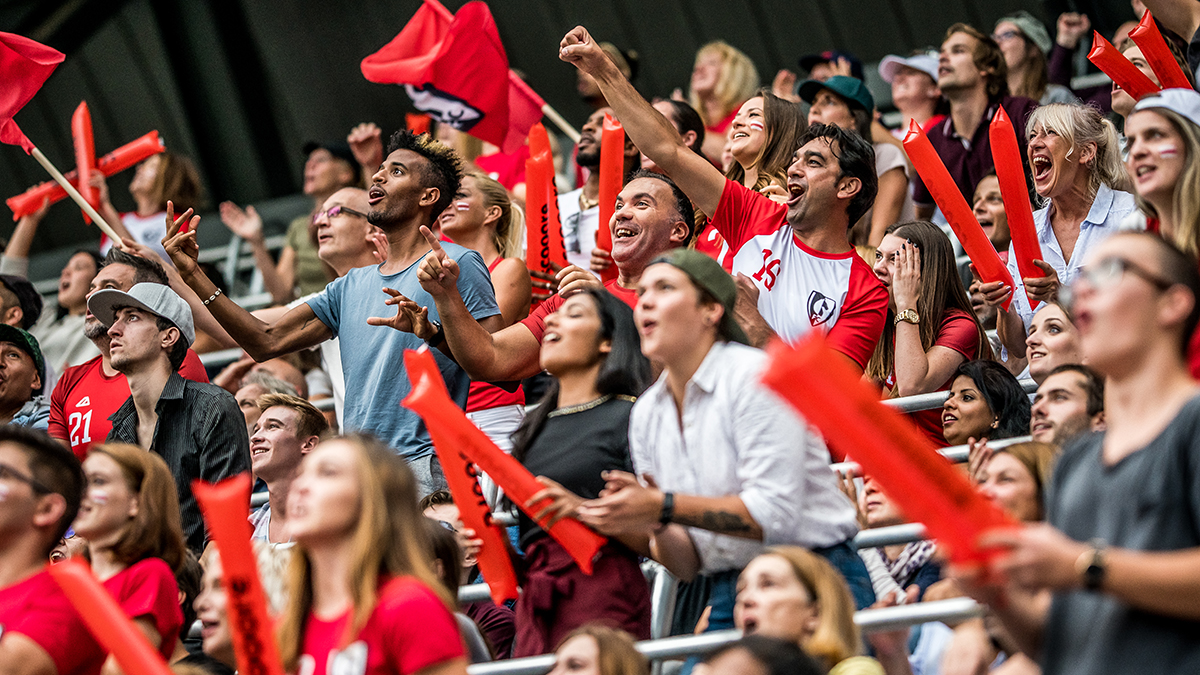
What’s happening: ~91% of in-stadium fans use apps; in-person attendees are the heaviest weekly app users.
What to do next
- Stadium-first pilots: Trial AR replays, multilingual captions, tap-to-bet responsibly, dynamic concessions pricing, and seat-based loyalty tiers.
- “Companion Mode” UX: A latency-aware, low-glare interface designed for bright environments, with vibration cues synced to key events.
- Closed-loop ROI: Tie on-site interactions (scans, purchases, quests) to post-match retention, merch conversion, and repeat attendance.
4) From Utility App to Year-Round Fan OS
What’s happening: ~73% of fans use sports apps; usage spikes even higher among those who attend games. Gen Z adoption is strongest; 55+ lags.
What to do next
- Own your graph: Build identity, preferences, and history in your owned app layer, not only on rented platforms.
- Program the off-season: Creator residencies, youth challenges, film-room series, and transfer windows keep community alive 12 months a year.
- Monetize the moments: Micro-subscriptions for premium analysis, drops, and behind-the-scenes; dynamic bundles tied to schedule spikes.
5) One Product Won’t Fit Every Market
What’s happening: North American fans over-index to stats and analytics; many other markets gravitate to commentary and community features.
What to do next
- Regional product toggles:
- NA: deeper data tiles, win probability, shot maps, micro-bet integrations.
- EMEA/Asia/ME: social rooms, language-first commentary, creator-led explainers.
- Localized creator networks: Commission regionally relevant voices; measure narrative lift (shares, watch time) not only reach.
- Pricing strategy: Match value perception—data-led tiers in NA, community/experience-led tiers elsewhere.
6) AI’s Next Job: Connect Fans to Each Other
What’s happening: Fans increasingly value AI that builds community—translation, safety/moderation, topic routing—beyond pure personalization.
What to do next
- Multilingual togetherness: Real-time translated chat, comment threads, and Q&As that collapse language barriers.
- Healthy rooms at scale: AI-powered moderation that filters hate/spam, elevates insightful contributions, and protects creators.
- Smart discovery: Recommend people and rooms to join, not just clips to watch.
7) Creators as Narrative Architects
What’s happening: Nearly half of fans follow sports creators; storytelling quality is the lever that drives connection and habit.
What to do next
- Brief for story arcs, not posts: Underdog journeys, tactical masterclasses, matchday city culture, and player origin stories.
- Co-create formats: Dual commentary streams, film-room break-downs, “walk with me” vlogs around fixtures and festivals.
- Pay for performance that matters: Retention, shares, and first-time viewer conversion—not just raw views.
8) Gen Z’s AI Standard: Instant, Personal, Immersive
What’s happening: Younger fans see AI as baseline infrastructure. They expect real-time stats, tailored feeds, alternate angles, and instant translation.
What to do next
- AI everywhere: Dynamic overlays in live video, personalized highlight reels on demand, interactive 3D moments for replays.
- Latency wins loyalty: Engineering targets (sub-second updates) matter to perception; publish them as product promises.
- Accessibility by design: Auto-captions, second-language commentary, and adaptive UX for small screens.
9) Reinvent “Live,” Don’t Accept the Plateau
What’s happening: Daily live viewing has stayed flat; weekly remains strong. The model is mature, not broken.
What to do next
- Live as a canvas: Switchable commentary (pro + creator + friend party), audience-driven camera choices, live polls affecting studio segments.
- Social presence layers: Verified watch-alongs, club-hosted rooms, and creator “drop-ins” that spike communal moments.
- Short-form concurrency: Official, real-time highlight clips pushed to the app and social during the game to feed the attention flywheel.
10) Orchestrate Multi-Device Attention
What’s happening: Multi-device viewing rises—especially among Gen Z. There is no single main screen.
What to do next
- Design the journey, not the screen: TV for shared viewing; mobile for interaction and stats; laptop for fantasy and commerce. Make them talk.
- Session stitching: Recognize the same fan across devices, carry progress/state, and reward the whole session—not siloed clicks.
- Measurement upgrade: Move from per-screen KPIs to orchestrated outcomes (e.g., “viewed live + played prediction + saved a clip”).
365247 — What We Do
We help rights-holders, leagues, clubs, broadcasters, and venues turn increase fan engagement, and drive fan behaviour into measurable revenue. Our work blends commercial strategy, product design, and storytelling to build systems that fans love and sponsors pay for.
Let’s talk for a detailed session
Partner With Us
Want to feature your brand, business, or service on 365247 — Whether you’re looking to sponsor, collaborate, or build presence within our ecosystem, we’d love to explore it with you.
Submit your interest here
Method note: This analysis is informed by key findings reported in the IBM Sports Survey 2025.
IMAGE: Getty Images