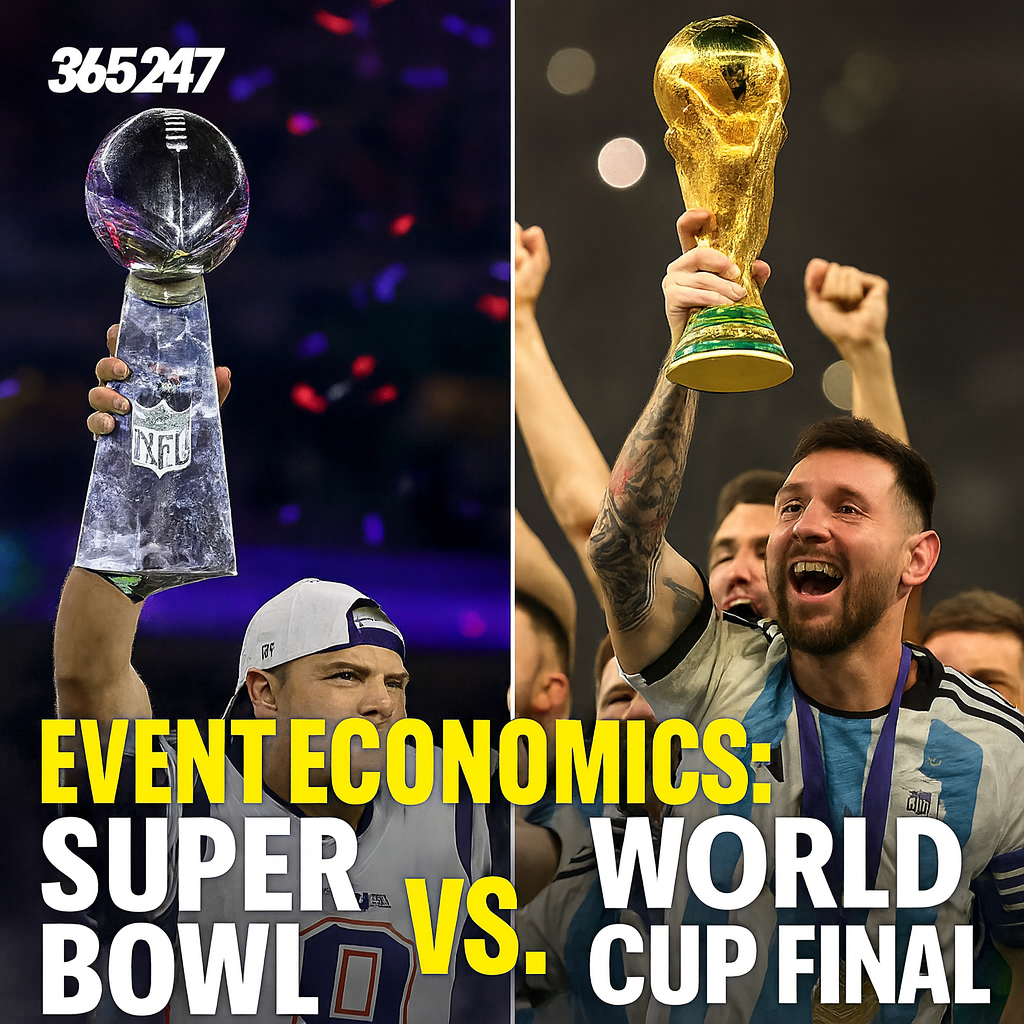
When it comes to global spectacles, few events rival the Super Bowl and the FIFA World Cup Final. Both are among the most-watched broadcasts on the planet, but the business models behind them couldn’t be more different.
The Super Bowl: A Masterclass in Scarcity
- Viewership: ~110 million
- Revenue: More than US$500 million in ad sales in a single day
- Positioning: A cultural phenomenon that transcends sport
The Super Bowl is less a football game and more a national holiday in the U.S. Its real strength lies in scarcity — one night, one game, one chance. Advertisers fight to be part of that cultural moment, knowing their 30-second slot can reach the widest possible mainstream audience. The halftime show, celebrity appearances, and brand activations turn it into a 360-degree entertainment product.
The World Cup Final: Scale Without the Same Yield
- Viewership: ~1.5 billion
- Revenue Model: Spread across FIFA, broadcasters, sponsors, and national federations
- Challenge: Monetization per eyeball is dramatically lower
The World Cup Final dwarfs the Super Bowl in raw numbers. But unlike the concentrated revenue structure of the NFL’s showcase, FIFA’s model spreads earnings across multiple stakeholders. Ticketing, sponsorship, media rights, and host nation revenues all flow into different pockets. What looks like the biggest audience in sport does not automatically translate into the highest per-fan monetization.
The Strategic Lesson
The Super Bowl demonstrates a vital truth: size isn’t everything.
It’s not about how many people watch; it’s about the value of each minute of attention. By curating scarcity, controlling storytelling, and positioning itself as a cultural event, the Super Bowl extracts far more value per viewer than even the World Cup Final.
For rights holders, leagues, and clubs, the implication is clear:
- Create scarcity. A single game can be worth more than an entire tournament if framed correctly.
- Build culture around the event. Halftime shows, celebrity tie-ins, and entertainment crossovers deepen cultural value.
- Capture attention with precision. The key metric isn’t total viewership, it’s how much value you generate per eyeball.
In the age of fragmented attention and saturated calendars, the winners will be those who treat sporting events not just as competitions, but as cultural anchors with unique economic ecosystems.