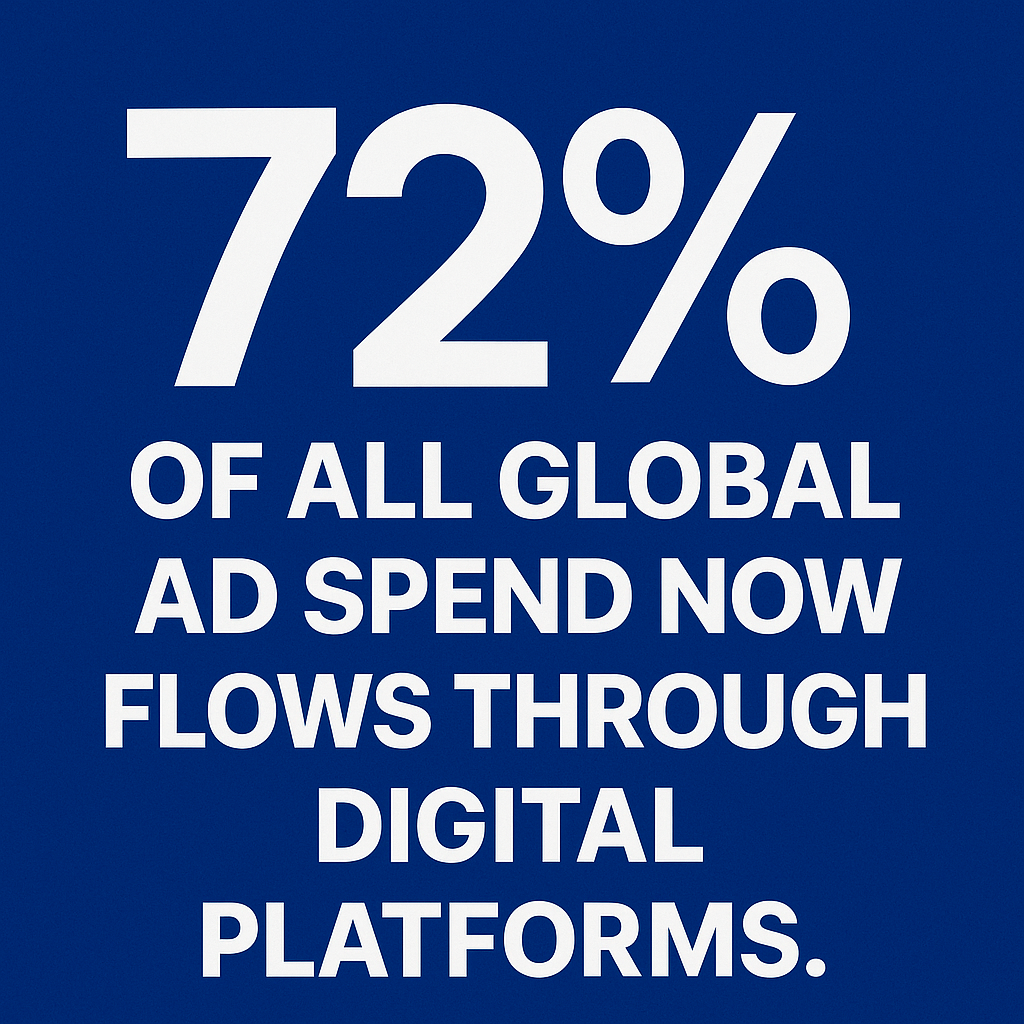
The sponsorship landscape is being reshaped by one undeniable fact: 72% of all global ad spend now flows through digital platforms. Even more striking, 85% of that money is captured by just three companies — Meta, Google, and Amazon.
For brands chasing reach and precision, these platforms have become the default. Why gamble on a mid-tier rugby club’s unproven audience data when TikTok or YouTube can guarantee precise targeting, instant reporting, and scale at a fraction of the risk?
This shift leaves sports rights-holders — particularly those outside Tier 1 properties — in a precarious position. Sponsorship is no longer the automatic “first-choice” for marketers. It has to be earned, justified, and data-backed.
The Data Deficit
The contradiction is stark:
- Only 13% of Tier 2 rights-holders have integrated data strategies.
- Tier 3 properties? Zero.
Yet these same organizations are forecasting sponsorship growth, heavily dependent on their ability to leverage fan data. The disconnect between ambition and capability risks widening the gulf between elite properties and everyone else.
Why Data Is the New Currency
For sponsors, exposure alone is no longer enough. They want proof:
- Who saw the activation?
- How did they engage?
- What action did they take?
AI-driven tools now allow rights-holders to connect ticketing, CRM, content, and commerce into a single ecosystem. But most still treat fan databases as afterthoughts rather than as commercial growth engines.
Without this sophistication, rights-holders are effectively selling “scraps” — awareness without attribution — while tech giants dominate the marketing value chain.
What Needs to Change
- Build first-party fan ecosystems
Ticketing, merchandise, content subscriptions, and mobile apps must feed into a unified CRM. - Shift from “exposure” to “outcomes”
Rights-holders should sell sponsorships not just on visibility but on measurable KPIs — leads generated, conversions, and purchase intent. - Invest in data literacy
Commercial teams need to evolve beyond sales pitches to include analytics, dashboards, and predictive insights that mirror what advertisers already get from digital platforms. - Collaborate, don’t compete, with digital giants
Rights-holders can’t beat Meta, Google, or Amazon at scale — but they can integrate with them, offering hybrid sponsorship packages that blend the authenticity of sport with the precision of digital targeting.
The Bigger Picture
The sponsorship economy is at an inflection point. Tech giants have set the benchmark, and rights-holders must evolve or risk being left behind. For those willing to embrace data-driven transformation, the opportunity isn’t just survival — it’s to reclaim relevance in a world where sponsorship must prove its ROI in real time.