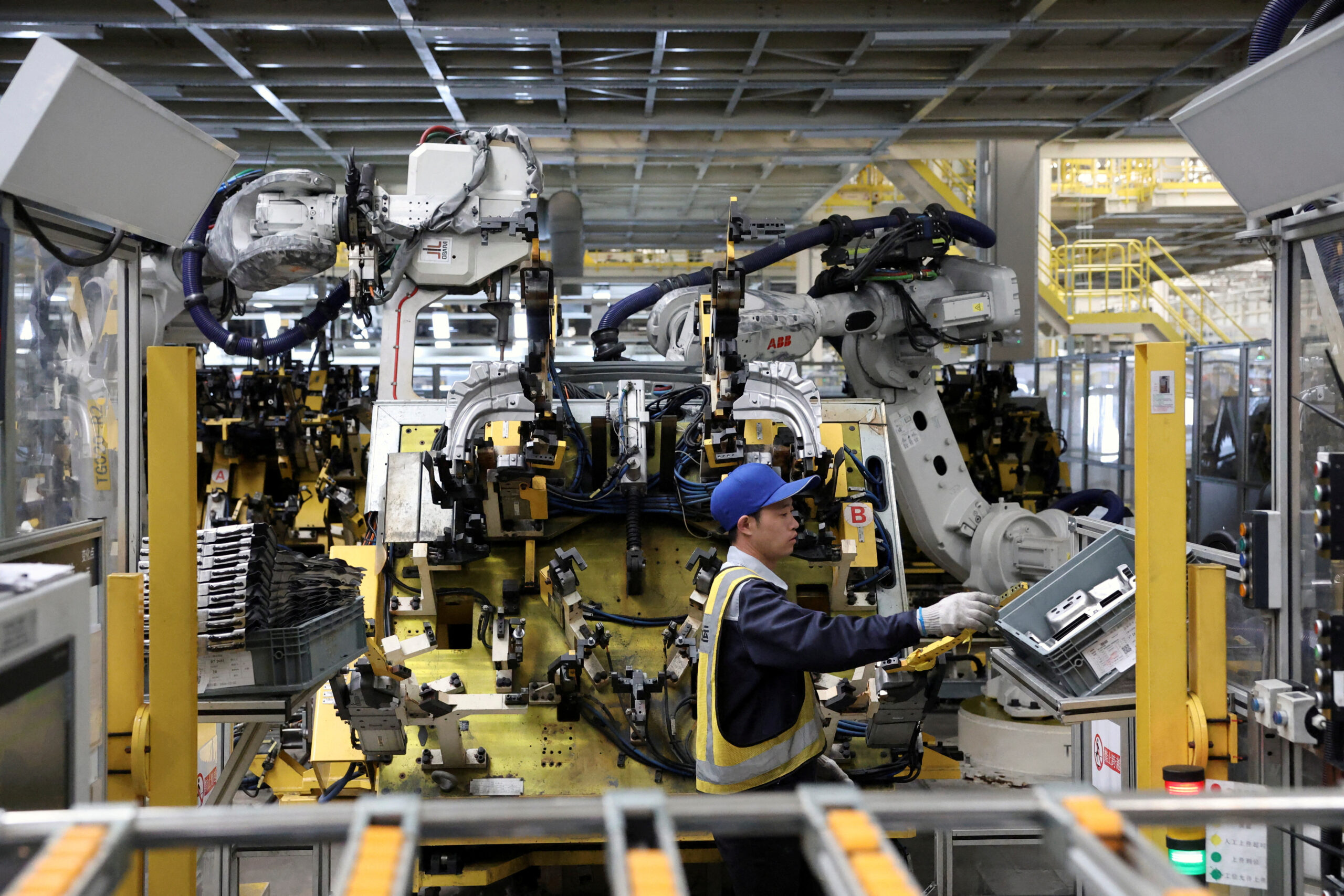
Despite Beijing’s ongoing attempts to stimulate its economy, China’s industrial sector is under renewed pressure—with profits plunging by 9.1% in May 2025 compared to the same month last year. This marks the steepest monthly drop since October 2024, signaling deep-rooted challenges for manufacturers, miners, and utilities.
The cumulative data for the first five months of 2025 shows industrial profits down 1.1% year-on-year, according to official releases. Weak domestic demand and falling product prices were cited as key headwinds. The trend adds weight to broader concerns that China’s post-pandemic economic engine is sputtering, even as certain retail and consumption indicators show resilience.
Sector-by-Sector Breakdown
Mining: A sharp 29% drop in profits, reflecting falling commodity prices and global oversupply.
Manufacturing and Utilities: Slight upticks, but not enough to offset sector-wide contraction.
Auto Manufacturing: Registered an 11.9% decline, likely tied to price competition and cooling exports.
State-Owned Enterprises: Profits dipped 7.4%, underscoring systemic inefficiencies.
Foreign-Invested Firms: A rare bright spot, with 0.3% profit growth, driven by stronger trade ties in Asia and Europe.
Stimulus vs. Structural Strain
Despite earlier government interventions—ranging from infrastructure spending to consumer subsidies—Chinese enterprises continue to report margin compression. The key reason? Price wars and deflationary pressures. Businesses are slashing prices and ramping up promotions just to maintain market share, eating into profitability even as retail foot traffic increases.
According to Alfredo Montufar-Helu from The Conference Board, price levels remain below pre-Covid benchmarks, especially in consumer-facing sectors like hospitality and retail.
Will Beijing Intervene Again?
Economists are split. With GDP growth tracking at 5.2% in the first half—slightly above China’s official target—policymakers may feel no urgency to introduce a fresh wave of stimulus in the upcoming Politburo meeting.
That said, lingering concerns over trade tensions with the U.S., especially surrounding tariffs and technology export controls, may push Beijing to act depending on how U.S.-China negotiations unfold in late July.
“Further stimulus depends on the geopolitical temperature, not just economic indicators,” said Neo Wang of Evercore ISI.
Trade Still Holding—But With a Pivot
Interestingly, despite a 34.5% decline in exports to the U.S., China’s overall exports rose by 4.8% in May, buoyed by growth in Southeast Asia and EU markets. Citi expects a 2.3% rise in total exports for 2025, factoring in trade shifts and a weakened yuan that aids competitiveness.
The U.S. and China recently agreed to a 90-day trade pause, which includes easing some tariffs and export restrictions. However, deeper structural disagreements—particularly around critical minerals and technology access—still loom large.
The Road Ahead
While some analysts believe the worst of the profit squeeze may have passed, others warn of a slowdown in the second half of the year due to:
- Post-boom normalization in exports
- Unrelenting price competition
- Impact of tariffs on direct U.S. shipments
China’s industrial slowdown is not just a local issue—it is a global signal. As the world’s factory adjusts to softer demand and changing trade dynamics, the effects are likely to ripple across supply chains, commodity markets, and investor sentiment worldwide.
Stay ahead with 365247 Media – where business meets global strategy.
Join the 365247 Community here.
IMAGE: Reuters