Just five years ago, Como 1907 were fighting for survival in Italy’s fourth division. Bankrupt, overlooked, and trapped in the lower tiers, the club seemed destined for obscurity. Then came a turning point: an acquisition by Sent Entertainment Ltd. in 2019 for just €800,000.
Since then, Como has engineered one of the most remarkable ascents in modern European football. Three promotions in five years propelled the club into Serie A, and in its first top-flight season (2024/25), Como not only survived — they finished mid-table in 10th. Squad value has grown by nearly 30 times between 2020 and 2025, placing Como among the most intriguing projects in European football.
But can Como sustain this fairytale against Italy’s giants — and can its wealthy owners turn “La Dolce Vita” into a long-term system rather than a short-lived spectacle?
The Wealth Behind the Project
At the center of Como’s rise are brothers Rudi and Michael Hartono, Indonesian tobacco magnates with an estimated combined fortune of $48 billion (Forbes). In comparative terms, they dwarf Serie A’s other power players:
- Agnelli family (Juventus): €15.9 billion
- Rocco Commisso (Fiorentina): $8 billion
- Dan Friedkin (Roma): $7.7 billion
For once, Italy’s richest club owners are not in Turin, Milan, or Rome, but in a lakeside town of just 85,000 people.
Cesc Fàbregas: From Shareholder to Manager
Perhaps the most fascinating figure in Como’s story is Cesc Fàbregas.
- In 2022, he joined as a player on a two-year contract, with a small equity stake in the club.
- By 2024, he had retired, transitioned directly into management, and signed a contract as head coach until 2028.
- He has full transfer control — rare in Italian football — and earns roughly €5 million per year.
- Inter Milan attempted to lure him away as head coach, but the Hartonos matched the offer, signalling both trust and ambition.
Fàbregas’ journey — shareholder → player → manager — is unprecedented in modern football and places him as the symbolic face of Como’s project.
The Hype Machine
Como has built a cultural aura far beyond its results on the pitch:
- Thierry Henry is a minority shareholder.
- Hollywood A-listers like Keira Knightley, Hugh Grant, and Adrien Brody have been spotted at matches.
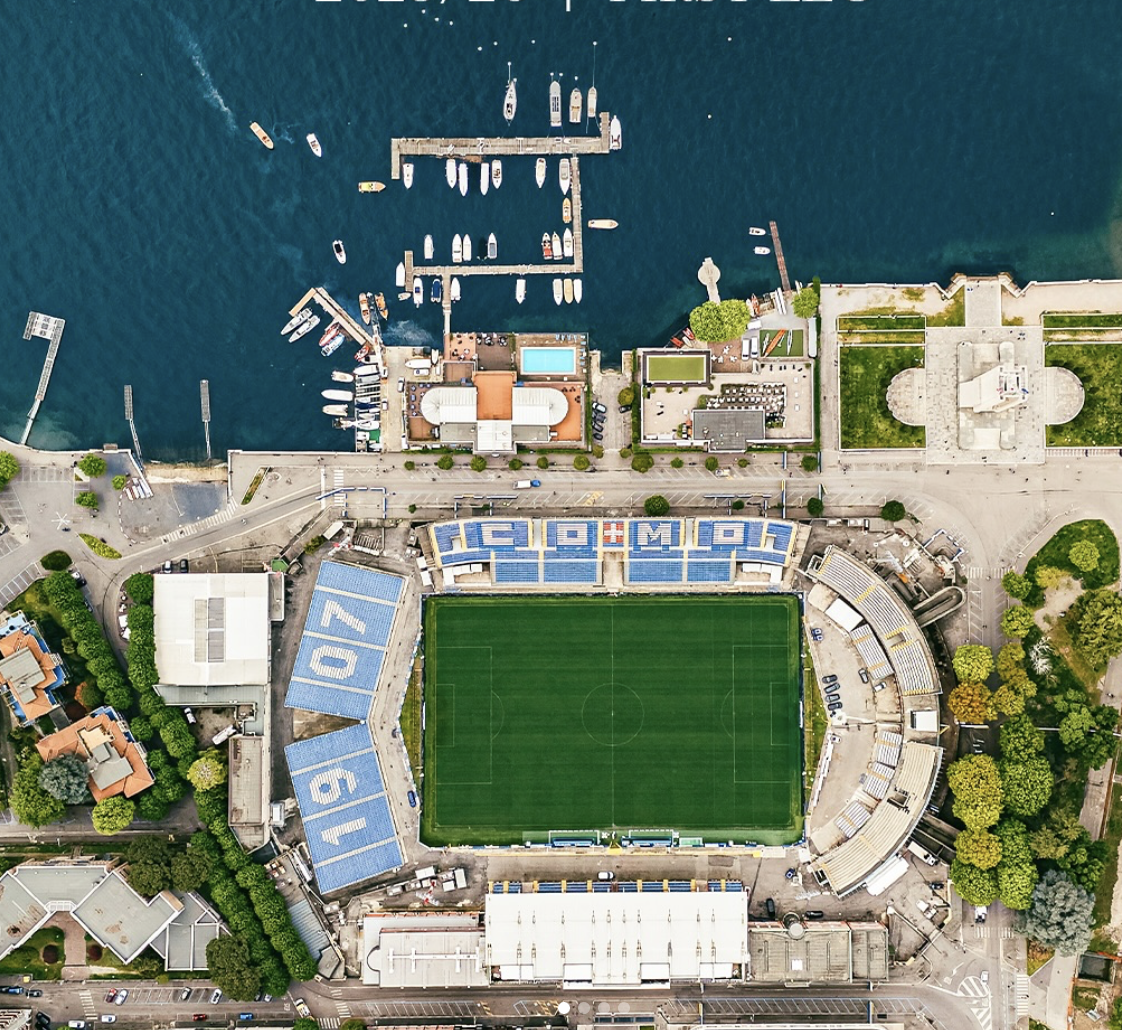
- The historic Giuseppe Sinigaglia Stadium, perched on the edge of Lake Como, is undergoing phased renovations to expand capacity to 15,000–20,000 by 2028.
This is not just football — it’s lifestyle theatre, wrapped in the mystique of “La Dolce Vita.”
The Disneyland Model
Como’s owners aren’t shy about their ambitions to make the club more than a sporting entity.
- VIP matchday travel packages have been launched, tying football into the broader €1.5 billion Lake Como tourism industry.
- The lake itself is being branded as Intellectual Property, featured in merchandise and global storytelling campaigns.
- The long-term strategy is to turn Como into football’s answer to a luxury resort: a fusion of sport, leisure, and lifestyle.
Football, in this vision, becomes not just competition but an immersive experience — a product that rivals entertainment brands as much as it does traditional Serie A clubs.
Achievements So Far
- Promotion from Serie D to Serie A in just five years.
- Stabilization of finances after bankruptcy.
- Survival and mid-table finish in year one back in the top flight.
- Construction of a narrative that fuses football with cultural cachet.
The next target? European qualification. If Como can reach UEFA competitions within the next two years, the “Disneyland” model will gain a credibility boost that could draw more investors, sponsors, and fans.
Can This Be Sustainable?
At 365247, we see Como as a live case study for football as lifestyle IP. The project raises both opportunities and challenges:
Strengths
- Capital Advantage: The Hartonos’ wealth ensures long-term runway.
- Unique Differentiation: Few clubs can blend football with a global luxury destination like Lake Como.
- Star Leadership: Fàbregas provides credibility, Henry adds global resonance.
Risks
- Scalability: How far can a small-town club push revenues, even with tourism?
- Over-commercialization: Fans may resist if “Disneyland” overshadows sporting authenticity.
- Performance Dependency: Without European football, lifestyle branding risks becoming superficial.
Strategic Imperatives
- Embed Identity: Keep Lake Como’s cultural authenticity central to the brand.
- Hybrid Revenue Model: Balance lifestyle/tourism with competitive football revenues (matchday, media rights, player trading).
- Global Partnerships: Align with luxury, travel, and lifestyle brands to extend reach beyond Italy.
- Performance Floor: Guarantee Serie A survival every year — lifestyle branding collapses without sporting credibility.
The Road Ahead
Como 1907 is one of the most fascinating experiments in European football today. If successful, it could redefine what a “small club” can achieve in the age of billionaire ownership — proving that cultural positioning, lifestyle branding, and elite management can compensate for scale.
But success will depend on execution. For Como, the next five years are not about money alone; they are about credibility, culture, and consistent performance.
Work With 365247
At 365247 Media, we help clubs, owners, and investors turn identity-driven projects into sustainable systems. From luxury positioning to sponsor alignment and fan engagement frameworks, our role is to ensure hype becomes measurable, long-term value.
Contact us today to design your club’s identity-led growth strategy — where culture, performance, and commerce align.