Chinese electric vehicle (EV) manufacturer BYD is facing a paradox in India: growing popularity among consumers paired with growing difficulty in executing its operations. Despite strong sales momentum in the Indian market, the automaker continues to be hampered by geopolitical tensions that limit its ability to manage and scale its operations locally.
Strong Market Response, Weak Institutional Access
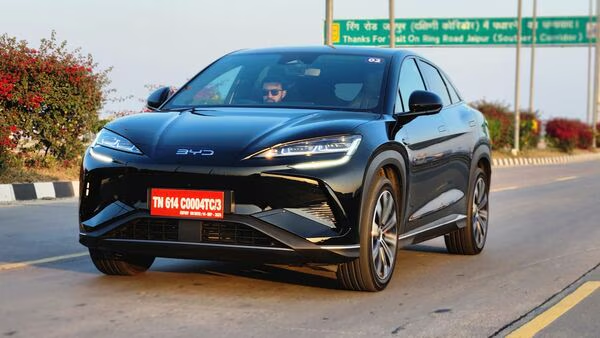
BYD’s footprint in India has expanded on the back of its electric passenger vehicles — notably well-suited to the Indian urban landscape. By mid-2025, the company’s EV sales in India had already come close to matching its total for the entire previous year. Indian drivers are responding to the product — but the Indian state is not as receptive.
While market appetite appears promising, BYD’s internal operations have been disrupted by restrictions that prevent key personnel from obtaining work visas or business permits. The company’s India managing director has had to manage regional operations from other locations — including Sri Lanka, Nepal, and even Tokyo — due to the inability to re-enter or work from India.
This physical detachment has hindered the company’s ability to make agile, ground-level decisions — something particularly vital in a price-sensitive and fast-evolving auto ecosystem like India’s.
Policy Freeze: Strategic or Structural?
The Indian government has made it clear that investment from Chinese-origin OEMs remains sensitive. The official position is informed by broader national security considerations and a legacy of economic caution since 2020. This has resulted in a cold shoulder to BYD’s proposal for a $1 billion EV manufacturing facility in collaboration with an Indian partner — a project that would have unlocked regulatory incentives and tariff reductions.
India’s Commerce Ministry has signaled no immediate intent to alter this stance. From a regulatory perspective, the message is simple: while the Indian EV market is open, participation from certain quarters is still viewed through a strategic filter.
Tesla’s Entry Complicates the Picture
In contrast, Tesla’s arrival in India is being handled through high-level diplomatic channels. Elon Musk’s meeting with Prime Minister Narendra Modi and the planned launch of Tesla showrooms in July 2025 demonstrate the government’s more flexible posture with U.S. automotive giants.
Interestingly, Tesla will also be entering India without local manufacturing in the short term, subjecting it to the same steep import duties that would apply to BYD. However, Tesla benefits from strategic goodwill, and there are expectations that localization may follow once initial market testing is complete.
Looking Ahead: Can BYD Wait It Out?
BYD’s continued efforts to build market share — even without policy tailwinds — signal a long-term commitment to India. But without local decision-makers on the ground or regulatory access to build manufacturing capacity, its ability to scale beyond niche success will be limited.
This moment presents a broader question for multinationals with strategic interest in India: what’s the cost of long-term patience versus short-term limitations?
For BYD, the path forward will likely involve deeper engagement with regional hubs around India, renewed diplomatic navigation, and an emphasis on slow, strategic embedding until policy conditions shift.
India may be an EV growth frontier — but for BYD, it remains a market that rewards resilience more than reach.
Partner With Us
Want to feature your brand, business, or service on 365247 — Whether you’re looking to sponsor, collaborate, or build presence within our ecosystem, we’d love to explore it with you.
Submit Your Interest Here