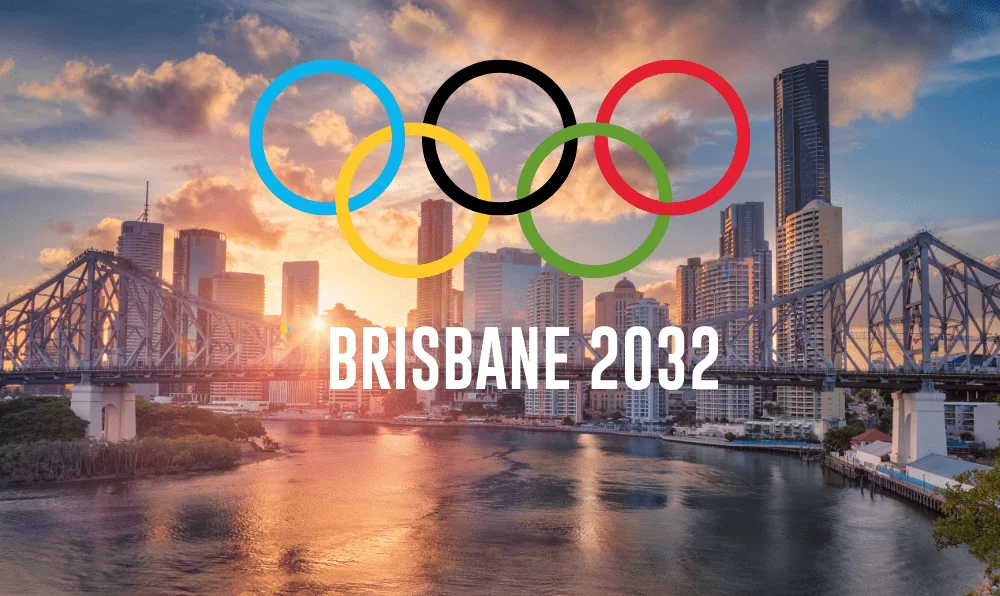
In a landmark development for international sport and urban renewal, the Australian federal government has pledged over AUS$3.4 billion (US$2.23 billion) towards the development of venues for the 2032 Brisbane Olympic and Paralympic Games. This joint funding arrangement, made in collaboration with the Queensland state government, signifies not only the scale of the upcoming Games but also Australia’s ambition to redefine its sporting infrastructure landscape for the next generation.
The Financial Framework
At the heart of the deal is a balanced funding model: the federal and state governments will equally co-finance the construction of smaller sporting venues. However, the showpiece of the investment — a new, multi-purpose stadium in Brisbane’s Victoria Park — will receive AUS$1.2 billion (US$788.6 million) in federal support alone. This venue, expected to cost AUS$3.8 billion (US$2.5 billion), will seat 63,000 spectators and serve as the centerpiece of the Games, hosting both the opening and closing ceremonies as well as the athletics program.
The remainder of the AUS$7.1 billion (US$4.66 billion) venue budget will be covered by the Queensland government and private sector partners, keeping to the originally announced financial ceiling despite earlier planning delays.
A Multi-Use, Long-Term Vision
The new stadium at Victoria Park isn’t just about the 2032 spectacle. After the Olympic flame is extinguished, the venue will transition to become the permanent home of the AFL’s Brisbane Lions and Queensland’s state cricket team. This dual-use strategy is a hallmark of modern Olympic planning — a sharp pivot away from the “white elephant” venues that have historically plagued post-Games cities.
In total, 17 new venues are slated for development, each designed with long-term community integration and multi-sport use in mind. This aligns with Brisbane 2032’s vision to create a Games that delivers lasting economic, sporting, and social legacy — a core component of the International Olympic Committee’s (IOC) reform agenda.
Addressing Delays, Renewing Momentum
While planning has faced multiple setbacks — notably in venue design finalisation and initial timelines — the renewed funding agreement signals a much-needed reset. Brisbane 2032 Organising Committee CEO Andrew Liveris has expressed optimism that construction on major venues will begin by the end of 2026.
The IOC has remained cautiously supportive, offering Brisbane organisers an extended timeline to finalise the Olympic sports program, while also reaffirming their confidence in the host city’s trajectory. The broader goal remains intact: to deliver an innovative, sustainable, and financially disciplined Olympic Games that sets new benchmarks for the modern era.
A Broader Strategic Context
The Brisbane announcement comes as global competition to host the 2036 Summer Olympics intensifies. With bids expected from countries including Saudi Arabia, Indonesia, Turkey, and India (which has formally proposed Ahmedabad as a host city), the 2032 Games serve as a proving ground for new Olympic-era governance, urban development strategies, and global interest alignment.
Meanwhile, the IOC is reviewing its host city selection process, with incoming President Kirsty Coventry acknowledging a growing appetite among IOC members to play a more central role in determining future hosts. This marks a shift in how the Olympic Movement is engaging with geopolitical realities and stakeholder expectations in a changing world.
The Brisbane 2032 Opportunity
The scale and structure of Australia’s Olympic investment provide several key insights for public-private stakeholders:
- Joint Governance Models: The 50/50 federal-state co-investment in minor venues is a replicable framework for future major event planning, balancing political risk and accountability.
- Legacy-Centric Infrastructure: The integration of post-Games use — particularly for the new stadium — sets a new precedent in maximising ROI from mega-event assets.
- Private Sector Pathways: With significant funding expected from private investors, the Brisbane 2032 project opens the door for infrastructure developers, sport-tech firms, event suppliers, and ESG-focused investors to engage early.
- Narrative Control in a Crowded Market: As cities vie for global events, strategic storytelling and stakeholder assurance — especially around legacy, sustainability, and public benefit — will be key differentiators.
Brisbane 2032 is more than just Australia’s next big sporting event. It’s a blueprint for how nations can harness the Olympics as a catalyst for cross-sector collaboration, infrastructure renewal, and soft power projection. For cities and companies looking to shape the future of global sport, the Brisbane Games represent both a challenge and an invitation.
Looking to align your brand or business with the Brisbane 2032 opportunity?
At 365247 Consultancy, we help brands, and private sector players design forward-thinking Olympic strategies.
Contact us today to explore how you can plug into the world’s biggest stage.