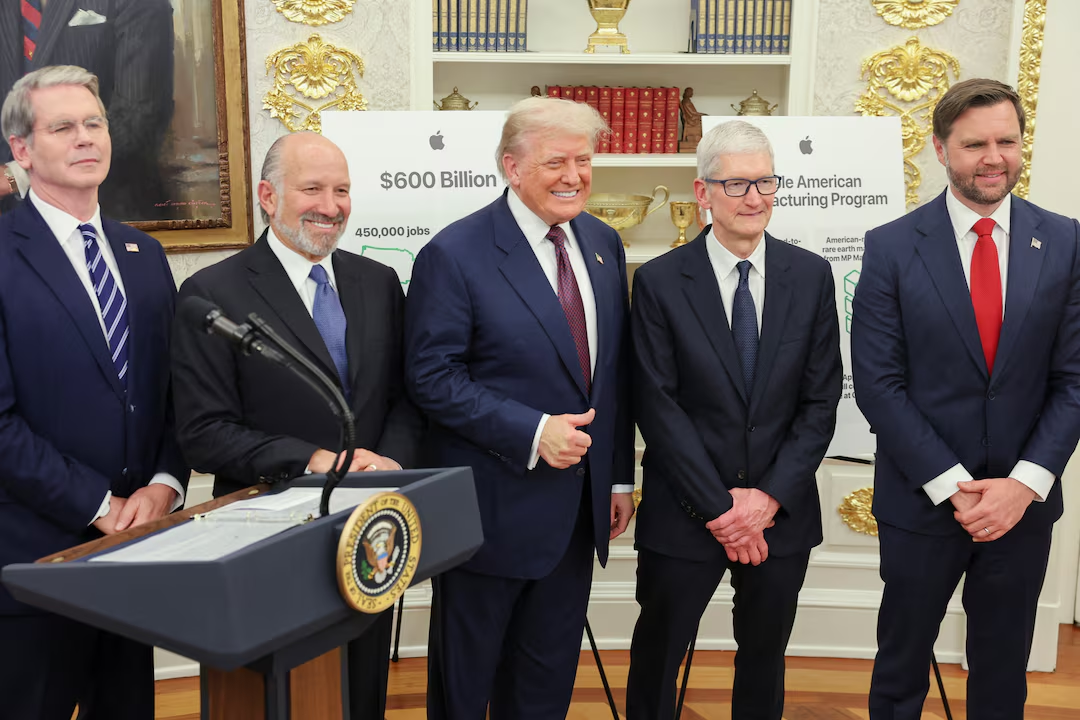
Apple’s recent announcement of a $100 billion expansion in its U.S. investment footprint signals more than just a financial commitment — it’s a calculated maneuver in the high-stakes arena of global trade, geopolitics, and domestic manufacturing narratives.
With this pledge, Apple brings its total domestic investment projection to $600 billion over the next four years, aligning with previous promises of job creation and supply chain diversification. The tech giant had earlier committed to hiring 20,000 workers across the country — a move framed around economic contribution and political alignment.
The timing, however, is telling.
Former President Donald Trump, a long-standing advocate for reshoring American manufacturing, has recently reignited pressure on U.S. multinationals to bring production home. At the heart of this push is Apple — one of the most visible symbols of American innovation, yet one that relies heavily on overseas assembly, particularly in China.
Trump’s warning of potential 25% tariffs on Apple products manufactured abroad may have catalyzed this latest pledge. While the announcement centers on U.S.-based supply chain and advanced manufacturing expansion, it stops short of moving full iPhone assembly to American soil — a sticking point that remains unresolved.
Apple CEO Tim Cook acknowledged that several iPhone components — including semiconductors, glass, and Face ID modules — are already made in the U.S. But he maintained that final assembly operations would continue abroad “for a while,” pointing to cost, scale, and infrastructure realities.
Despite the political overtones, market analysts have been quick to note that Apple’s latest figures are in line with its historical capital expenditure trends. Investment of this magnitude, while headline-grabbing, may not mark a radical departure from its operating rhythm. What it does suggest, however, is strategic optics — especially after a turbulent period in U.S.-China relations and an increasingly protectionist posture in Washington.
“Today is a smart pivot by Apple,” notes Daniel Ives, a tech analyst at Wedbush Securities. “It positions the company closer to U.S. policymakers while minimizing the risk of punitive trade actions. It’s both defensive and forward-looking.”
For Apple, the challenge is balancing global efficiency with domestic expectations. For Trump, it’s about leveraging national manufacturing pride as a pillar of political capital. And for the broader industry? This signals a future where corporate diplomacy becomes just as crucial as product innovation.
Partner With Us
Want to feature your brand, business, or service on 365247 — Whether you’re looking to sponsor, collaborate, or build presence within our ecosystem, we’d love to explore it with you.
Submit your Interest Here
IMAGE: Reuters