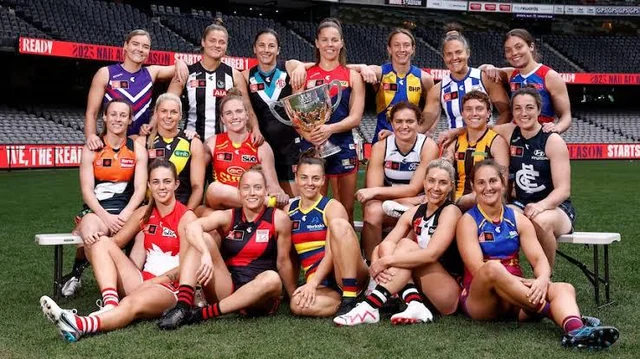
As the AFL Women’s (AFLW) competition heads into its tenth season, the financial numbers behind the scenes tell a complex story of growth, challenge, and strategic recalibration. According to recent internal league presentations, the AFLW is currently operating at a loss of AUS$50 million annually, with total operating costs reaching AUS$100 millionand revenues covering only half that figure.
This revelation was part of a larger internal review conducted by the Australian Football League (AFL), which oversees the women’s competition. The insights were shared with all 18 teams, and highlight critical considerations as the league looks to balance ambition with sustainability.
Expansion vs Economics
The AFLW has grown significantly since its launch in 2017, now featuring 18 teams and a 12-match regular season. However, calls from players for a longer season are being weighed against economic feasibility. The AFL reportedly estimated that a full expansion of the season could double the league’s losses to AUS$200 million per year — a sobering figure that could reshape plans for the sport’s trajectory, including the proposed 2027 entry of a Tasmanian AFLW team.
Some club executives have expressed concern over prioritizing AFLW investment ahead of other pressing infrastructure challenges — such as redeveloping key stadiums like the MCG and improving facilities across regional Australia. In contrast, others argued that the AFLW delivers tangible strategic benefits — including new sponsorship pipelines, government funding, and engagement with new, younger audiences.
Shifting Priorities: Performance, Visibility & Broadcast Value
The AFL has laid out three clear areas of focus to ensure AFLW’s long-term success:
- On-Field Performance: Elevating the overall competitive quality of matches.
- Audience Growth: Reversing recent declines in attendance and viewership, especially compared to the league’s early seasons.
- Financial Independence: Building a standalone commercial model for AFLW, including a potential dedicated broadcast deal beyond 2031.
There are green shoots. The 2024 season saw record streaming numbers via Foxtel, with viewership up 61% year-on-year, and the Grand Final reaching 354,000 free-to-air viewers — the best numbers since 2018.
Compensation, Equity & Club Preparedness
Under the current collective bargaining agreement (CBA), AFLW players have emerged as Australia’s fourth-highest-paid athletes by sport, with average salaries reaching AUS$87,000. However, this rise in player pay hasn’t been matched by club-level resources. Some teams continue to struggle to provide full-time support infrastructure for their women’s squads — suggesting a disparity between top-down league ambition and bottom-up execution capabilities.
Additionally, with the AFL still retaining full control over all AFLW teams, private ownership models — common in international women’s leagues — remain unexplored. Still, the league is closely monitoring global comparables like the WSL, WNBA, and NWSL’s Angel City FC, as it considers future structural reforms.
Future Innovation: The AFL’s In-Season Tournament Pitch
In a move to diversify its commercial strategy, the AFL has floated the idea of launching an in-season tournament post-2028, once Tasmania’s teams are fully integrated. The tournament would carry a AUS$5 million prize and could offer teams a path to post-season qualification — drawing inspiration from the NBA’s recent in-season success.
Such a tournament could provide new storytelling and monetization opportunities, while energizing mid-season engagement for fans and sponsors alike.
The AFLW’s situation isn’t a crisis — it’s an inflection point. For leagues globally trying to grow women’s sport, the real challenge isn’t just investment — it’s alignment of investment with sustainable outcomes. At 365247, we believe:
- A phased expansion strategy can drive audience growth without overwhelming financial risk.
- Clubs need centralized support for infrastructure parity, particularly in player development and backroom staff.
- Women’s leagues globally must decouple from subsidization and move toward revenue independence through media, brand storytelling, and lifestyle integration.
- Data-backed commercial innovation, such as themed in-season tournaments or gamified fan engagement layers, can unlock new value.
Let’s Talk Strategy
We work with federations, clubs, and investors to future-proof build sports strategies.
Get in touch with us to explore how we can reshape growth models with smart, scalable, and globally aware solutions.