The Stadium Beyond Its Name
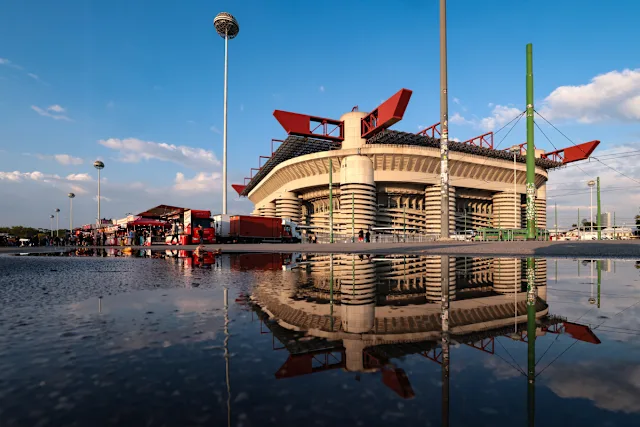
Few football arenas in the world evoke the same emotion as San Siro — officially known as the Stadio Giuseppe Meazza. For nearly a century, this colossal venue has stood as the beating heart of Milanese football, home to both AC Milan and Inter Milan, and a global symbol of Italian sporting heritage.
But as the future of stadium infrastructure evolves — with clubs exploring naming rights and redevelopment deals — the question of identity has resurfaced. Should modern commercialization reshape one of football’s most historic venues?
The Naming Rights Discussion
During a recent event in Milan, Mayor Giuseppe Sala acknowledged the growing importance of stadium naming rightsas part of football’s commercial ecosystem.
“That is a choice down to the clubs,” Sala said. “It’s evident that most European and global stadiums now have sponsorship in the form of naming rights.”
However, speaking not as a politician but as a fan, Sala added a personal sentiment that resonated with many supporters:
“I never managed to refer to the stadium as the Meazza, with all due respect to Giuseppe Meazza. I just called it San Siro. That’s my experience anyway — I really like San Siro.”
His words encapsulate a tension shared by football fans worldwide — between tradition and modernization, emotion and economics.
A Name Rooted in History
The confusion surrounding the stadium’s name is part of its unique story.
Originally opened in 1926 as Stadio San Siro, the ground took its name from the district in western Milan where it was built. At the time, it was a privately funded project by AC Milan, intended exclusively for the Rossoneri.
In 1935, ownership transferred to the Milan city council, and Inter became co-tenants in 1947 — cementing San Siro’s status as the shared home of Milanese football.
The venue was officially renamed in 1979 in honor of Giuseppe Meazza, one of Italy’s greatest ever players and a rare legend who represented both Milan clubs during a career that included World Cup victories in 1934 and 1938.
Yet, decades later, the name “San Siro” endures in the public consciousness — a reflection of how football culture often values emotional geography over formal branding.
Tradition vs. Transformation
As football’s financial models continue to evolve, naming rights have become a crucial revenue stream for clubs and municipalities alike.
- Arsenal’s Emirates Stadium,
- Manchester City’s Etihad Stadium, and
- Bayern Munich’s Allianz Arena
have all shown how strategic partnerships can fund infrastructure and global marketing.
Both AC Milan and Inter have long explored plans for a new shared or separate stadium, with naming rights expected to play a central role in financing. Yet, for many fans and locals, the thought of losing the San Siro name represents a symbolic loss of cultural continuity — the erasure of a landmark that transcends sport.
The Emotional Economy of Football Heritage
Mayor Sala’s remarks highlight an increasingly common dilemma in modern sports: how to balance nostalgia with necessity.
In purely financial terms, naming rights deals are an effective revenue generator. But in emotional terms, the San Siro name is a cultural asset — one that carries decades of memories, rivalries, and collective identity.
This duality defines much of football’s present-day transformation: clubs must innovate to survive commercially, yet remain authentic enough to preserve what fans hold sacred.
Don’t Just Watch Sport, Understand It. Join the 365247 Newsletter for daily insights
For brands, agencies and services
IMAGE: Getty Images