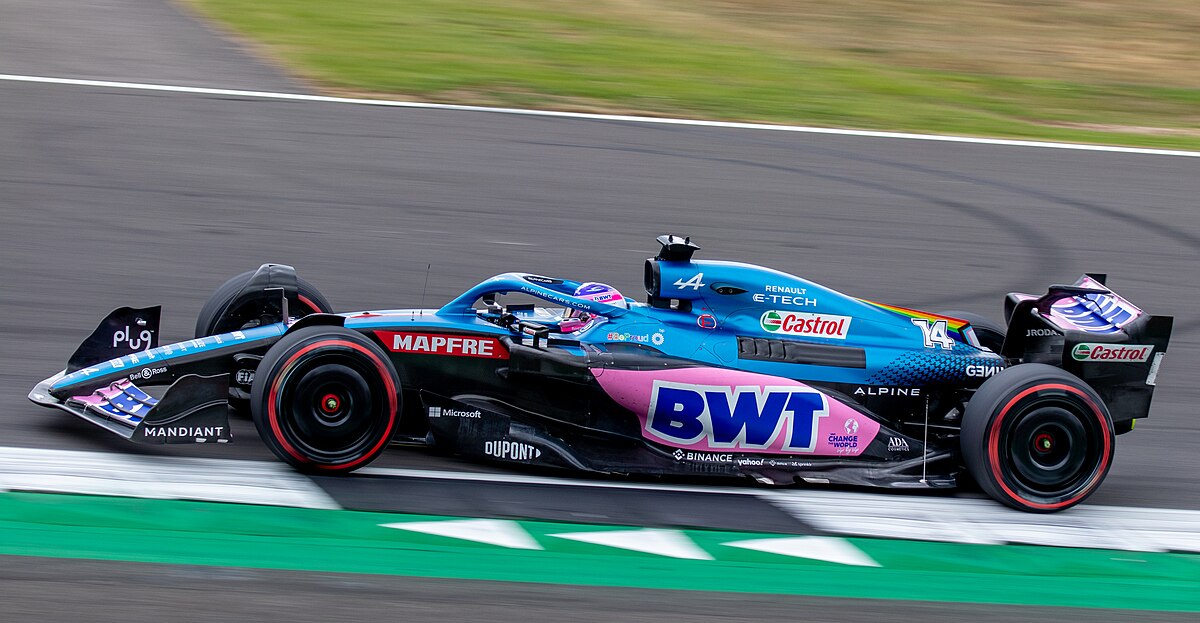
The Alpine Formula One team has reported a £14.6 million (US$19.7 million) loss for the year ending December 31, 2024 – marking its first return to the red after three consecutive years of profitability. The result contrasts with a £7.8 million (US$10.5 million) profit in 2023.
Financial Snapshot
- Turnover: £238.5 million (US$321.9 million), down £11.5 million year-on-year
- Cost of sales: £194 million (US$261.9 million)
- Administrative expenses: £56.1 million (US$75.7 million)
- Total shift: A combined swing of £22.4 million compared to last year’s results
While some of the gap can be explained by a drop in prize money and rising costs, an additional £15.6 million (US$21.1 million) remains unaccounted for – suggesting deeper structural challenges.
Performance on Track, Impact off Track
Alpine highlighted its underwhelming 2023 campaign as a key driver of reduced income. With a 12.9% drop in prize money, the team’s competitive struggles translated directly into weaker financials.
This downturn comes at a time when most Formula One teams are enjoying commercial growth, fueled by F1’s rising global profile, expansion into the U.S., and booming sponsorship activity.
Interestingly, Alpine noted that sponsorship revenue remained “broadly consistent”. In 2024, the team signed partnerships with H. Moser & Cie, Businessolver, JAAQ, Infinox, Apecoin, and Modo Casino, while also renewing deals with Shamir, Banco BRB, and the Venetian Resort Las Vegas.
Long-Term Track Record
Despite the 2024 loss, Alpine remains one of the more financially disciplined operations on the grid. Since 2020, the team has generated an overall profit of £36 million (US$48.6 million) – the second-highest among UK-based F1 teams, trailing only Mercedes.
This long-term profitability stands in contrast to teams like Williams, which has posted cumulative losses of over £200 million since 2020.
Strategic Takeaways
- Performance Matters: F1’s prize money structure heavily punishes poor on-track results. Alpine’s downturn shows just how quickly financial fortunes can reverse.
- Commercial Stability vs Growth: While Alpine has kept sponsors on board, its inability to significantly grow revenues (as rivals like McLaren and Red Bull have done) highlights a gap in activation and brand positioning.
- Cost Pressures: Rising administrative and operational costs continue to squeeze margins, even for mid-tier teams.
365247 Insights
For Formula One teams, Alpine’s results underline a simple truth: financial resilience is now as much about commercial strategy as it is about engineering performance.
- Diversify revenue streams: Teams need to move beyond standard sponsorships and explore lifestyle tie-ins, fan memberships, and digital-first products.
- Capitalize on U.S. & Asian markets: With F1’s global expansion, underperforming teams must work harder to monetize their presence in growth regions.
- Optimize cost structures: Even with the cost cap, administrative and operational overheads can erode profits if not tightly managed.
- Reframe sponsorship value: The next wave of sponsors will demand measurable fan engagement, not just logo placements. Teams must build authentic content ecosystems around their brand.
Final Word
Alpine’s £14.6 million loss is a reminder that in Formula One, momentum is fragile. A single poor season on the track can unravel years of careful financial management. Yet, with a strong historical record and a growing sponsorship portfolio, the team still has the foundation to recover.
The bigger picture? F1 teams that combine competitive results with strong commercial innovation will be the ones to consistently turn global attention into lasting profitability.
Don’t Just Watch Sport, Understand It. Join the 365247 Newsletter for daily insights
For brands, agencies and services
IMAGE: Getty Images