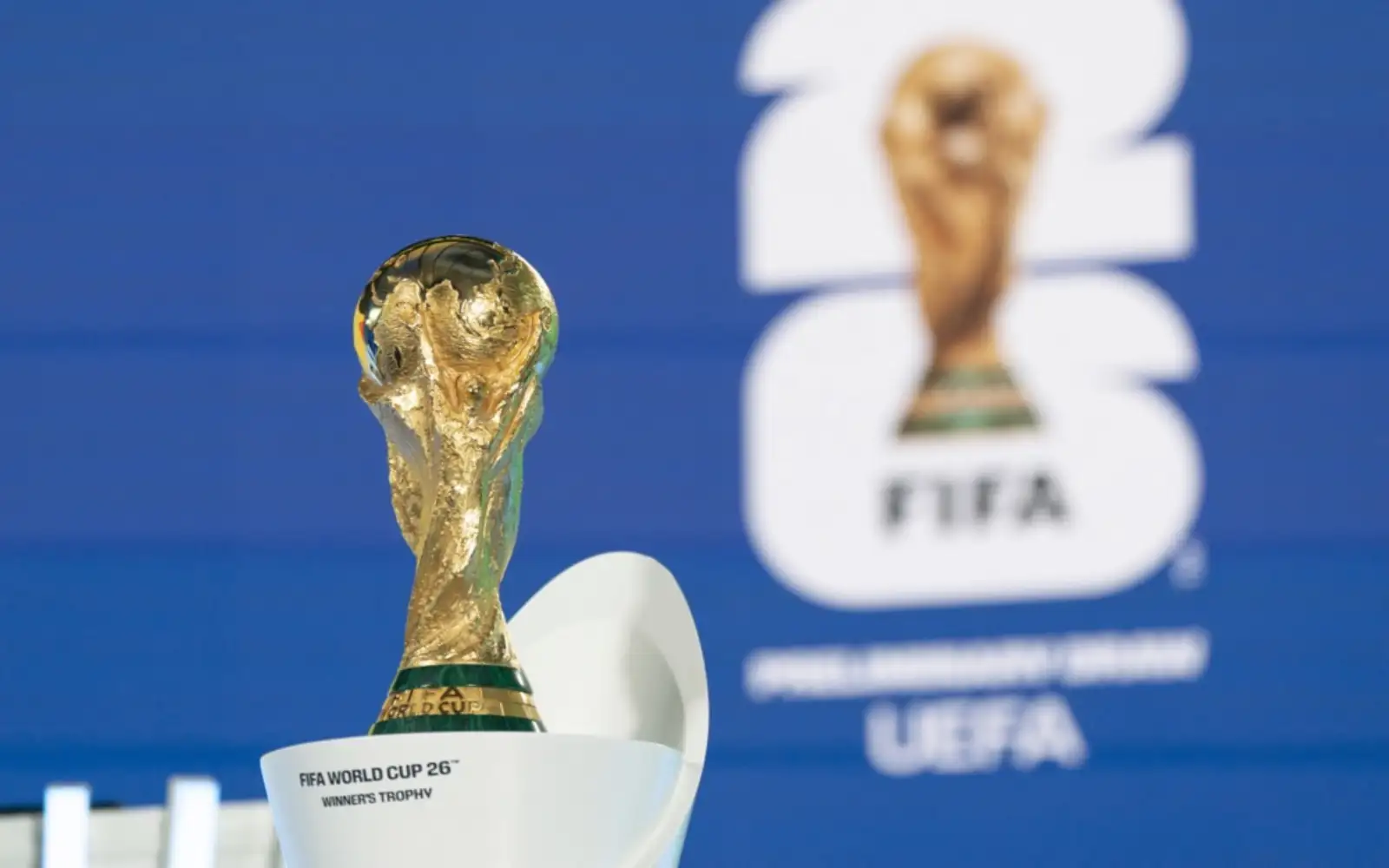
The football world is buzzing after reports emerged that FIFA president Gianni Infantino held talks with South American leaders at Trump Tower in New York about a bold idea: expanding the men’s World Cup to 64 teams.
The timing is striking. The 2026 tournament in the United States, Canada, and Mexico will already grow to 48 nations, up from 32 since France 1998. Now, ahead of the 2030 centenary World Cup — hosted across Spain, Portugal, and Morocco, with commemorative matches in South America — discussions are underway about doubling the size compared to Qatar 2022.
The Proposal
- Format: 16 groups of four teams, with the top two progressing to a Round of 32.
- Matches: 128 in total — double the 64 staged in Qatar in 2022.
- Hosts: Uruguay, Paraguay, and Argentina have floated the idea of staging entire group stages, not just one-off centenary matches.
- Presentation: Uruguayan FA president Ignacio Alonso formally proposed the plan at a FIFA Council meeting in March, with political backing from regional presidents Yamandu Orsi (Uruguay) and Santiago Pena (Paraguay).
South American football chief Alejandro Dominguez argued that a one-off 64-team World Cup would mark the centenary in fitting style: “Not too long ago, I turned 50 and my family prepared a totally different party. I would like to invite you to think outside the box.”
The Pushback
While the idea excites smaller nations eager for inclusion and revenue, opposition is strong in Europe and North America:
- UEFA president Aleksander Ceferin called it a “bad idea,” warning it would dilute quality and undermine qualification pathways.
- CONCACAF president Victor Montagliani agreed, insisting it “doesn’t feel right.”
- A FIFA insider told The Guardian: “The overwhelming feeling… is that 64 teams would damage the World Cup. Too many uncompetitive matches. It risks the business model.”
This echoes earlier clashes, when Infantino’s proposals for a biennial World Cup and the expanded Club World Cup faced stiff resistance.
Why This Matters?
- Growth vs. Value
FIFA is caught between two imperatives: expand participation to unlock new markets and revenues, while preserving the prestige and competitive balance that underpin the World Cup’s value. - Political leverage
South America’s centenary ambitions aren’t just symbolic. By proposing a bigger World Cup, regional leaders increase bargaining power with FIFA and potential hosting influence. - Broadcast & sponsorship economics
A 128-match tournament could drive record broadcast hours and sponsorship activations, but risks saturation. Too many low-stakes games could erode fan attention and long-term brand value. - The global sports calendar crunch
Adding more teams and games further squeezes a congested calendar already stretched by the expanded Club World Cup and continental competitions. Balance is now the central governance challenge. - Fan engagement question
Will fans embrace more inclusivity, or will they tune out if quality declines? This is the ultimate test of whether “more” really means “better” in the modern sports economy.