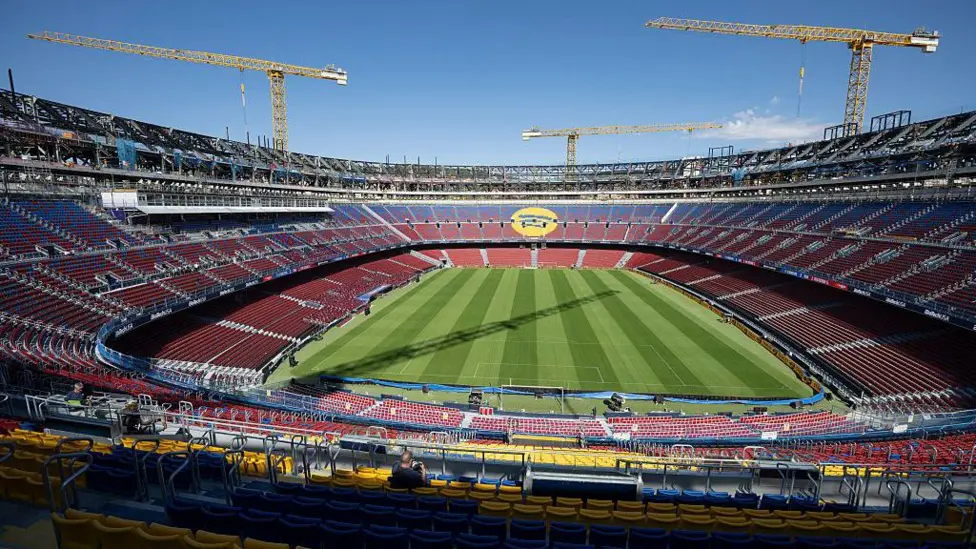
FC Barcelona’s long-awaited return to the Nou Camp has been postponed once more after the city council rejected a key permit request on safety grounds.
The decision means that the La Liga champions will not be able to host Real Sociedad at the Nou Camp this weekend as planned. Instead, the fixture will be staged at the 55,000-capacity Olympic Stadium on Montjuic hill, where Barcelona have been playing during the stadium’s ongoing redevelopment.
Permit Issues and Safety Concerns
Barcelona had hoped to reopen the Nou Camp — albeit with a temporary reduced capacity of 27,000 seats — but the city’s fire department raised concerns about evacuation routes and other safety measures.
Laia Bonet, Barcelona’s deputy mayor, emphasized that public safety remains the city’s top priority: “The council must guarantee the safety of everyone who wants to go to the stadium. This is the priority.”
Barcelona acknowledged the setback and thanked fans for their patience during what they described as a “complex and exciting process.” The club also confirmed they are working to address the council’s requirements.
Timeline of the Nou Camp Renovation
- Work began: June 2023
- Budget: Approx. £1.1 billion
- Target capacity: 105,000, which would make it one of the largest stadiums in the world
- Original return date: November 2024 (to coincide with the club’s 125th anniversary)
- Current estimate: Summer 2027 for completion of the roof, a year later than initially planned
So far, Barcelona have hosted La Liga matches against Valencia and Getafe at the 6,000-seat Johan Cruyff Stadium, home of the women’s team, highlighting the operational challenges caused by the construction delays.
Club’s Position
Barcelona’s operations director, Joan Sentelles, sought to reassure fans, stating: “Just because it’s not finished, doesn’t mean it’s not safe.” However, he confirmed that major elements such as the stadium roof will not be completed until 2027.
The delay further complicates a project already under intense scrutiny, both for its ambitious budget and its importance to the club’s financial future. The revamped Nou Camp is central to Barcelona’s Espai Barça redevelopment project, designed to transform the stadium into a modern, revenue-generating hub.
Strategic Takeaways
- Delays Risk Commercial Revenue
– Every postponed reopening means lost matchday income, reduced hospitality opportunities, and slower return on the £1.1bn investment. - Fan Patience is Being Tested
– Supporters have shown resilience by attending games at temporary venues, but prolonged disruption risks diminishing engagement and satisfaction. - Regulatory Relationships Are Crucial
– Large-scale projects require continuous alignment with city authorities. Missteps in safety compliance can derail timelines and reputations. - Global Perception Matters
– Barcelona’s brand is built on more than football success. Stadium setbacks create negative optics for investors, sponsors, and global fans. - Opportunity in Transparency
– By keeping fans informed and engaging them in the journey, Barcelona can turn disruption into a narrative of resilience and progress.
Final Word
The Nou Camp’s redevelopment remains one of the most ambitious infrastructure projects in world sport. But delays and safety setbacks highlight the risks of managing transformation at such scale. For Barcelona, the new stadium is not just about capacity or aesthetics — it’s about securing the club’s long-term financial and cultural future.
The question now is whether the club can balance ambition, safety, and fan trust as the countdown to 2027 continues.
Subscribe to the 365247 Newsletter for Daily Insights
For Brands, Businesses and Services, feature in our posts
IMAGE: Getty Images