The latest rankings of America’s wealthiest sports team owners highlight how money, markets, and media intersect in today’s sports industry. According to Forbes, 2025 has once again reshaped the hierarchy of influence — with tech billionaires, retail dynasties, and private capital giants firmly in control of some of the biggest teams in U.S. sports.
The Billionaire Power List
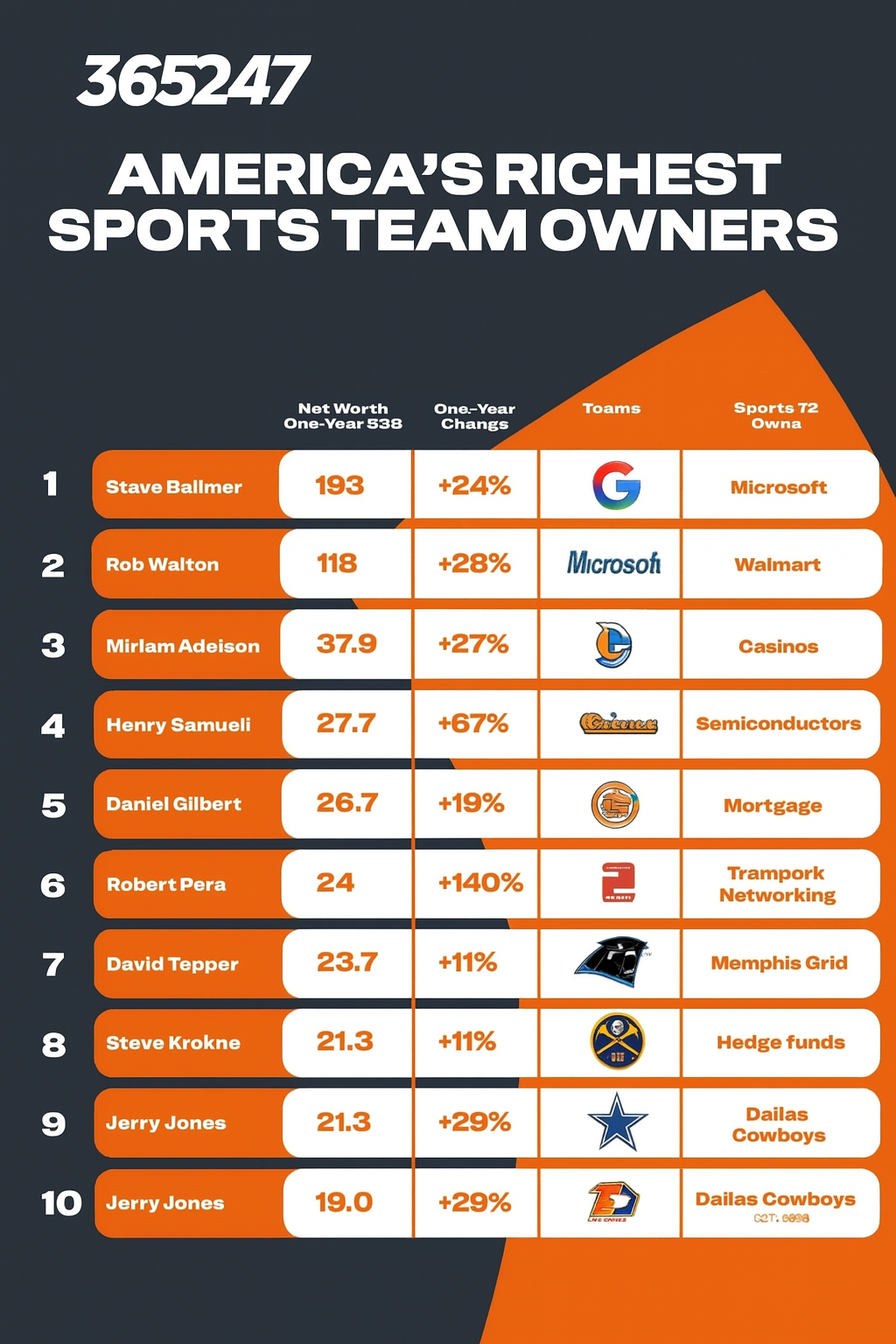
- Steve Ballmer (Los Angeles Clippers, $193bn, +24%)
The former Microsoft CEO remains far ahead of the field, not only as the wealthiest team owner but as one of the richest individuals in the world. His deep pockets have allowed the Clippers to become one of the NBA’s most ambitious franchises, with the new Intuit Dome set to redefine arena experiences. - Rob Walton (Denver Broncos, $118bn, +25%)
Heir to the Walmart fortune, Walton’s control of the Broncos is part of a broader wave of U.S. sports franchises being treated as long-term, family-backed investments. His net worth ensures the Broncos can weather any market shifts in player salaries or stadium demands. - Miriam Adelson (Dallas Mavericks, $37.9bn, +27%)
The casino magnate continues to diversify her wealth into sports, with the Mavericks providing a global platform. Her entry signals the increasing crossover between gaming, entertainment, and sports franchises. - Henry Samueli (Anaheim Ducks, $27.7bn, +64%)
The semiconductor billionaire has overseen an extraordinary wealth increase. His commitment to hockey in Southern California shows how tech-driven owners are using sports as both passion projects and brand platforms. - Daniel Gilbert (Cleveland Cavaliers, $26.7bn, -19%)
Despite a drop in fortune, the mortgage mogul remains a key player in sports ownership. His investment in the Cavaliers has been deeply tied to downtown Cleveland’s redevelopment — a model of sports-led urban regeneration. - Robert Pera (Memphis Grizzlies, $24bn, +140%)
Pera’s massive net worth jump — the largest in the top ten — underscores the power of wireless networking and tech. Once considered a low-profile owner, his Grizzlies project shows how smaller-market teams can thrive under data-first ownership. - David Tepper (Carolina Panthers, $23.7bn, +11%)
The hedge fund billionaire continues to grow his fortune while expanding influence in both football and soccer. His wealth secures Carolina as a growth project in a competitive U.S. sports market. - Steve Cohen (New York Mets, $23bn, +8%)
Baseball’s richest owner has blended hedge fund strategy with a bold approach to spending. Cohen’s Mets are a case study in financial firepower meeting fan expectations. - Stan Kroenke (Multi-club empire incl. LA Rams, Denver Nuggets, Colorado Avalanche, Arsenal FC, $21.3bn, +26%)
Kroenke’s diversified sports empire spans U.S. and European markets. His model demonstrates how cross-border sports ownership can leverage synergies in sponsorship, real estate, and global fan engagement. - Jerry Jones (Dallas Cowboys, $19.6bn, +29%)
The most iconic owner in American sports remains a commercial pioneer. Jones’ Cowboys are not just an NFL franchise — they are one of the most valuable sports brands in the world, driven by his ability to monetize stadium, media, and partnerships.
Why This Matters?
The wealthiest owners aren’t just writing checks — they are reshaping the entire sports ecosystem:
- Tech Titans Lead the Way: From Ballmer to Pera to Samueli, technology fortunes are driving a new era of sports ownership where data, digital, and infrastructure innovation define growth.
- Sports as Global Assets: Kroenke, Adelson, and Walton demonstrate how clubs are no longer local entities but global assets capable of yielding long-term returns.
- The Power Gap Widens: Billionaire-backed franchises enjoy financial firepower that smaller ownership groups simply cannot match. This creates competitive imbalances but also pushes leagues to think bigger about global reach.
The 365247 Take
Sports ownership is no longer just about passion — it’s about strategy. These billionaires see teams as media companies, real estate anchors, and cultural touchpoints. The question is whether their wealth will continue to amplify sporting ambition — or concentrate power so much that competition itself is reshaped.