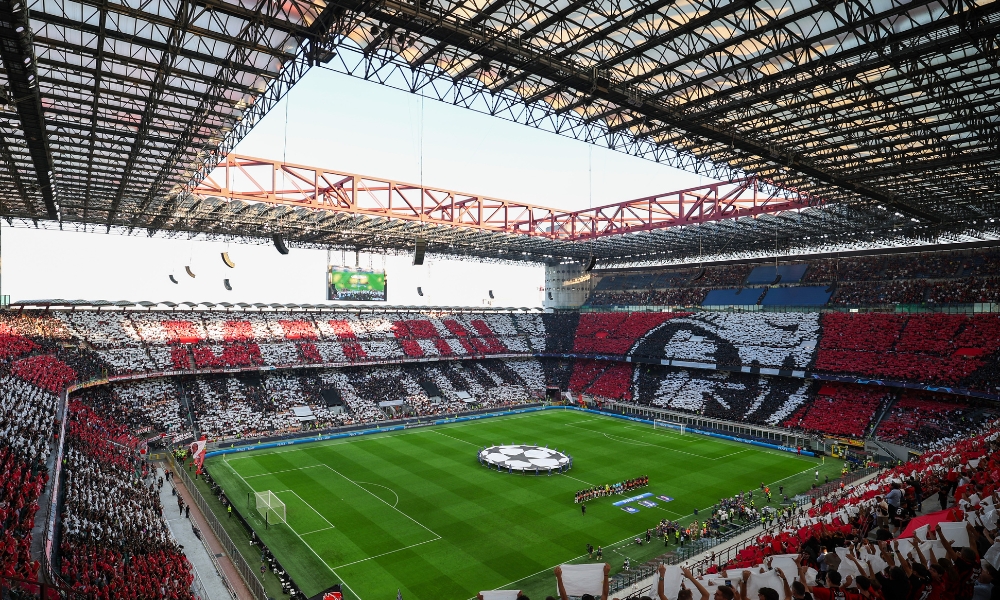
Milan’s football landscape is on the brink of transformation. Reports from the Italian press reveal that AC Milan and Inter Milan have reached an agreement with the city to sell the iconic San Siro stadium, paving the way for a new, state-of-the-art venue.
The move, long debated in Italian football, reflects the growing need for modern stadium infrastructure that matches the ambitions of Europe’s top clubs. With fans and stakeholders calling for progress, both Milan giants have now committed to leaving behind one of football’s most historic grounds.
The Turning Point
Mayor Giuseppe Sala confirmed during an interview with RTL 102.5 that the city has reached a definitive agreement with the two clubs. The proposal will be presented to the city council for approval, with the vote described as a “pivotal” moment for Milan’s sporting and cultural future.
“If all goes according to plan, we will finalize the sale to the council tomorrow,” Sala stated on 17/09.2025, underlining the urgency and importance of the decision.
The timeline is clear: the new stadium must be ready by 2031. UEFA has made it explicit — unless Milan modernizes its infrastructure, the city will be excluded from hosting Euro 2032. This ultimatum has injected fresh urgency into a debate that has dragged on for years.
Pressure and Progress
The San Siro, with its 80,000-seat capacity and rich history, has long been revered as one of football’s cathedrals. But in an era where clubs like Real Madrid, Bayern Munich, and Tottenham Hotspur have leveraged new venues to drive commercial growth, the Milan clubs risk being left behind.
The planned project is not simply about keeping up with Europe’s elite; it is about securing Milan’s place on the global stage. With completion targeted for 2031, the city and its clubs are under pressure to deliver a venue that can both honor their heritage and serve as a commercial engine for the next generation.
What This Means for Clubs and Cities?
The San Siro project is a blueprint moment for sports properties everywhere:
- Modernization as Survival: Legacy cannot be the only selling point. Historic venues must evolve or risk exclusion from major international tournaments.
- UEFA’s Leverage: Governing bodies are increasingly dictating infrastructure timelines. Rights to host events will be tied more tightly than ever to modern, fan-centric facilities.
- Commercial Growth: A new stadium isn’t just about matchday revenue. Naming rights, premium hospitality, and year-round activation are now central to financial strategy.
The suspense lies in the execution. Can Milan balance nostalgia for the San Siro with the demands of modern football economics?
Closing Thought
This is not just a Milanese story. It’s a global lesson in how sport, business, and urban development collide. Clubs, leagues, and cities everywhere should take note: when heritage clashes with progress, decisive action is the only way forward.
For Brands, Businesses and Services, feature in our posts
IMAGE: Getty Images