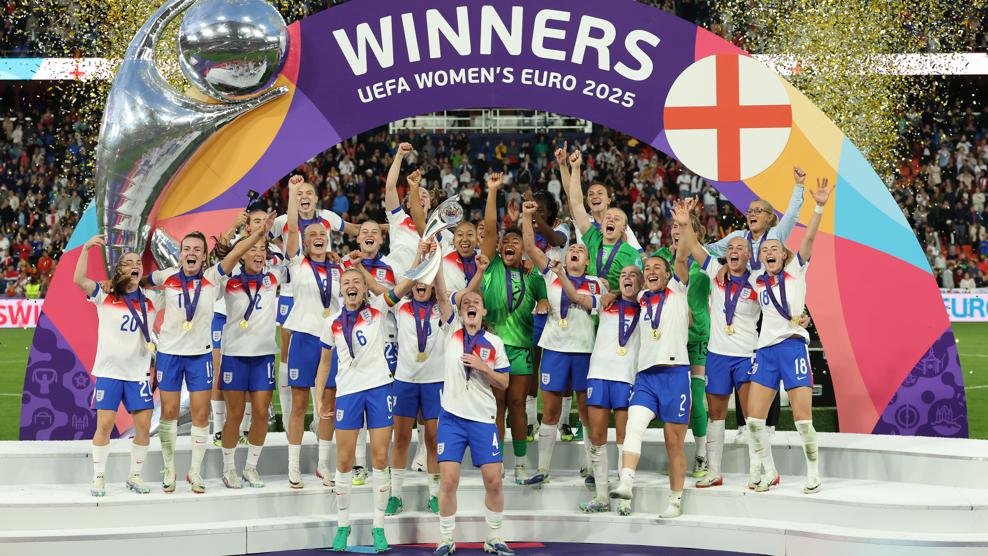
It may feel like time has passed since Leah Williamson lifted the trophy under the Basel night sky, but the ripple effects of UEFA Women’s EURO 2025 are only just beginning to take shape. This wasn’t just a tournament; it was a statement about where women’s football stands today — and where it is heading.
Economic & Commercial Impact
Switzerland proved to be more than a gracious host. The competition delivered a CHF 205m (€220m) economic boost, thanks to the surge in international visitors. Hotel bookings rose 9% year-on-year compared to July 2024, underscoring how major women’s events are no longer niche — they are tourism drivers.
Commercially, EURO 2025 broke new ground. With 21 brands in the sponsor portfolio, UEFA achieved the largest sponsorship line-up in tournament history, driving a 150% revenue increase compared to 2022. That’s not just growth — that’s a clear sign that women’s football now commands premium global attention from brands.
Legacy & Local Game Development
Tournament legacies often fade, but Switzerland is aiming for long-term transformation. A dedicated €11m ‘Here to Stay’ programme will be channeled into grassroots development: doubling the number of women players, coaches, and referees by 2027.
Already, the effect is visible. The Swiss Women’s Super League saw a 42% jump in attendance during its opening weekend post-EUROs — proof that tournament buzz can translate into sustained domestic growth if nurtured properly.
The Fan Experience: Bigger Than Ever
Attendance shattered expectations. Of the 657,291 tickets sold, nearly 35% went to international fans. Importantly, affordability was built into the ticketing strategy, helping drive an average crowd of more than 20,000 per match — a Women’s EURO first.
Beyond stadiums, 1.2 million people engaged in fan zones, while the global broadcast audience topped 500 million cumulative viewers, with 412 million watching live coverage. Women’s football has become a broadcast powerhouse in its own right.
Sustainability as a Strategic Priority
EURO 2025 doubled down on sustainability, proving that major tournaments can blend spectacle with responsibility.
- 86% of fans travelled via eco-friendly transport, thanks to Swiss Railways’ late-night train services.
- 95,000 people joined official fan walks, making travel itself part of the celebration.
- Stadiums applied the 4Rs principle — reuse, reduce, recycle, recover — with materials repurposed into training kits and merchandise.
This sets a benchmark for future events, where sustainability is no longer a side initiative but a core KPI for hosts and sponsors.
Bigger Picture: The Business of Women’s Football
Women’s EURO 2025 wasn’t just the largest edition ever, it was a blueprint for the future of women’s sport as a commercial, cultural, and social force. Three takeaways stand out:
- Scale is real — fans will turn up and tune in if the infrastructure and access are there.
- Brands see value — the record sponsor portfolio shows that women’s sport is no longer an “add-on,” but a standalone investment opportunity.
- Legacy must be strategic — Switzerland’s €11m grassroots plan demonstrates how hosts can ensure the impact lasts beyond the final whistle.
Bottom Line
Women’s EURO 2025 was more than a tournament; it was a case study in how to run a modern sports property. Economic uplift, global audience scale, sponsor engagement, and sustainability were not separate storylines — they were interwoven pillars of the event.
The women’s game is no longer chasing validation. It is setting new standards — and the rest of the sports industry is paying attention.
For Brands, Businesses and Services, feature in our posts
IMAGE: Getty Images