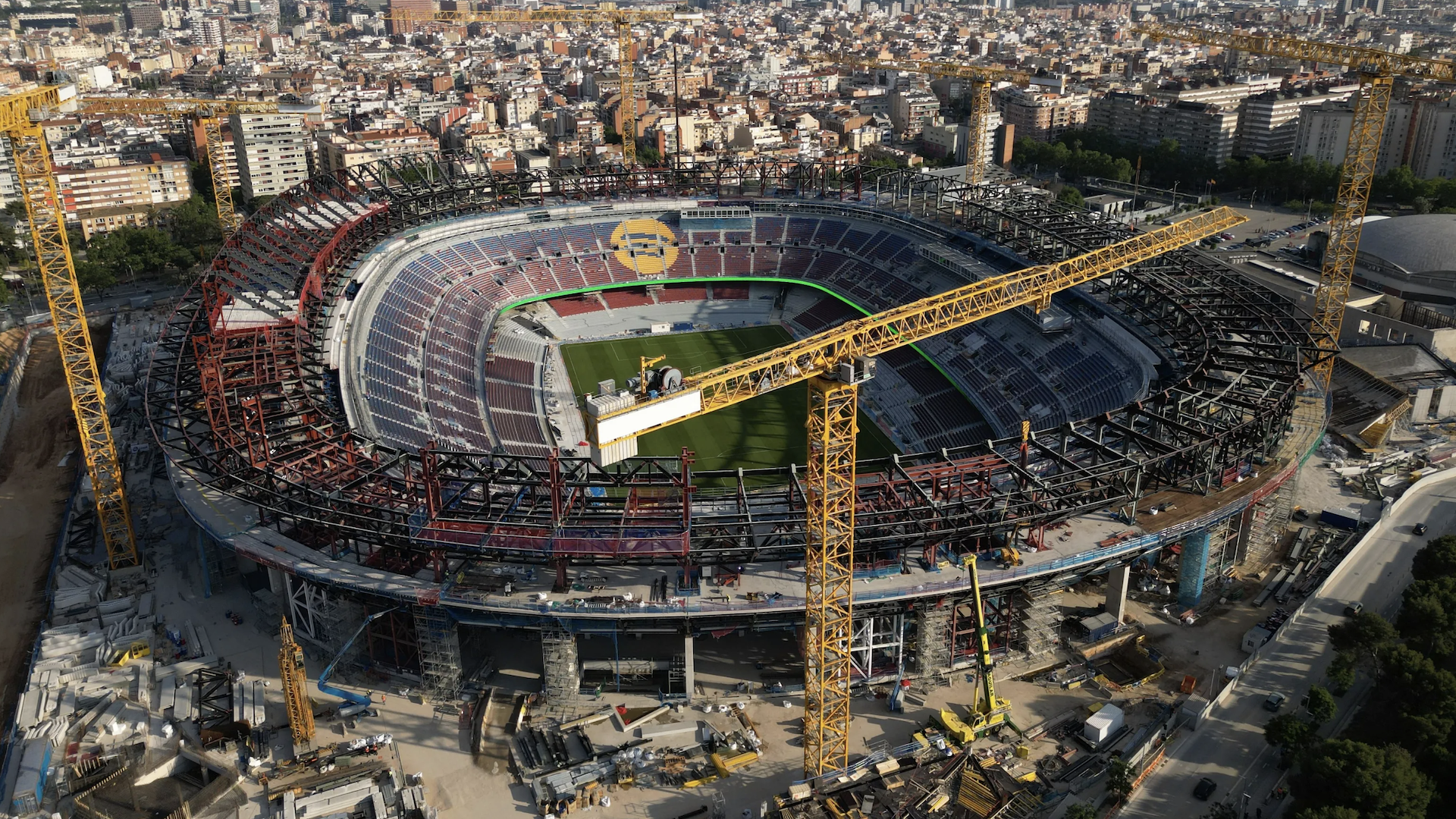
On 28 May 2023, FC Barcelona played its last game at the iconic Camp Nou, closing the stadium for a long-awaited redevelopment project. More than two years later, the renovation is still unfinished, and delays are forcing the club to extend its exile into the 2025/26 season.
Barcelona had planned to host their first home match back at the newly named Spotify Camp Nou on September 14, 2025 against Valencia. Instead, the Blaugrana will play at the Estadi Johan Cruyff, their youth academy ground, after failing to secure the necessary approvals from the city council, La Liga, and UEFA.
A Venue Shuffle
Barcelona’s temporary home at the Estadi Olímpic Lluís Companys (Montjuïc) was unavailable due to a Post Malone concert, leaving the Johan Cruyff Stadium as the only viable option. This continues a frustrating pattern of disrupted return dates:
- The Joan Gamper Trophy in August 2025 was also moved from Camp Nou to Johan Cruyff.
- Reports of a possible partial reopening in late 2024 slipped into early 2025, then into September 2025, and now even that timeline remains uncertain.
As of September, the Camp Nou has received only phase 1A certification, confirming some structural progress (new pitch laid, partial seating installed), but not enough to host matches. A July site inspection flagged more than 200 safety concerns, while the stadium roof, VIP sections, and third tier remain under construction.
The Financial Strain
The Espai Barça project is one of the most ambitious—and expensive—redevelopments in world football. Initial costs of €1.5bn could balloon as high as €2.8bn, with the stadium renovation alone reported at €900m.
The club has relied heavily on refinanced loans with Goldman Sachs to keep construction moving. The financial urgency is clear: Barcelona projects the completed stadium could generate €350m annually, primarily through:
- VIP boxes and hospitality
- Expanded matchday capacity (105,000 seats)
- Enhanced technology infrastructure, delivered with partners HPE and Orange for 5G and cybersecurity
- Long-term naming rights revenue, with Spotify paying €70m per year
Commercial Pressure
For Barcelona, reopening Camp Nou is not just about football—it’s a financial lifeline. The club is already leveraging sponsorship deals and forward-selling revenues, but until fans return to Europe’s largest stadium, cash flow remains constrained.
In contrast, rivals Real Madrid have already unlocked the commercial power of the renovated Santiago Bernabéu, which reopened in 2024 and helped drive revenues beyond €1bn for two consecutive years. The Bernabéu is now a multi-purpose entertainment hub, hosting concerts, NFL exhibitions, and immersive experiences, setting the standard Barcelona must match.
The Sporting Context
On the pitch, Barcelona are resurgent—winners of La Liga and Copa del Rey last season, powered by the rise of Lamine Yamal, Pedri, and Pau Cubarsí. Yet off the pitch, their financial model is tied to reopening Camp Nou as quickly as possible. The risk is clear: continued delays could erode commercial momentum just as Real Madrid expand theirs.
365247 Consulting Insight
Barcelona’s renovation story highlights a bigger truth about modern football:
- Stadiums are no longer just homes—they are financial engines.
- Delays are more than inconveniences—they are lost revenue cycles.
- Commercial viability now depends on multi-use strategies: premium hospitality, concerts, tech-enabled fan experiences, and non-matchday monetisation.
For investors, clubs, and sponsors, the lesson is simple: timing matters as much as design. Real Madrid executed their Bernabéu project to precision; Barcelona cannot afford to miss another deadline without risking long-term competitive imbalance.
For Brands, Businesses and Services, feature in our posts
IMAGE: FC Barcelona