The Golden State Valkyries have delivered a debut campaign that redefines what is possible for WNBA expansion franchises, combining record-breaking attendance with a historic first-year playoff berth.
A Season of Sellouts and Surging Demand
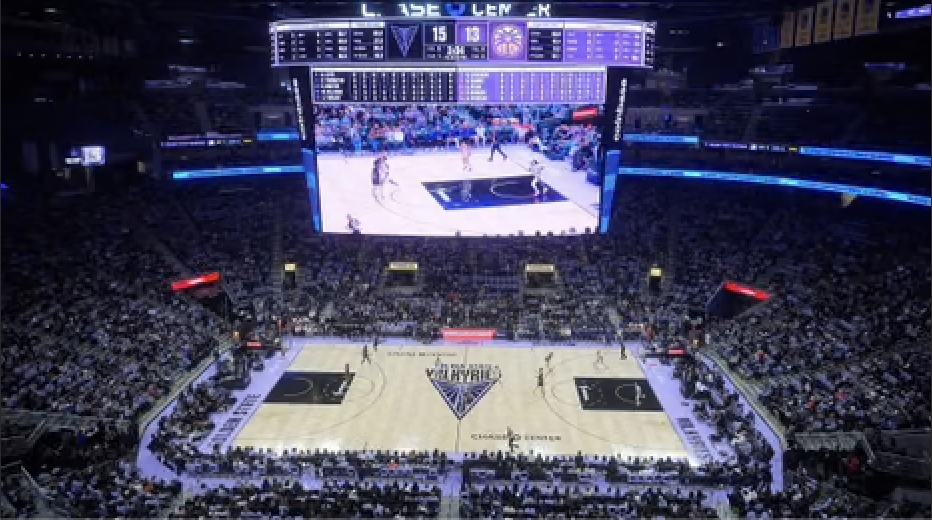
Playing at San Francisco’s Chase Center, the Valkyries sold out all 22 home games in their inaugural season, drawing a remarkable 397,408 fans in total. With an average attendance of 18,604 per game, they have set a new league benchmark, eclipsing the Indiana Fever’s 2024 record of 17,036.
To put that in perspective, these figures place the Valkyries in line with strong NBA regular-season averages, showcasing both the appetite for women’s basketball in the Bay Area and the power of launching in an established NBA market with existing infrastructure.
The Expanded WNBA Calendar
The 2025 season marked the introduction of the WNBA’s 44-game schedule, adding two home games per team compared to 2024. While this provided more inventory for teams to capitalize on demand, Golden State’s ability to convert every fixture into a sellout highlights the effectiveness of their market positioning, arena experience, and local engagementstrategies.
Indiana continues to be a force at the gate, with their 2025 campaign sitting second in total attendance (349,313 with one game left), proving that expansion success is part of a broader league-wide growth trend.
Playoff Debut with a Twist
The Valkyries’ fairy-tale season comes with logistical hurdles. Due to a scheduling clash with the Laver Cup tennis tournament, their guaranteed first-round home playoff game will be staged at San Jose’s SAP Center instead of Chase Center—dubbed “Ballhalla” by fans.
As a lower seed under the WNBA’s revised 1–1–1 playoff format, Golden State is guaranteed at least one home game. Should they spring an upset, postseason basketball would return to Chase Center, offering another chance to extend their record-breaking momentum.
Why This Season Matters for the WNBA?
Golden State’s inaugural success sends a powerful message as the league prepares to add four more expansion teams between 2026 and 2030. Their immediate impact proves that:
- Market selection matters: Cities with existing NBA infrastructure and strong basketball culture provide a launchpad for immediate traction.
- Demand is real: When matched with the right venue and marketing strategy, WNBA expansion can draw NBA-caliber crowds.
- Momentum is marketable: A playoff run in year one creates narratives that drive long-term fan loyalty and commercial partnerships.
For the WNBA, the Valkyries’ debut strengthens the commercial case for future franchises and positions the league to negotiate from a position of confidence with broadcasters, sponsors, and cities vying to host expansion clubs.
365247 Insight
The Valkyries’ success is not just a story of attendance—it’s a blueprint. Expansion clubs often face the challenge of proving relevance quickly. Golden State’s approach demonstrates that if you combine established infrastructure, strong branding, and an NBA-level entertainment package, demand will follow.
The wider lesson for leagues and investors: expansion isn’t about filling a team sheet, it’s about embedding a club into the cultural and economic fabric of a city from day one.
The Takeaway
The Golden State Valkyries have not just entered the WNBA—they’ve changed the conversation around expansion. For the league, their season is proof that with the right strategy, the future of women’s basketball can be both sustainable and spectacular.
For Brands, Businesses and Services, feature in our posts
IMAGE: AP