CREDIT: Boardroom
Liverpool’s Record Summer
Fenway Sports Group (FSG) has clearly chosen Liverpool FC as its crown jewel in 2025. The club’s summer transfer window spending surged past $500 million, capped by the record-breaking $170 million signing of Alexander Isak from Newcastle on deadline day.
Other marquee additions included:
- Florian Wirtz (22, Bayer Leverkusen) — $145 million
- Hugo Ekitiké (22, Eintracht Frankfurt) — $110 million
This offensive refresh signals forward-planning as Mohamed Salah, still influential at 33, moves into the twilight of his career.
The spending spree was financed in part by Liverpool’s stellar 2024/25 campaign:
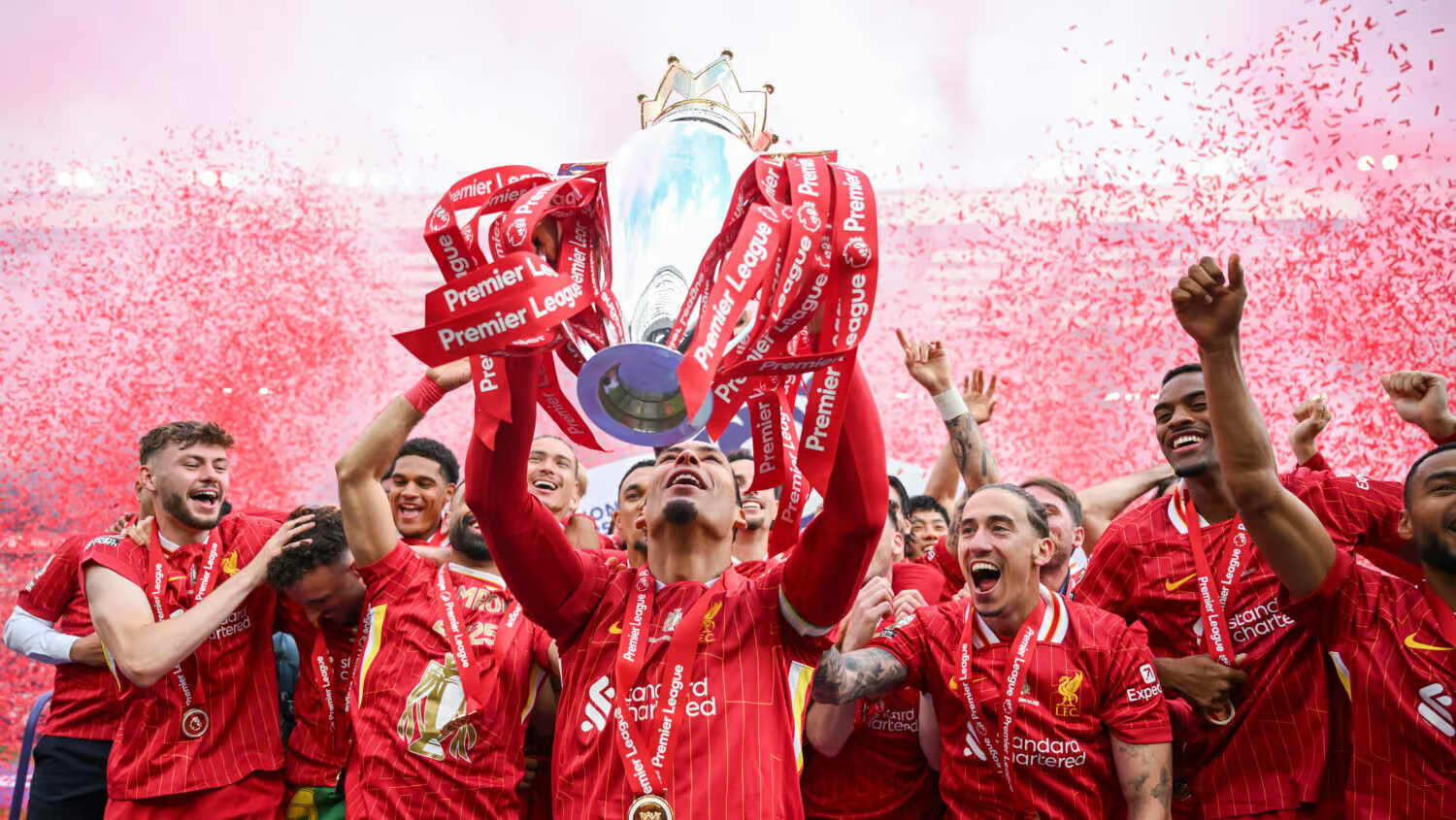
- $234.3 million from winning the Premier League
- $108.4 million from reaching the Champions League knockouts
- $305 million generated in player sales
The reinvestment shows a deliberate cycle: convert sporting success into transfer market firepower to maintain competitiveness and fan momentum.
Red Sox Fans Left Wanting
In stark contrast, FSG’s Boston Red Sox have been far more restrained. Their payroll sits at $198 million, only 11th in MLB, despite being one of baseball’s most storied franchises.
Frustration deepened when:
- Franchise cornerstone Rafael Devers was traded to San Francisco, just two years after a 10-year, $313.5m extension.
- At the trade deadline, instead of adding major talent, the Sox acquired marginal pitchers Dustin May and Steven Matz, combining for only $4m in salary.
Boston is relying heavily on youth development, promoting prospects like Roman Anthony, Marcelo Mayer, Kristian Campbell, and Peyton Tolle. While this shows long-term planning, it risks undermining fan expectations for a team with a history of bold investment.
Penguins on the Periphery
FSG’s Pittsburgh Penguins have also seen reduced spending. The NHL team missed the playoffs three straight years for the first time since 2006, with payroll slipping to 19th in the league in 2024.
Reports suggest FSG may even explore a sale of the franchise, potentially to free up capital for other ventures. Earlier speculation tied FSG to a possible Las Vegas NBA expansion team, though league focus appears to be shifting toward Europe.
Ownership Philosophy in Action
FSG’s current approach seems to favor spending after winning, rather than to create winning.
- Liverpool: Rewards success, reinvests profits aggressively, and pushes to extend dominance.
- Red Sox: Tighter payroll, youth-first rebuild, with expectations that a playoff breakthrough could unlock fresh spending.
- Penguins: Constrained investment, raising questions about long-term fit within the portfolio.
This performance-first spending cycle aligns with Fenway’s financial discipline, but risks alienating fans in Boston and Pittsburgh who expect resource allocation consistent with the brands’ legacies.
Strategic Lens: Consulting Takeaways
For ownership groups managing multi-club or multi-franchise portfolios, Liverpool’s summer illustrates one version of the “winner’s flywheel”:
- Sporting success → record revenues (league wins, European campaigns).
- Reinvestment → marquee signings that sustain competitive edge.
- Global fanbase growth → stronger commercial deals.
- Commercial uplift → capital to fuel the next cycle.
But applying this selectively across a portfolio creates brand equity risk. Fans of the Red Sox and Penguins may perceive neglect, even if the long-term strategy emphasizes development or eventual exits.
365247 Consultancy POV
The lesson from FSG’s playbook is not just about how much money is spent, but where and when.
- Clubs with global reach (Liverpool) receive disproportionate investment because their upside is international.
- Properties with local or regional pull (Red Sox, Penguins) face more restrained spending unless sporting success demands reinvestment.
- Without careful communication, this uneven allocation creates fan trust gaps and brand value leakage across the portfolio.
For multi-sport owners, the challenge is aligning portfolio-level capital discipline with franchise-level cultural expectations. Success requires transparency with fanbases, measurable pathways for reinvestment, and tailored commercial strategies that prove value even in down cycles.
Final Word
Fenway Sports Group’s summer shows Liverpool at the peak of its investment cycle, while the Red Sox and Penguins play more patient games. Whether that patience will pay off—or cost fan loyalty—will shape the next chapter in FSG’s ownership story.
For Brands, Businesses and Services, feature in our ecosystem
IMAGE: Getty Images