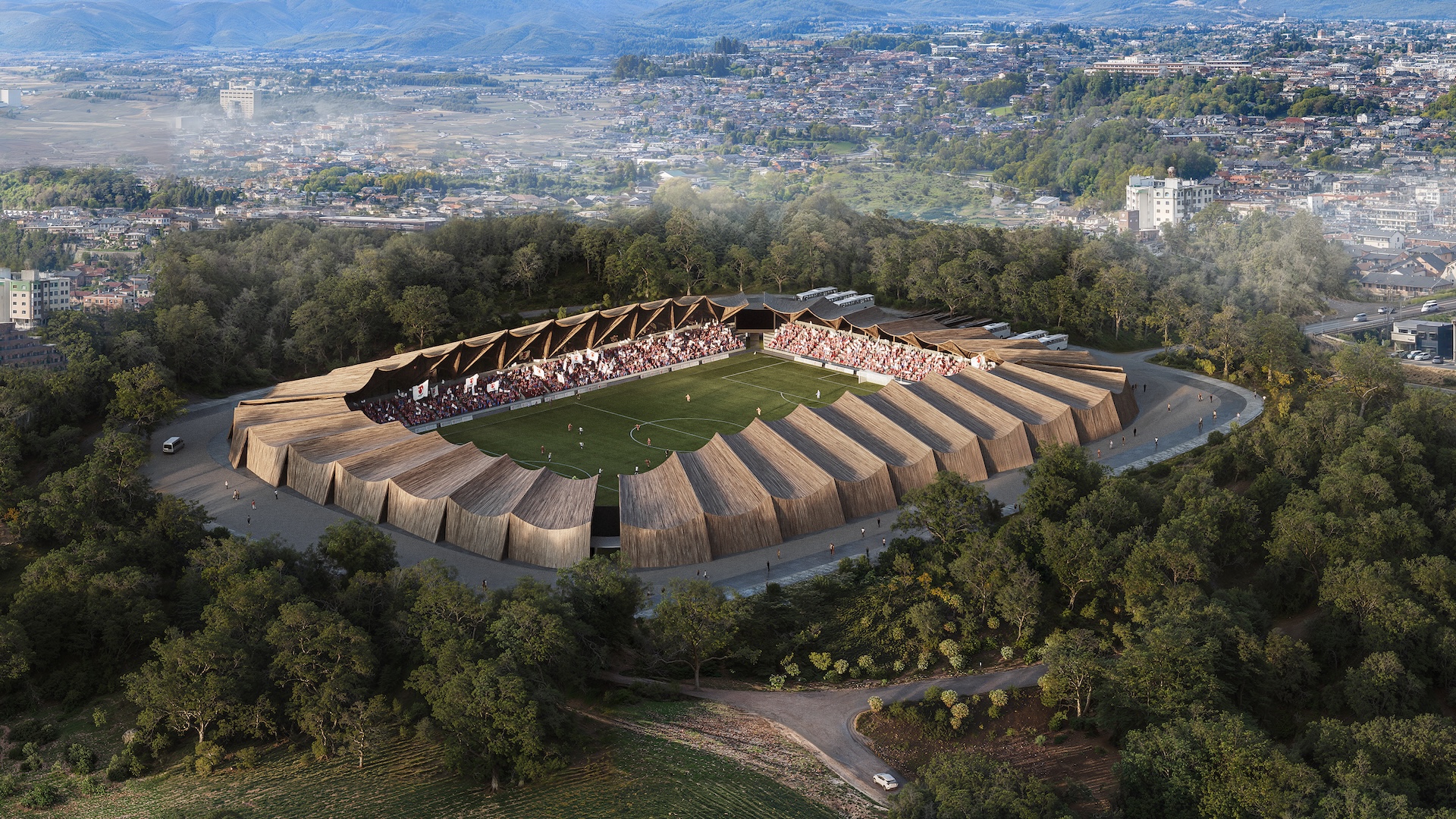
Fukushima United FC has revealed a concept that could reshape how smaller clubs think about venues: Japan’s first all-wood football stadium—and, the club says, the first fully recyclable wooden stadium anywhere. The J3 League side, which currently plays at the 5,710-capacity Toho Minnano Stadium (an athletics venue), is pursuing a purpose-built home that puts circular design, local materials, and community participation at its core.
A Stadium Rooted in Tradition—and Built to Be Reused
The architectural vision draws on Shikinen Sengu, a centuries-old Shinto practice in which shrines are periodically rebuilt and the divine spirit is ceremonially transferred to a newly constructed structure. Fukushima United’s plan translates that ethos into modern sport:
- All-wood construction: Layered lumber sourced from within Fukushima Prefecture forms the primary structure.
- Designed for disassembly: Every component is intended to be taken apart and reused, extending the building’s life and reducing waste.
- Community making: Club members and local residents will be invited to help craft elements of the stadium in festival-style workshops, turning the build itself into a civic project.
- Skills for the next generation: Reforestation initiatives and woodworking education are expected to pass on craft knowledge and stewardship of local resources.
Passive Design Tailored to Fukushima’s Climate
Fukushima’s basin geography informs a passive-first approach that aims to minimize mechanical heating and cooling:
- Seasonal roof geometry blocks summer sun while deflecting cold winter winds.
- Shaped exterior walls capture prevailing breezes in hot months and shield the bowl when temperatures drop.
- Water and snow as resources: Collected rainwater is filtered for reuse, and snow stored in winter becomes a cooling medium in summer.
- On-site energy with storage: Renewable energy generated at the venue will be stored in battery systems to push toward partial or full energy self-sufficiency.
The club intends to pursue the Living Building Challenge, one of the world’s most demanding frameworks for regenerative, net-positive buildings.
Status and Next Steps
Capacity and delivery timelines have not yet been announced. For supporters who have long asked for a football-specific arena, the concept signals intent: a venue built for the game, the community, and the region’s forests and crafts.
Why This Matters (365247 View)
- A blueprint for right-sized sustainability: Lower-league clubs often face budget and footprint constraints. A modular, wood-forward, disassemblable design can reduce embodied carbon and spread costs across phases.
- Community equity in practice: Inviting residents to contribute components creates emotional ownership, volunteerism, and grassroots advocacy that traditional builds struggle to achieve.
- Local supply chains as strategy: Sourcing timber from Fukushima ties the club’s identity to regional industry and can stimulate reforestation and new skills training.
- Operational savings through passive design: Smart roof and wall geometry, plus water/snow reuse, can cut long-term energy costs—critical for smaller operating budgets.
- Sponsorable sustainability: Regenerative forestry, craft education, and circular construction open differentiated platforms for partners seeking credible climate and community impact.
For Brands, Businesses and Services, Partner with us
IMAGE: Fukushima United FC