Credit: Mark A. Hartmann
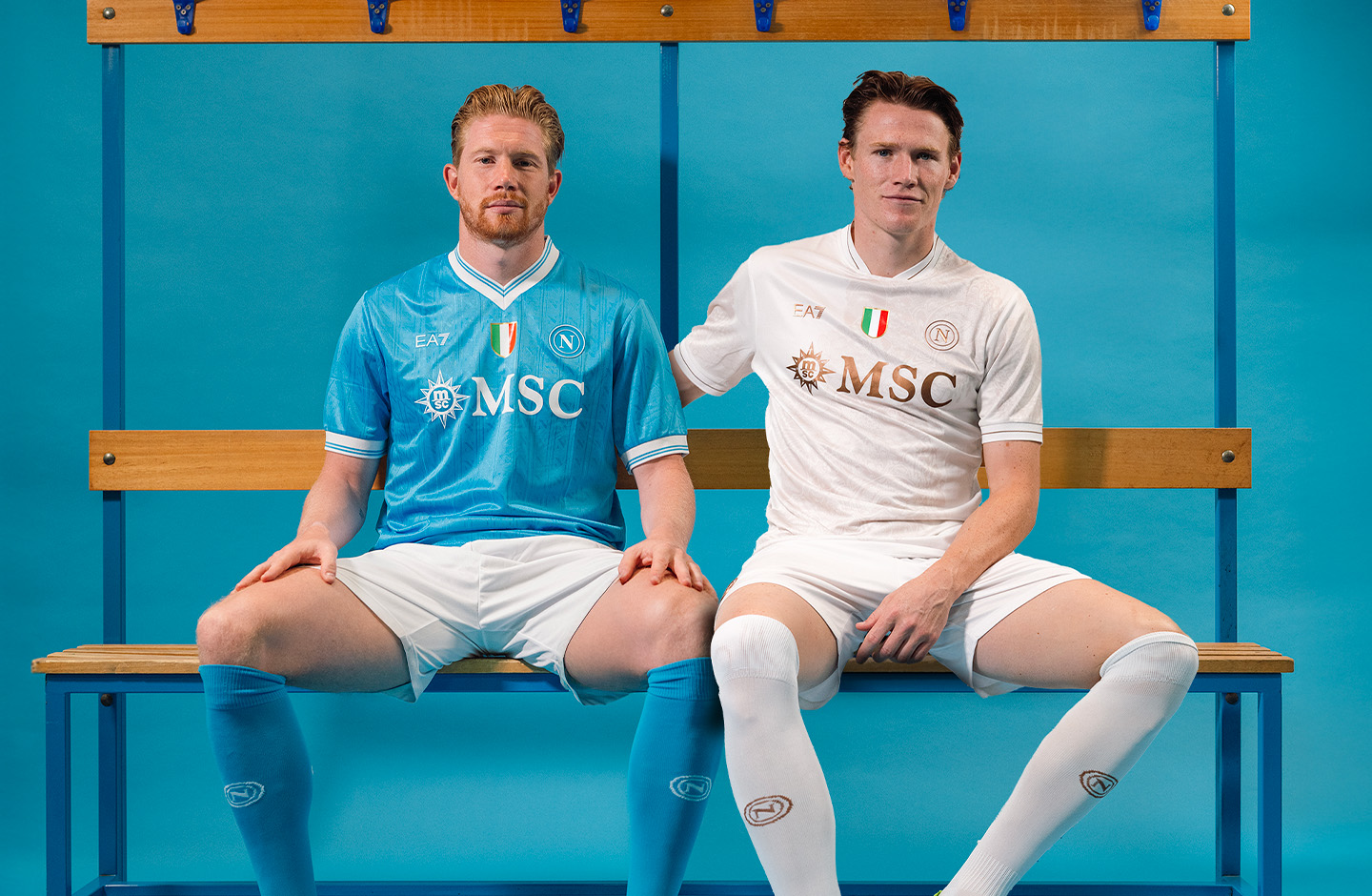
When SSC Napoli pivoted away from the traditional kit-supplier model in 2021 and paired with EA7 Emporio Armani, they didn’t just change a logo. They rewired the P&L. President Aurelio De Laurentiis openly questioned the value of enriching the big-three manufacturers and moved to self-produce and self-market Napoli apparel with EA7 as the creative/technical brand. The club’s own release makes it plain: “the clothing and accessories will be produced and marketed by SSC Napoli.”
This is a case study in vertical integration: faster cycles, fashion-grade storytelling, and more margin retained by the club.
1) The legacy playbook (and why clubs outgrow it)
The standard Club × Supplier deal looks like this: a fixed annual fee from the brand, royalty on wholesale sales (often ~10–20%), and the manufacturer controls design, production, and global distribution. For very large clubs, royalty rates can move higher, but the core reality holds—clubs trade control for guaranteed cash and global logistics.
Upside: scale and reach.
Trade-off: slower time-to-market, less creative autonomy, and limited unit economics.
2) Napoli’s shift: fashion house on the crest
- Goodbye Kappa; hello EA7 (2021/22): Napoli ended its prior deal and launched a first-of-its-kind arrangement with EA7, Armani’s performance line. Crucially, Napoli runs production and marketing while collaborating with Armani’s design team—a hybrid of club-owned operations and fashion-house aesthetics.
- Drop cadence, not seasons: In 2021/22 Napoli released an unprecedented 13 kits, including limited Maradona tributes—embracing scarcity and storytelling over traditional spring/summer cycles.
- D2C muscle: The club has long invested in direct-to-consumer channels (including an official Amazon store) and has since expanded owned retail and international partners—vital pipes when you control production.
What this unlocked: speed to shelf, category fluidity (capsules, special editions), and higher per-unit contribution by removing intermediaries.
“The clothing and accessories will be produced and marketed by SSC Napoli.” — Club statement confirming the model.
3) Creative control = commercial control
With EA7, Napoli turned shirts into a fashion narrative: local motifs, artist collaborations, and city-coded storytelling—then shipped fast. Reports at launch even sparked debate about manufacturing lineage (Napoli denied any Kappa involvement), which only underscored how closely the club guards its creative and supply chain.
By 2023, analyses were calling Napoli’s approach a “kit experiment”—more releases than Europe’s elite and a template for turning culture into commerce.
4) Did it work?
Public, audited revenue breakouts for club merchandise are rare. But the observable outputs are hard to ignore: record release cadence, repeated sell-outs of specials, and a maturing owned-retail stack. The design leadership is now formalized—Valentina De Laurentiis driving seasonal direction with Armani—and the distribution spans club stores, e-commerce, and selected partners.
The bigger lesson: by owning design and production, Napoli captured the levers that actually move margin—SKU velocity, drops, and direct attribution—while EA7 provides a credible performance-fashion frame.
5) What other clubs can copy (and what they shouldn’t)
Copy this:
- Shorten the cycle. Move from 12–18 month supplier timelines to rapid prototyping and drops tied to real moments (derbies, anniversaries, players).
- Tell city stories. Anchor graphics and capsules in local culture; it travels better than generic “global” design.
- Own the pipes. Invest in D2C (owned e-com, marketplaces) before you go vertical on production.
Be careful with:
- Capacity risk. Owning production requires QA, forecasting, and working capital.
- Over-issuance. 10+ kits can drive fatigue unless scarcity and purpose are clear; Napoli paired volume with limited runs and storytelling.
- IP and compliance. Fashion-grade collabs add legal complexity; build internal capability or retain a specialist operator.
A playbook for “Make, Market, Measure”
1) Rights architecture, not just a supplier swap
Design a co-branded model (club-produced, fashion-validated) that preserves brand credibility while flipping margin and speed in your favor. Use royalty on wholesale only where it unlocks channels you can’t reach alone.
2) Build a capsule calendar
Replace one-off third kits with a 12-month capsule schedule tied to fixtures, heritage dates, and creator collabs. Every drop gets its own P&L and KPI stack (sell-through, waitlist size, repeat rate).
3) Instrument the funnel
From teaser content to cart, tag every step. Owned channels (email, app, membership) should deliver the majority of revenue within 24–72 hours of a drop.
4) Decide your level of verticality
Full in-house isn’t binary. Start with design + forecasting in-house, outsource manufacturing to a short-lead partner, and phase ownership as ops maturity grows.
Partner With Us
Want to feature your brand, business, or service on 365247 — Whether you’re looking to sponsor, collaborate, or build presence within our ecosystem, we’d love to explore it with you.
Submit your interest here
IMAGE: SSC Napoli